Global Leaders Slam Trump’s Iran War as Alliances Crumble
Global leaders are fiercely criticizing Donald Trump's handling of the Iran conflict, citing it as disastrous and unlawful. International alliances appear to be fracturing as countries like France and Spain distance themselves from U.S. policy. The situation highlights the dangerous link between fossil fuels and war, with a call for a shift to renewables to foster global stability.

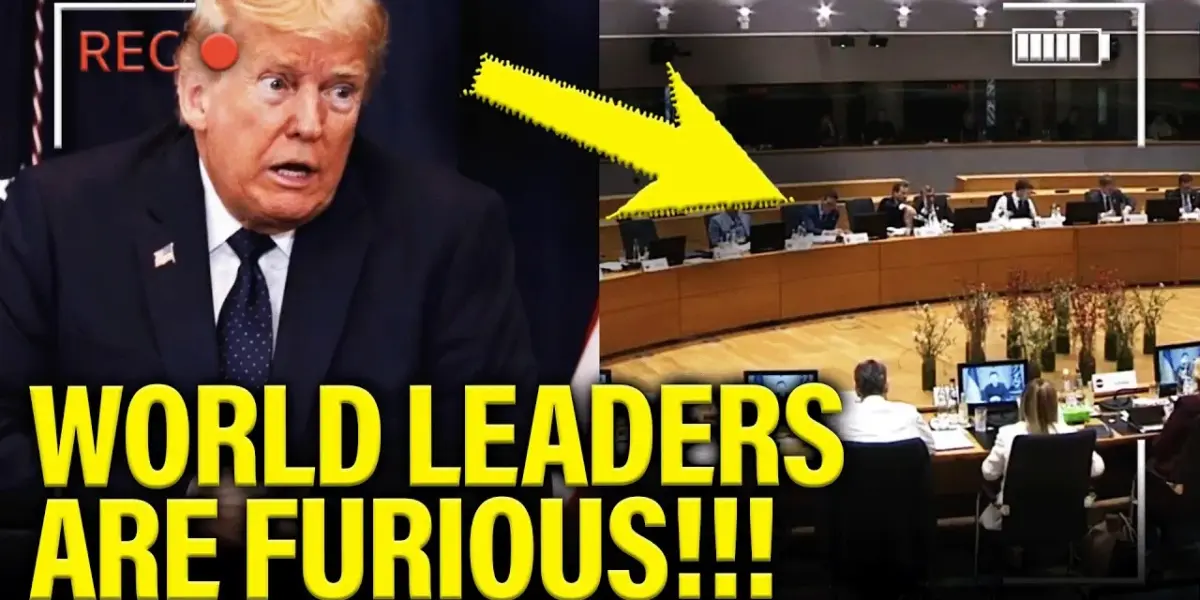
World Leaders Condemn Trump’s Iran Actions
Furious world leaders are speaking out against Donald Trump’s actions concerning Iran, calling his involvement in the conflict disastrous and unlawful. Statements reveal a growing international disapproval of his policies. A former French general, who led the French Foreign Legion, compared joining Trump’s war to buying a discounted ticket for the Titanic after it hit an iceberg. This stark analogy highlights the perceived recklessness of the current situation.
France’s President Emmanuel Macron has made it clear that France will not participate in any force aimed at opening the Strait of Hormuz. He emphasized that France is not involved and does not want its name associated with such actions. Macron also criticized Israel’s bombing of Lebanon, particularly in Beirut, and its ground operations. He urged Israel not to invade Lebanon, noting that Israel has called up reservists for a potential invasion. The destruction in Beirut, compared to Gaza, shows the severe impact of these military actions.
Reports indicate that Israel has been demolishing buildings believed to house Hamas members, regardless of civilian presence. Tragically, doctors and innocent civilians have been killed in these strikes. The United States and Israel are also accused of killing young girls in an elementary school in Iran and targeting energy and desalination facilities. These actions, however, appear to be backfiring, as Iran has retaliated by striking energy facilities in Riyadh and the liquefied natural gas facility in Qatar, as well as the Haifa energy facility.
Escalation and Global Fears
The situation is escalating rapidly, with the World Health Organization preparing for the possibility of nuclear annihilation and its fallout. This fear extends beyond the immediate conflict zone. The transcript also recalls a time when Donald Trump threatened to invade Greenland. Denmark, a NATO ally, was reportedly preparing for a potential war with the United States. Danish troops were sent to Greenland with explosives to destroy runways, aiming to block U.S. landings, and blood supplies were mobilized for possible casualties. This incident demonstrates how Trump’s rhetoric can create serious international tensions.
Spanish Prime Minister Pedro Sanchez has clearly stated Spain’s opposition to the war in Iran, deeming it illegal and causing immense damage, including alleged war crimes. Spain will not be involved. Sanchez stressed the need for diplomatic solutions and de-escalation throughout the Middle East. He views the current conflict as interconnected with events in Gaza, the West Bank, and Lebanon. He believes it is crucial to uphold principles, remain engaged, and show unity within the European Union. Sanchez wants to send a clear message that Europe stands for multilateralism and international law, opposing the war due to its illegality and the suffering it causes to civilians, refugees, and the global economy, particularly affecting the Global South.
Deteriorating U.S. Standing and Shifting Alliances
A concerning trend highlighted is the declining perception of the United States on the global stage. Polls show that people in key U.S. allies now believe it is better to align with China than the U.S. The global balance of power has visibly shifted away from the United States and towards China. This shift is attributed to Donald Trump’s actions, which have significantly damaged America’s international standing. Some analysts suggest that the damage is substantial and will require significant constitutional and legal reforms within the U.S. to limit the power of a president who can act with perceived impunity. The current U.S. system is seen by some as defective, unable to handle leaders who act in bad faith.
Italy’s Defense Minister also clarified that European nations, including Italy, are not participating in any war mission related to the Strait of Hormuz. No country will enter Hormuz without a truce and a broad multilateral initiative. While acknowledging the importance of safely reopening Hormuz, Italy believes the United Nations should provide the legal framework for such a peaceful effort. This indicates that European naval powers will not escort ships through the Strait of Hormuz until the conflict ends, leaving Trump to manage the situation independently. This stance appears to benefit Russia and Israeli Prime Minister Netanyahu, potentially at the expense of U.S. allies.
The Role of Fossil Fuels in Conflict
The ongoing conflict in the Middle East is closely linked to the world’s reliance on fossil fuels. Iran’s leverage stems largely from its oil resources, and the Strait of Hormuz is critical because 20% of the world’s oil passes through it. This concentration of resources creates vulnerability, tension, and incentives for conflict. Experts suggest that a global shift to renewable energy sources like wind and solar could reduce the likelihood of war, as these resources are not concentrated in a few contested regions and can be generated almost anywhere.
Ironically, while the dangers of oil dependence are evident, reports suggest that some U.S. officials are considering paying billions to shut down offshore wind projects. This move would redirect investment towards fossil fuels, doubling down on the very energy sources fueling current conflicts. Historically, oil has been directly linked to major wars, while renewable energy sources have never sparked an international conflict. Although transitioning to renewables has challenges, it offers a path toward a world less dependent on fossil fuels and, consequently, less prone to resource-driven wars.
Sanctions Relief and Shifting Global Dynamics
In parallel developments, the U.S. envoy to Belarus announced the lifting of sanctions against Russian-controlled banks in Belarus, a move seen as a significant benefit to Belarus and Russia. Furthermore, there are indications that oil sanctions against Russia and potentially Iran might be lifted. This could allow Iran to generate revenue, which, according to the transcript, could be used to harm Americans, with Russia benefiting from the money Iran makes.
Qatar’s Prime Minister has stated that everyone knows who the main beneficiary of the current war is, implying figures like Netanyahu or Putin, or possibly both. He believes the conflict is serving their agendas. Meanwhile, U.S. politicians continue to criticize Ukrainian President Zelenskyy. Some argue that munitions sent to Ukraine would be better spent on U.S. interests. This sentiment contrasts with Zelenskyy’s efforts to offer Ukraine’s capabilities, such as interceptor drones and satellite technology, to help the U.S. counter threats. Ukraine seeks U.S. assistance in dealing with Russia, especially since Russia is perceived as helping Iran harm Americans.
Ukraine’s Concerns and Russia’s Advantage
Zelenskyy has addressed the European Council, noting that Russia feels emboldened by the U.S. actions in the Middle East. He pointed out several factors contributing to this: the active use of air defense missiles in the Middle East, suggesting Ukraine might face a shortage; the stalled 20th EU sanctions package against Russia; the easing of some U.S. sanctions that increase Russia’s war budget; and the failure of a critical European financial security guarantee for Ukraine. Zelenskyy has consistently expressed readiness for ceasefire negotiations with Russia but believes that U.S. actions have hindered communication. He also distrusts Russia’s intentions, especially given its perceived strength and its alliance with Iran.
Russia, feeling emboldened, may approach negotiations demanding all of Ukraine. Zelenskyy emphasizes that Ukraine is part of Europe and that Russia must understand this to achieve a ceasefire. He is working on internal reforms and external efforts to secure a clear date for EU membership, which he believes would prevent Russia from blocking Ukraine’s accession. The transcript also notes Iran’s increasing capabilities, with successful direct strikes on energy facilities in Qatar, Israel, and Riyadh. The claim that the U.S. has degraded 90% of Iran’s missiles is disputed, with evidence suggesting decoys were targeted instead of actual ballistic missiles. Russia, China, and North Korea are believed to be actively supplying Iran with drones and military equipment.
Congressional Criticism and Differing Views
Even within the U.S. Congress, there are differing views. Republican Congresswoman Stefanik questioned a former Director of National Counterterrorism Center regarding a statement blaming Israel and influential American media for a misinformation campaign that pushed for war with Iran. The former director expressed disagreement with the statement, emphasizing that the President makes decisions based on available intelligence.
Why This Matters
The escalating tensions surrounding Iran, fueled by perceived U.S. policy missteps and a reliance on fossil fuels, have far-reaching consequences. World leaders are openly distancing themselves from U.S. actions, indicating a significant erosion of trust and a potential realignment of global alliances. The narrative suggests that Trump’s policies have weakened America’s standing, pushing allies to consider alternatives like China. The conflict also highlights the complex interplay between energy resources and international security. The reliance on oil creates inherent vulnerabilities and conflict incentives, whereas a transition to renewable energy could foster greater stability. Furthermore, the situation in Ukraine is directly impacted by these global dynamics, with Russia potentially gaining an advantage due to perceived U.S. distractions and shifting priorities. The international community is watching closely to see if these events will lead to a more multilateral approach to global security or further fragmentation.
Implications, Trends, and Future Outlook
The trend indicates a weakening of traditional U.S. alliances and a growing skepticism towards its foreign policy under Trump. The increasing alignment of some nations with China suggests a significant geopolitical shift. The conflict also underscores the persistent role of fossil fuels in driving international conflict, while renewable energy emerges as a potential pathway to greater global stability. The future outlook suggests a more complex and multipolar world, where U.S. influence may be challenged, and energy policy will remain a critical factor in geopolitical relations. The ability of international bodies like the UN to establish frameworks for de-escalation and peaceful resolution will be crucial.
Historical Context and Background
The current situation echoes past conflicts where oil resources played a central role, such as the Gulf War. The tensions with Iran have a long history, involving complex diplomatic and military engagements. The transcript also references the lead-up to the Iraq War, drawing parallels between alleged misinformation campaigns and the decisions made. The mention of Denmark preparing for war with the U.S. over Greenland recalls past instances of U.S. assertiveness and the potential for allies to feel threatened. The ongoing conflict in Ukraine, which began in 2014 and escalated in 2022, is also intricately linked to broader geopolitical strategies and energy interests.
Source: FURIOUS World Leaders BLAST Trump for SUDDEN COLLAPSE!! (YouTube)

Related Articles


Trump’s Iran Claims: Shocked or Deluded by War Games?
Donald Trump claimed surprise over Iran's actions in the Strait of Hormuz, but experts suggest retaliation was inevitable. Military war games likely predicted such a scenario, raising questions about the advice given to the President.

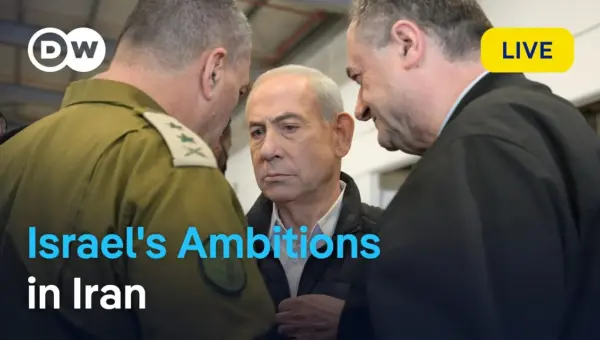
Israel’s Strategy Against Iran Revealed
Israel's strategy to counter Iran's nuclear ambitions and regional influence centers on containment, utilizing a mix of covert military actions, intelligence operations, and diplomatic pressure. Analysts highlight the growing urgency due to Iran's nuclear advancements, while also noting the persistent risk of escalation in the volatile Middle East.
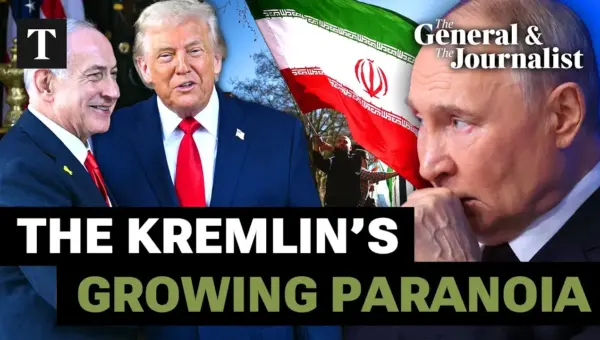
Kremlin Shakes: Elite Discontent Fuels Putin’s Paranoia
Internal turmoil and paranoia are reportedly gripping the Kremlin as President Putin faces growing elite discontent and the realities of the Ukraine war. Meanwhile, Russia's strategic involvement in the Iran conflict highlights complex calculations and potential risks, even as a wider global war remains unlikely.