Global Flashpoints Intensify: From US-China Trade Wars to Shadowy Espionage and Strategic Island Confrontations
A week of intense geopolitical developments saw the US Supreme Court strike down some Trump-era tariffs on China, while extensive Chinese espionage operations targeting US military and advanced AI technology were uncovered. Simultaneously, a critical dispute over the strategically vital Diego Garcia base escalated, involving US, UK, and Chinese interests, alongside increasing military posturing in the South China Sea and China's advancements in robotic warfare.

Global Flashpoints Intensify: From US-China Trade Wars to Shadowy Espionage and Strategic Island Confrontations
In a week marked by significant geopolitical shifts and revelations, the intricate web of international relations has been pulled taut across multiple fronts. From a pivotal US Supreme Court decision impacting President Trump’s tariffs on China to the uncovering of extensive espionage networks and a brewing diplomatic storm over a strategically vital Indian Ocean archipelago, the global landscape is witnessing heightened tensions and strategic maneuvering. These developments underscore a period of profound uncertainty and competition, with the shadow of China’s growing influence looming large over economic, technological, and military domains.
The Digital Battleground: Independent Media Navigates Censorship
Amidst the swirl of international events, independent media outlets continue to grapple with significant challenges in information dissemination. Chris Chappell, host of the prominent YouTube channel “China Uncensored,” recently voiced urgent concerns regarding what he described as “insane” YouTube suppression. Chappell detailed a alarming trend where many viewers reported not seeing his videos for months, or even over a year, with some discovering they had been secretly unsubscribed. This systemic issue, he argued, directly threatens the survival of his show, which consistently posts four episodes per week.
In response, Chappell launched “Operation Honeypot 2: Electric Pugaloo,” an urgent campaign to migrate his audience off YouTube’s platform and onto his independent website, chinauncensored.tv. The initiative aims to secure 3,000 new subscribers to ensure the show’s financial viability and escape what he termed “crushing censorship.” As of a recent update, the campaign had garnered 388 new subscribers, with a special limited-edition “Operation Honeypot” mug offered to the first 200 annual premium plan subscribers, signaling the immediate need for audience support.
This struggle highlights a broader phenomenon impacting independent news organizations globally. As digital platforms increasingly control content visibility through complex algorithms and content moderation policies, concerns about censorship, de-platforming, and algorithmic bias have grown. For channels like “China Uncensored,” which often cover sensitive geopolitical topics, particularly those critical of authoritarian regimes, the risk of suppression is particularly acute. The reliance on external platforms creates a precarious environment for media outlets that depend on direct audience engagement and support to bypass these digital gatekeepers. The push for direct subscriptions and independent hosting represents a growing trend among content creators seeking to preserve editorial independence and ensure consistent reach to their audience, free from the constraints of large tech company policies.
US-China Economic Tensions: Tariffs and Trade Policy in Flux
In a significant development for US-China economic relations, the US Supreme Court delivered a ruling that struck down a substantial portion of President Trump’s tariffs on Chinese goods. The decision specifically targeted tariffs imposed under the International Emergency Economic Powers Act (IEPA), which had been utilized for what were colloquially known as the “Liberation Day tariffs” from the previous year. This immediate fallout from the Supreme Court’s decision signals a potential recalibration of US trade policy, though its full implications are yet to unfold.
The IEPA is a powerful statute typically reserved for national emergencies, granting the President broad authority to regulate international commerce in response to unusual and extraordinary threats to US national security, foreign policy, or economy. Its application to trade tariffs, particularly in such a broad manner, had been contentious, leading to legal challenges. While the Supreme Court’s ruling reduces the scope of these specific tariffs, it is crucial to note that not all tariffs on China have been eliminated. Other significant US tariffs on Chinese imports, such as those on steel and automobiles, remain in effect. Furthermore, tariffs imposed during the Trump administration’s first term also continue to apply.
President Trump’s administration had consistently leveraged tariffs as a key instrument in its trade strategy against China, aiming to address perceived unfair trade practices, intellectual property theft, and the burgeoning trade deficit. The “trade war” initiated under his presidency led to billions of dollars in tariffs on various Chinese products, sparking retaliatory tariffs from Beijing and significantly impacting global supply chains and economic stability. Despite this recent legal setback, officials close to Trump have reportedly been preparing “backup plans” for months, suggesting that a continued aggressive stance on trade with China remains a priority. This indicates that the battle over trade policy, and the strategic use of economic levers, is far from over, irrespective of specific court rulings. The enduring trade friction continues to be a defining feature of the broader US-China rivalry, with both nations seeking to assert economic dominance and protect national interests.
The Expanding Shadow of Chinese Espionage and Foreign Interference
Recent weeks have cast a stark light on the extensive and multifaceted nature of Chinese espionage and foreign interference operations targeting the United States and its allies, ranging from military infiltration to the theft of cutting-edge technology and the intimidation of diaspora communities.
Military Marriage Fraud Scheme Uncovered
The US Department of Justice recently unveiled a shocking “Navy marriage fraud scheme,” charging 11 conspirators involved in a sophisticated plot. According to Immigration and Customs Enforcement (ICE), a Chinese transnational gang orchestrated a scheme to recruit US military personnel to enter into sham marriages with Chinese nationals. The primary objective was to secure green cards for the Chinese nationals, and in some cases, even grant them access to sensitive US military bases. The going rate for participation in these fraudulent marriages was reportedly $45,000 per transaction. This elaborate network, uncovered by undercover agents, has been described as one of the widest-ranging Chinese spy plots ever discovered in the US, with cases spanning across various locations. The implications for national security are profound, as foreign agents gaining proximity or access to military installations could compromise classified information, operational security, and personnel safety.
Australia Confronts Foreign Interference
Australia, a key US ally in the Indo-Pacific, is also grappling with overt Chinese foreign interference. Two Chinese nationals were recently charged in Australia for monitoring a local Buddhist group called Guany Sida on behalf of a Chinese government security agency. The Chinese Communist Party (CCP) labels Guany Sida a “cult,” despite its millions of global devotees who advocate for peace, charity, and the practice of Buddhist scriptures. Australia’s intelligence chief unequivocally condemned this behavior as “utterly unacceptable,” while the Chinese Foreign Ministry urged Australian authorities to “handle the case prudently” — a statement often interpreted as a veiled request to disregard such activities.
Further evidence of the CCP’s extraterritorial reach emerged from the Hungry Panda Delivery Service in Australia. Writers for the service, predominantly Chinese international students, reported being intimidated by Chinese police after organizing protests in Sydney over working conditions and pay. These protests, organized via the Chinese social media app WeChat, led to family members back in China being summoned by police and warned about their relatives’ “dangerous overseas activities.” One writer recounted receiving multiple phone calls, including a direct threat of arrest if she returned to China, despite the protests being held legally in Australia and unrelated to Chinese politics. These incidents underscore the CCP’s use of intimidation tactics against its diaspora abroad, effectively chilling free speech and assembly in democratic nations.
AI Trade Secrets Stolen from Google
The technological dimension of Chinese espionage was highlighted by the conviction of Linwei Leon Ding, a former Google engineer. A San Francisco federal jury found Ding guilty of seven counts each of theft of trade secrets and economic espionage. Evidence presented during his 11-day trial revealed that between May 2022 and April 2023, Ding stole over 2,000 pages of Google’s artificial intelligence (AI) trade secrets, uploading them to his personal Google Cloud account. Prior to abruptly quitting his job and attempting to book a one-way ticket to Beijing, he also made contact with two Chinese tech companies. This case marks the first-ever conviction in the US on AI-related economic espionage charges, underscoring the critical importance of protecting intellectual property in the rapidly advancing field of AI, which is central to national security and economic competitiveness. Ding now faces a potential combined sentence of up to 25 years in prison, signaling the severe consequences of such illicit activities.
Geopolitical Chessboard: Ukraine, Chagos, and the Indo-Pacific
The global geopolitical landscape is further complicated by China’s ambiguous role in the Ukraine conflict, a contentious dispute over a strategically vital archipelago, and escalating military posturing in the South China Sea, each presenting unique challenges to international stability.
China’s Ambiguous Role in Ukraine Conflict
Despite its “no-limits” partnership with Russia, China recently pledged an undisclosed amount of “energy-related humanitarian aid” to Ukraine during a meeting between the Chinese and Ukrainian foreign ministers at the Munich Security Conference. This move, seen by some as an attempt to curry favor with European nations and Canada, comes even as China continues to provide Russia with dual-use materials and purchases sanctioned Russian oil, effectively propping up Moscow’s war economy. While some European officials have expressed hope that Beijing could exert pressure on Russia to end the war, China’s actions often appear contradictory. Its balancing act reflects a desire to maintain strategic ties with Russia while avoiding complete alienation from Western powers, a complex diplomatic tightrope walk with significant implications for the conflict’s trajectory.
Diego Garcia: A Strategic Pawn in the Indian Ocean
A brewing diplomatic and territorial dispute over the Chagos Archipelago is rapidly escalating, with significant implications for US and UK military interests. Earlier this week, four British citizens of Chagosian ancestry returned to the islands, asserting their right of return and setting up a small tent community. This action coincides with the British government’s efforts to finalize a deal that would cede the Chagos Islands to Mauritius, a nation not geographically close to the archipelago. Chagosians, who were forcibly displaced by the British in the 1960s and 70s to make way for a US military base, fear that Mauritius will not facilitate their return to their homeland. They were promptly served eviction notices by the British Indian Ocean Territory Immigration Authority, highlighting the ongoing tension.
Central to this dispute is Diego Garcia, one of the Chagos Islands, which hosts a critical joint US-UK military base — the only US base in the Indian Ocean. This base is a vital hub for air and naval operations, intelligence gathering, and logistical support for operations across the Middle East, Africa, and Asia. The concern for the US and UK stems from Mauritius’s friendly relations with China, with reports indicating that Beijing is already in talks with Mauritius to lease an island in close proximity to Diego Garcia. The proposed deal, reportedly involving a 100-year lease of Diego Garcia with burdensome stipulations for British taxpayers, is widely seen as detrimental to British and US interests, potentially granting China a crucial strategic foothold in the Indian Ocean. Former President Donald Trump intervened via social media, urging UK Prime Minister Starmer not to “lose control” of Diego Garcia. However, Starmer has reportedly defied Trump, denying the US use of the air base for any upcoming strike on Iran. This stalemate underscores the high stakes involved, as the future of Diego Garcia could profoundly alter the balance of power in a critical global maritime region.
Militarization of the Philippines and South China Sea
The South China Sea remains a volatile flashpoint, with increasing military deployments and joint exercises. The US is planning to deploy more advanced missile launchers to the Philippines, a move that China has previously protested. While both countries remain tight-lipped about the specific systems, the Philippine ambassador to the US described them as “very sophisticated” and expressed hopes that the Philippines would eventually acquire its own. This development follows recent talks between the US and the Philippines aimed at increasing joint military drills and protecting freedom of navigation in the South China Sea, while unequivocally denouncing the CCP’s aggressive actions in the disputed waters.
Concurrently, the US, the Philippines, and Australia recently conducted a multilateral maritime cooperative activity within the Philippines’ exclusive economic zone. In response, China, ignoring its own extensive militarization and assertive claims in the region, announced that the People’s Liberation Army (PLA) Southern Theater Command had organized its own naval and air force drills in the South China Sea. Beijing characterized these joint drills by other nations as “stirring up trouble in the area,” further escalating tensions in one of the world’s most strategically important maritime regions. The ongoing military build-up and confrontational exercises highlight the growing risk of miscalculation and potential conflict in the South China Sea, with global implications for trade and regional stability.
The Rise of Robotic Warfare
Adding another layer to China’s global ambitions is its rapid advancement in robotics and artificial intelligence, showcased at its annual Chinese New Year gala with robotic kung fu warriors, “terminators,” and robotic dogs. While some videos of these displays have faced skepticism regarding human control, China’s investment in AI and robotics for military applications is undeniable. The prospect of highly autonomous robotic units on future battlefields raises significant questions about the nature of warfare, ethics, and the strategic advantage they could confer. This technological race is a critical component of the broader geopolitical competition, as nations vie for dominance in emerging military technologies that could redefine global power dynamics.
Conclusion
The confluence of these events — from the legal battles over tariffs and the insidious reach of espionage to the high-stakes diplomatic maneuvers concerning strategic islands and the accelerating arms race in robotics — paints a picture of a world in flux. The enduring US-China rivalry serves as a central theme, manifesting across economic, intelligence, and military domains. As independent media fights for its voice, and nations navigate complex alliances and territorial disputes, the international community faces the imperative of understanding and addressing these multifaceted challenges to safeguard peace, security, and the principles of open societies in an increasingly interconnected and contested global arena.
Source: An Attack on Iran Was Imminent. Then This Happened (YouTube)

Related Articles
Trump: Iran Strikes Ahead of Schedule, Expects ‘Great Deal for World’
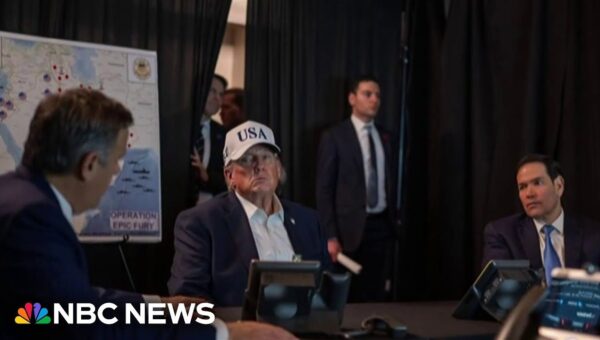
Three U.S. service members have been killed amid escalating conflict with Iran, President Trump confirmed. He stated that strikes are ahead of schedule, with senior Iranian leaders killed, and expressed optimism for a "great deal for the world" despite ongoing talks with Iranian officials.

Trump’s Putin Stance: US Strategy and Global Implications
Analysis suggests Donald Trump's approach to the Ukraine war involves pressuring Kyiv, but US involvement is crucial for resolution. China's influence and the 'MAGA' agenda's geopolitical implications are key factors.


US Strikes Iran: Mounk and Fukuyama Discuss Unpredictable Conflict
Leading political scientists Yascha Mounk and Francis Fukuyama analyze the recent US strikes on Iran, warning of unpredictable outcomes and internal instability. They question the objectives of the "war of choice" and its potential to destabilize the region, while also discussing the shifting global perceptions of Israel.