Gilgo Beach Killer Pleads Guilty to Murdering 8 Women
Rex Heuermann has pleaded guilty to murdering eight women, admitting to strangling and dismembering them. A criminologist's 2011 profile accurately predicted the killer's characteristics, including his meticulous nature and proximity to the crime scenes. The case highlights the role of evolving DNA technology and the complex psychology of serial offenders.

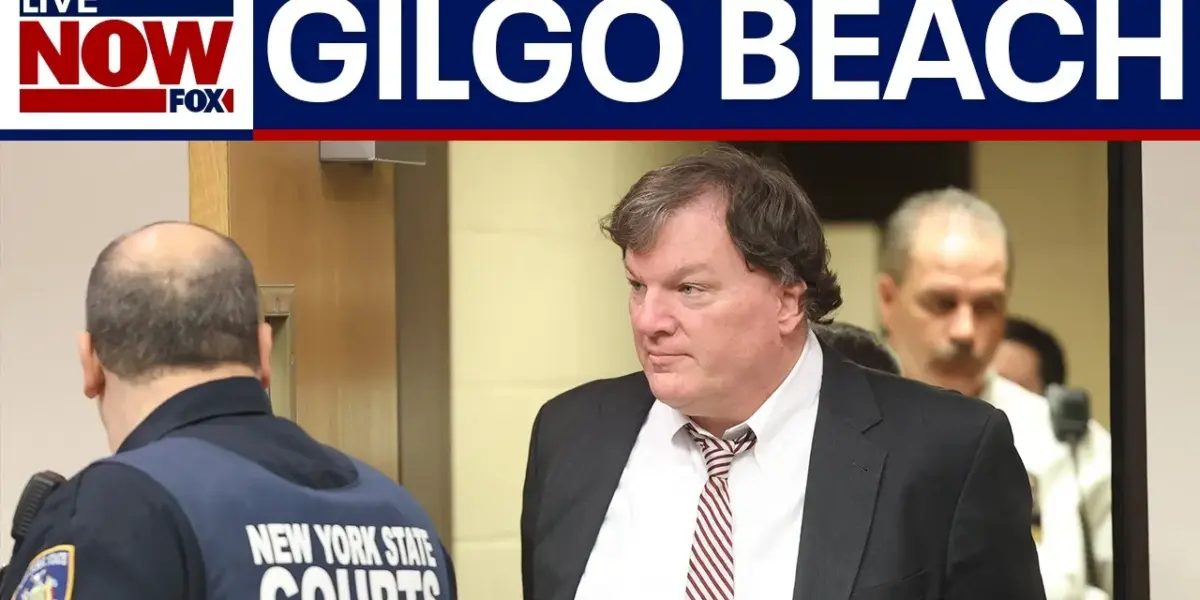
Killer Admits Guilt in Long Island Serial Murders
Rex Heuermann, the suspected Gilgo Beach killer, has pleaded guilty to the murders of eight women. This admission marks a significant turning point in a decades-long case that has haunted the New York metropolitan area. Heuermann confessed to strangling and dismembering eight sex workers, hiding their bodies along desolate stretches of Long Island’s coastline.
Decades-Long Investigation Begins
The grim discovery began in December 2010 with the “Gilgo Four.” Four young women, all sex workers, were found dead in a remote area near Gilgo Beach. Criminologist Dr. Scott Bond, who has studied serial killers for years, explained the initial scene. “Three of them were posed together, wrapped in identical camouflage burlap and similar ligatures,” he noted. “He had created almost like a little shrine, a burial ground. So, we knew right away there’s a serial killer at work.”
Just a few months later, in April 2011, six more bodies were discovered in the same vicinity, bringing the total to ten. This discovery intensified the investigation and captured national attention.
Expert Profile Predicted Killer’s Identity
Dr. Bond, then teaching at Drew University, was asked by The New York Times to create a psychological and behavioral profile of the unknown killer. He predicted a highly organized, meticulous, and detail-oriented individual. This type of killer, known as a “power and control” killer, seeks domination and believes they are omnipotent, similar to notorious figures like Ted Bundy or John Wayne Gacy. Dr. Bond theorized the killer would be a middle-aged white male, possibly a family man, educated, and living openly in plain sight, likely very close to the burial sites.
In 2023, this prediction proved remarkably accurate. Rex Heuermann, an architect trained in mathematics, engineering, and design, was arrested. He lived within viewing distance of where the first four victims were found. Investigators discovered blueprints for murder, dismemberment, and body disposal hidden in a crawl space under his home, showcasing an astonishing level of planning.
Why a Guilty Plea? Understanding the Killer’s Mindset
Heuermann’s decision to plead guilty, rather than face a trial, has intrigued many. Dr. Bond explained that this move likely stems from the killer’s psychopathic nature. “He is an absolute control freak. He’s also what’s known as a malignant narcissist,” Dr. Bond stated. “He did it because he looked at the facts and he saw game over. They’ve got him on at least eight victims where there is DNA directly linking him.”
Instead of facing a trial, Heuermann likely chose the guilty plea to gain a platform. “Rather than than go through the trial where he knows the end result already, why not plead guilty which is going to allow him on his sentencing date to stand before the judge before the victim’s families and simply grandstand and gloat,” Dr. Bond elaborated. This behavior mirrors that of Dennis Rader, the BTK killer, who used his sentencing hearing to describe his crimes in detail.
Demeanor in Court: A Mask of Narcissism
Witnesses and experts noted Heuermann’s demeanor in court as flat and emotionless, consistent with psychopathy. However, a “psychopathic smirk” was observed, which Dr. Bond interprets as a sign of his narcissism. “He thinks he’s smarter than the rest of us and he’s amused by all this,” he said. Heuermann, like other serial killers such as BTK and Son of Sam, appears to crave notoriety and public attention, even after being caught.
Families Seek Justice Amidst Pain
The guilty plea offers a form of closure for the victims’ families, though the pain of their loss remains profound. One victim’s family member shared an emotional statement in court, promising to never stop searching for justice. “Your voice was never silenced. Your story never forgotten. And your life will always mean more than the tragedy that took you,” they stated.
Dr. Bond acknowledged the immense suffering these families have endured. He cautioned that Heuermann, as a sadist and malignant narcissist, might use his sentencing hearing to further inflict pain on the families. “He will do his best to proverbially turn the knife and try to make these families suffer again,” Dr. Bond warned.
Lingering Questions: Are There More Victims?
Despite the guilty plea, Dr. Bond believes there may be more victims yet to be discovered. “I’ve long believed that there are more burial grounds,” he stated. He argues that Heuermann’s insatiable nature would not have stopped him from killing after the Gilgo Four were found. “He remained active. He wasn’t caught, you know, until 2023. I believe tragically that there are yet other burial grounds and other bodies out there to be discovered.”
Evolution of a Killer’s Methods
Dr. Bond’s 2011 profile highlighted the killer’s meticulous nature. He noted that early victims were dismembered and their body parts scattered, suggesting a highly organized approach. As Heuermann evolved, he shifted to wrapping bodies in burlap and leaving them in one location, indicating he felt less need to complicate the disposal once the bodies were not immediately found.
The profile also predicted the killer would be a hunter, given the way the bodies were wrapped, akin to how a hunter might tie up game. This proved true when investigators found over 250 guns and evidence of big game hunting beneath Heuermann’s home. He was also described as charming and persuasive, using these traits to manipulate his victims, who were often small and vulnerable.
Technology’s Role in Solving the Case
The advancement of DNA technology played a crucial role in Heuermann’s arrest. Investigators had collected hair evidence from the victims years earlier, but the technology to extract usable DNA from the hair shaft, rather than just the root, was not sophisticated enough at the time. “They had to wait until DNA analysis had reached a level of sophistication where they could extract it from the shaft of the hair itself,” Dr. Bond explained. Mitochondrial DNA analysis, specifically, was key to matching Heuermann to the evidence, including a pizza crust found at the crime scene.
Looking Ahead: Sentencing and Potential Future Discoveries
The upcoming sentencing hearing in June will be a critical moment. Dr. Bond is particularly interested in observing Heuermann’s demeanor, anticipating it will mirror that of the BTK killer. He also noted that Dennis Rader himself, when consulted in 2011, described the Long Island killer as a potential “clone” or “copycat” of himself. While the sentencing will be emotionally devastating for the victims’ families, it also represents the final chapter in bringing Heuermann to justice for these eight murders. The possibility of further discoveries of victims and burial sites, however, remains a somber prospect.
Source: 'Gilgo Beach killer' pleads guilty to the murder of 8 women (YouTube)

Related Articles


AI Models Show Alarming Bias in Justice System
Advanced AI models are revealing disturbing biases in legal systems, highlighting cases where serious crimes received lenient sentences. These AI insights are prompting crucial conversations about justice and societal values.


Granny Ripper’s Reign of Terror and a Journalist’s Dark Secret
This article delves into three chilling true crime cases: the "Granny Ripper" who murdered and dismembered her landlady in Russia, a family's terrifying encounter with serial killer Aileen Wuornos, and the shocking revelation of a journalist who was himself a serial killer, investigating his own crimes.

Bahamas Disappearance Fuels International Legal Questions
A woman's disappearance in the Bahamas has sparked an international legal investigation. Her husband claims she fell overboard, but her daughter doubts the story. Authorities face challenges proving a crime occurred, with potential charges and jurisdiction issues spanning two countries.