Ghislaine Maxwell’s Legal Maneuvers Hint at Trump Clemency Plot
Ghislaine Maxwell's legal strategy, including her bid to block 90,000 documents and claims of poverty, raises suspicions of a coordinated effort to secure a pardon from Donald Trump. The inconsistencies in her legal claims fuel speculation of a deliberate delay tactic to benefit from potential political intervention.


Maxwell’s Legal Strategy Fuels Speculation of a Trump Deal
Ghislaine Maxwell, currently serving a prison sentence for sex trafficking, has recently engaged in a series of legal filings that have raised eyebrows and fueled speculation about a potential clandestine arrangement with former President Donald Trump. At the heart of the controversy is Maxwell’s attempt to block the release of approximately 90,000 documents from a 2015 civil defamation case brought against her by the late Virginia Giuffre. These documents, related to Maxwell’s own depositions, are now subject to disclosure under the Epstein Transparency Act. However, Maxwell’s legal team is actively seeking to keep them sealed, arguing they contain sensitive information that was improperly handled by the Department of Justice during her criminal trial.
The Epstein Transparency Act and Withheld Documents
The Epstein Transparency Act mandates the release of documents related to Jeffrey Epstein’s crimes. Despite this, Maxwell is arguing that a significant portion of the documents, particularly those from the Giuffre v. Maxwell civil case, should remain confidential. Her legal strategy hinges on the claim that these documents were initially turned over to the government under a grand jury subpoena during her criminal proceedings, and that their release would violate Rule 6E of the Federal Rules of Criminal Procedure, which governs grand jury secrecy. This argument is being made even though the Epstein Transparency Act is generally understood to supersede such protections for the purpose of public disclosure.
Inconsistencies in Legal Representation and Claims of Poverty
A key point of contention highlighted by observers is the apparent contradiction in Maxwell’s legal representation. While she is employing high-profile and presumably expensive legal counsel, including partners from the firm Haden Morgan and Foreman PC, in the civil case seeking to block document release, she has simultaneously filed a habeas corpus petition claiming indigence. In this separate federal proceeding before Judge Analisa Torres in the Southern District of New York, Maxwell is representing herself pro se, asserting an inability to afford legal representation. This apparent discrepancy has led to accusations that Maxwell is employing a strategy of feigned poverty to delay proceedings and manipulate the legal system.
The Habeas Corpus Petition and Fifth Amendment Claims
Maxwell’s habeas corpus petition, filed after exhausting her direct appeals, is often a last resort for prisoners seeking release based on new evidence or claims of unlawful detention. However, the timing and nature of her petition, coupled with her continued invocation of the Fifth Amendment right against self-incrimination, suggest a strategic delay tactic. Critics argue that invoking the Fifth Amendment is unwarranted at this stage, as she has already been convicted and sentenced, and her appeals have been exhausted. The assertion that she needs more time to review the newly released Epstein files, claiming they prove her innocence by suggesting the complainants were not minors, is also met with skepticism, given the overwhelming evidence presented during her trial.
Allegations of a Coordinated Plan with the Trump Administration
The most explosive allegation stems from the suspicion of a coordinated effort between Maxwell’s legal team and individuals connected to the Trump administration. The transcript suggests that Maxwell’s attorney, David Oscar Marcus, hinted at a potential pardon or commutation from Donald Trump in exchange for favorable testimony. Furthermore, the argument is made that Todd Blanche, Trump’s former criminal defense attorney who later took a high-ranking position in the Department of Justice, may have been involved in setting up a deal. The transfer of Maxwell to a more comfortable federal correctional facility in Bryan, Texas, is also cited as evidence of preferential treatment. The overarching theory is that Maxwell is deliberately stalling legal proceedings to run out the clock until the end of a potential second Trump term, at which point she hopes to receive clemency.
Why This Matters
The unfolding legal maneuvers surrounding Ghislaine Maxwell are significant for several reasons. Firstly, they highlight the complex interplay between civil and criminal proceedings, and how legal tools can be used for strategic advantage, including delay. Secondly, the attempt to withhold a substantial volume of documents under the Epstein Transparency Act raises questions about transparency and accountability in cases involving powerful individuals. If Maxwell’s arguments prevail, it could set a precedent for concealing potentially crucial information related to Epstein’s network. Most critically, the allegations of a potential deal with the Trump administration, if substantiated, would represent a profound abuse of power and a subversion of the justice system. It would suggest that high-profile individuals could be shielded from accountability through political intervention, undermining public trust in the fairness of legal outcomes.
Historical Context and Broader Implications
The legal battles surrounding Maxwell are intrinsically linked to the broader Jeffrey Epstein scandal, which exposed a vast network of powerful individuals involved in sex trafficking and abuse. The Epstein Transparency Act was enacted to shed light on this network and ensure that relevant information was made public, a move that has been met with resistance from various parties implicated or seeking to protect their interests. Maxwell’s current legal strategy appears to be a calculated attempt to leverage the complexities of the legal system and the ongoing political landscape to her advantage. The historical context of Epstein’s connections to influential figures, including Donald Trump, adds a layer of gravity to these allegations. The potential for a politically motivated pardon or commutation would echo past controversies surrounding clemency decisions and raise serious ethical questions.
Future Outlook
The future of Ghislaine Maxwell’s legal situation remains uncertain. Her habeas corpus petition and her efforts to block document disclosure are likely to face intense scrutiny from the courts and the public. The Department of Justice will be under pressure to uphold the principles of the Epstein Transparency Act and ensure that relevant documents are released. The allegations of a coordinated plan with the Trump administration, while currently speculative, could lead to further investigations if any concrete evidence emerges. The outcome of these legal battles will not only determine Maxwell’s ultimate fate but also have broader implications for transparency, accountability, and the integrity of the justice system in high-profile cases.
Source: 🚨Ghislaine’s SECRET PLAN with Trump CAUGHT BY MEIDAS!!! (YouTube)

Related Articles

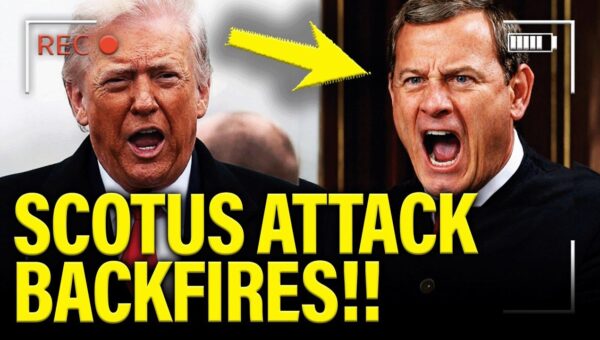
Trump’s SCOTUS Tirade Backfires, Alienating Key Allies
Donald Trump's aggressive attacks on the Supreme Court following a tariff ruling are backfiring, alienating justices and potentially undermining his own legal and political standing. The unprecedented personal assaults are seen as a self-destructive tactic with significant implications for the judiciary's independence.


Trump Open to Iran Talks After Attacks, Shifts on Regime Change
President Trump has agreed to negotiate with Iran's new leadership following recent U.S. and Israeli attacks, signaling a potential shift from his regime change objective. The move has drawn scrutiny from former officials who question the strategic coherence of U.S. policy.

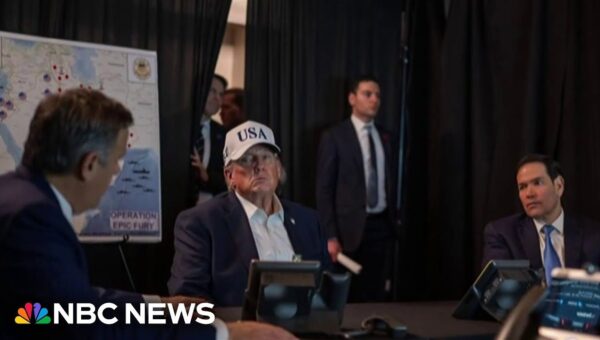
Trump: Iran Strikes Ahead of Schedule, Expects ‘Great Deal for World’
Three U.S. service members have been killed amid escalating conflict with Iran, President Trump confirmed. He stated that strikes are ahead of schedule, with senior Iranian leaders killed, and expressed optimism for a "great deal for the world" despite ongoing talks with Iranian officials.