Germany’s Chancellor Merz Courts China for Trade Amid Global Tensions
German Chancellor Friedrich Merz concluded a significant visit to China, aiming to reset bilateral ties amidst global tensions. The trip focused on trade imbalances, China's support for Russia, and the burgeoning EV market, with mixed signals on potential concessions.

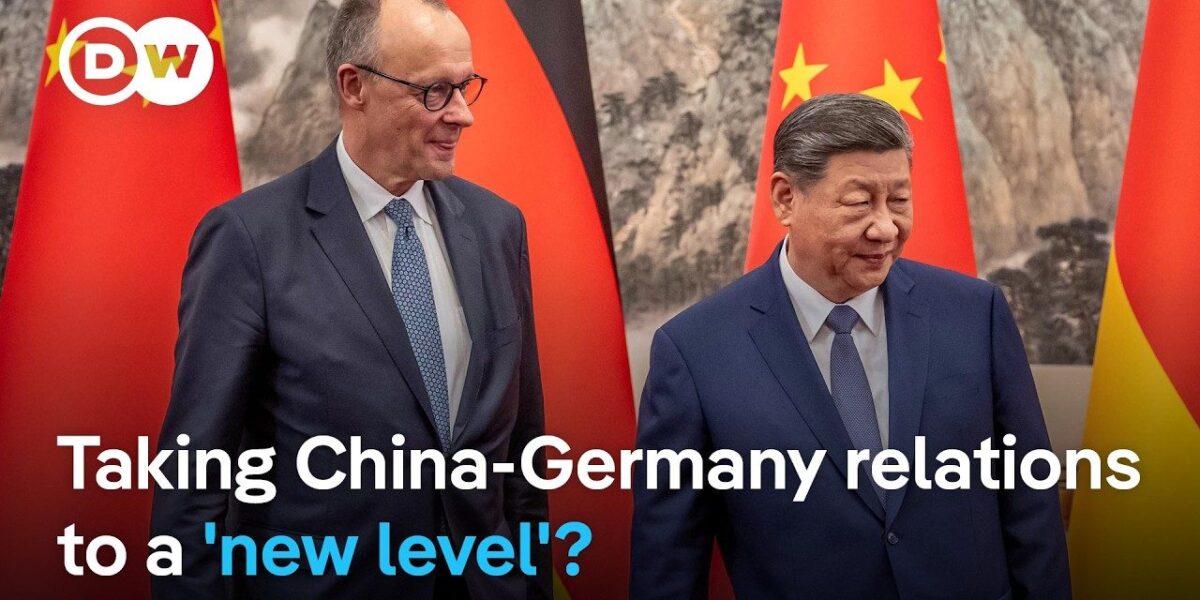
German Chancellor Visits China to Reset Bilateral Ties
German Chancellor Friedrich Merz is on a two-day official visit to China, marking his first trip to the country since taking office. The visit, which began with a meeting with Chinese President Xi Jinping, aims to recalibrate Germany’s complex relationship with Beijing amidst a period of significant global volatility. President Xi expressed a desire to elevate Sino-German relations to a “new level,” while Chancellor Merz highlighted the importance of the trip by announcing China’s agreement to purchase up to 120 aircraft from European manufacturer Airbus.
Economic Imperatives Drive German Engagement
Germany’s economic ties with China are deep-rooted, with China serving as its largest trading partner for decades. The increasing unpredictitability of the U.S. market, characterized by fluctuating tariff rates, has amplified the importance of China for German exporters. Chancellor Merz emphasized the desire to build upon the strong bilateral relationship and foster personal connections with Chinese leadership.
“We have worked very well together over the past few decades. Germany has enjoyed great economic success in China for decades. There has been a good bilateral relationship between China and Germany and I would like to build on that and develop good personal relationships between your prime minister and me and between you and me.”
Thorny Trade Issues on the Agenda
Despite the outward displays of cooperation, the visit is fraught with significant trade challenges. DW’s East Asia correspondent Rick Gloward noted that Chancellor Merz brought several difficult trade issues to Beijing. A primary concern is the substantial trade deficit Germany holds with China. German exports to China have seen a decline, and German brands are facing increased competition from increasingly competitive Chinese manufacturers on the global stage.
Merz’s Key Trade Demands
Chancellor Merz reportedly presented Chinese President Xi with three key requests:
- A reduction in Chinese subsidies for domestic manufacturers, which are perceived to create an unfair competitive advantage.
- An increase in the value of China’s currency, the Renminbi.
- Continued unimpeded flow of critical raw materials from China to Germany.
China’s Response to Trade Concerns
On the Chinese side, President Xi aimed to counter what he described as “rhetoric” from Europe viewing China as a “systemic rival.” He urged Germany and Europe to adopt an “objective and rational” perspective on China. The joint press release indicated that both sides acknowledged each other’s concerns, with China noting German concerns regarding export controls and trade balances.
Geopolitical Fault Lines: Ukraine and Taiwan
Beyond trade, thorny geopolitical issues, including Russia’s invasion of Ukraine and the situation surrounding Taiwan, were also on the agenda. Chancellor Merz has been a vocal critic of China’s perceived support for Russia’s war effort, noting China’s significant purchases of Russian oil and gas, as well as its export of “dual-use” materials and technology that could be utilized in the conflict. Merz reportedly urged China to curb these exports.
“Merz said to that he told China that their words and deeds were taken seriously in Moscow and called for China to curb those exports of dual dual use materials and technology to um to Russia.”
President Xi, according to state media, reiterated China’s stance that diplomacy is key to resolving the conflict and called for “equal participation in talks.” However, observers like Claus Sun, an analyst at the Mercator Institute for China Studies, suggest that Merz’s appeals may have had little impact, given the strengthening relationship between China and Russia, characterized by their “no limits partnership.”
China’s Strategic Framing of the Visit
China has framed Merz’s visit as a reaffirmation of partnership, portraying both nations as “responsible actors on the world stage.” This narrative serves Beijing’s broader objective of presenting itself as a stable and dependable global power, particularly in contrast to the perceived unpredictability of the United States under former President Donald Trump. The influx of Western leaders, including French President Macron and Canadian Prime Minister Trudeau, in recent weeks, assists Xi in solidifying his image as a strong leader within a shifting multilateral order.
“What count for a win for China is that uh it become it become a an option an alternative option especially under the turbulent uh Trump era for the western leaders. So as long as the western leader come to visit uh Beijing, come to visit uh have a visit in Beijing and they’re talking about the narrative that China want to have for example uh stabilization or stability in the uh international order the trade relation wise. I think that is a win for China already.”
The Electric Vehicle Conundrum
The burgeoning electric vehicle (EV) market presents a complex challenge. China has significantly outpaced European manufacturers in EV development and market penetration. While China faces domestic overcapacity issues and seeks stable export markets, Germany’s auto industry, a cornerstone of its economy, is concerned about its competitive position.
Potential Concessions and Market Access
China appears keen on securing stable markets for its EVs in Europe, especially as its domestic economy faces pressure. A potential concession from China could involve price controls or minimum pricing for EV sales in Europe, which could help manage overcapacity domestically and maintain stable bilateral economic relations. However, the extent to which China will address its industrial overcapacity and reduce the perceived dependence of German industry on China, which carries national security implications, remains to be seen.
Human Rights and the Shadow of Russia
Human rights concerns, particularly the treatment of the Uyghur ethnic minority in Xinjiang, and China’s stance on Russia’s invasion of Ukraine, remain significant points of contention. European nations are seeking China’s pressure on Russia to halt the war and an end to human rights abuses. However, it is widely acknowledged that these issues are unlikely to yield concrete concessions from China.
“Human right-wise I think there’s not a part to consider uh human right for wigur in shing jang that is a issue but uh again what are the leverage to make it happen right to make uh China to to concede I also think uh there’s not that much but China’s happy to talk about economy and these to kind of get these more hard politics issue >> being put away so that’s what I see here so far.”
Analysts suggest that while Europeans will publicly address these concerns, the “real business” of the visit will likely focus on economic matters. China views its relationship with Russia as crucial to its national interests and has shown no signs of altering its support. The leverage Germany possesses to compel significant concessions from China on these fronts appears limited, with Beijing preferring to focus discussions on economic cooperation.
Looking Ahead
Chancellor Merz’s visit underscores the delicate balancing act Germany faces in its relationship with China—navigating economic interdependence while addressing critical geopolitical and human rights concerns. The outcomes of this trip will be closely watched to gauge the future trajectory of Sino-German relations and their broader implications for Europe’s engagement with Beijing in an increasingly complex global landscape. The focus will now shift to whether tangible actions follow the diplomatic exchanges, particularly concerning trade imbalances and China’s international conduct.
Source: What does Germany's Friedrich Merz want from China during his trip? | DW News (YouTube)

Related Articles
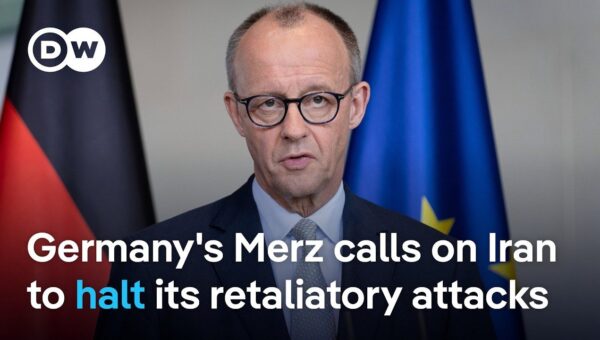
Germany on US-Israel Strikes: No “Lecturing” Partners
Germany's Chancellor Scholz calls on Iran to end its attacks and nuclear program but refrains from "lecturing" US-Israel on international law regarding recent strikes. Berlin increases security for Jewish institutions amid fears of retaliation.


Germany’s Fake Laws: AI Disinformation Campaign Exposed
Viral AI-generated videos falsely claim Germany has enacted absurd laws, including fines for flushing toilet paper. Experts reveal a disinformation campaign aiming to portray Germany as chaotic, with potential commercial or political motives behind the fabricated content.
Taiwan’s Nuclear Dilemma: Deterrence or Disaster?
As China expands its nuclear arsenal and military presence, the question of whether Taiwan should possess nuclear weapons or host U.S. nuclear arms gains urgency. The debate weighs the potential for deterrence against the risks of escalation, drawing parallels to Ukraine's disarmament and Taiwan's own past nuclear ambitions.