Germany Slams US Easing of Russian Oil Sanctions

Germany Criticizes US Decision to Loosen Russian Oil Sanctions
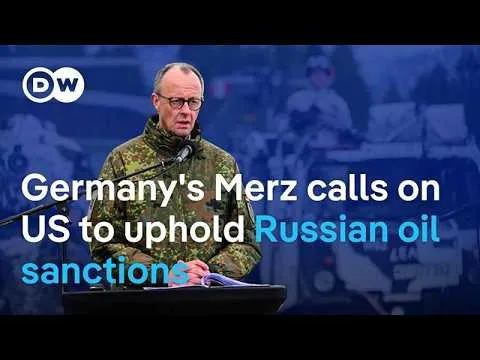
Berlin, Germany – German Chancellor Fred Merz has publicly criticized a reported decision by the United States to ease sanctions on Russian oil, warning that such a move would be a “mistake” that could inadvertently fund Moscow’s ongoing war in Ukraine. The comments came during Merz’s visit to Norway, where he emphasized the unified stance of the G7 nations against any relaxation of pressure on Russia.
G7 Disagreement and Concerns Over Ukraine
Merz revealed that six out of the seven G7 members had expressed a clear consensus against lifting sanctions. The apparent unilateral decision by the US government has caught other G7 nations by surprise, raising concerns about the cohesion of the alliance. “We learned this morning that the US government has apparently decided otherwise. Once again, we believe this is the wrong decision,” Merz stated, questioning the motives behind the US administration’s shift.
DW’s chief political editor, M. Kushner, who was present during Merz’s remarks, highlighted the unusual nature of such open criticism from a German chancellor towards a US sanctions decision. Kushner explained that while such direct opposition to US policy, particularly under the Trump administration, has become more frequent, the G7’s inability to maintain a unified front is a significant concern.
“This caught the other six by surprise and that in itself is a problem that the G7 cannot come to a conclusion that is then stuck by by the US president.”
The implications for Ukraine are particularly worrying. German Defense Minister Boris Pistorius echoed Merz’s concerns, stating that any move that bolsters Russia’s financial position would be to Ukraine’s disadvantage. Pistorius argued that reducing Russia’s oil income is crucial to bringing President Putin to the negotiating table, and that the US decision does the exact opposite.
Criticism of Iran Strategy and Middle East Policy
Beyond the Russian oil sanctions, Merz also called for a “convincing plan” for an end to the Iran conflict, another pointed critique of the Trump administration’s approach. Merz has adopted a strategy of questioning the logic behind unilateral US decisions rather than directly opposing them. While stopping short of calling the US approach a violation of international law, he clearly expressed skepticism about the administration’s plan for the day after a potential conflict resolution.
Government sources indicate that European nations are actively engaging with regional partners on Iran, sensing a significant lack of a clear strategy from the US. The concern is that unilateral decisions by the US to end the conflict could overlook the complex realities on the ground, including Iran’s strategic leverage over the Strait of Hormuz, through which a significant portion of global oil passes. This could lead to sustained high oil prices, even if supply routes remain open.
European Strategy and Transatlantic Tensions
The European Union is seeking to formulate a unified strategy ahead of an upcoming summit. However, divisions persist, with countries like Hungary reportedly aligning with US positions on certain issues. The challenge for Europe is to demonstrate proactive leadership rather than merely reacting to US policy shifts. This situation is viewed as a continuation of growing tensions in the transatlantic relationship.
Benjamin Schmidt, a former European Energy Security Adviser to the US State Department, affirmed that Chancellor Merz’s assessment is correct. He argued that relaxing sanctions, even temporarily, undermines Western leverage and transatlantic unity on Russia. Schmidt pointed out that the current oil price spike is driven by geopolitical factors, not a genuine supply shortage, and that the US decision has not significantly impacted global oil prices.
“I think Chancellor Merittz is is absolutely correct to say that this is a wrong move as he said by the Trump White House to uh relax sanctions even if temporarily on Russia’s oil supplies.”
Schmidt drew parallels to the waiver on Nord Stream 2 construction in 2021, suggesting that such decisions provide a green light to Russian aggression. He also highlighted the potential for the current waiver to be extended beyond its April 11th expiration date, further weakening resolve against Russia.
Concerns Over Russian Oil Revenue and Shadow Fleet
Experts are concerned that easing sanctions allows Russia to continue earning revenue through its “shadow fleet” of oil tankers, which operate with minimal insurance and quality control. Recent interdictions of these vessels by European nations and the US were seen as a growing pressure point on the Kremlin, a pressure that the current waiver potentially alleviates.
The Russian Foreign Ministry’s claim that the easing of sanctions proves Russia’s necessity for global energy security was dismissed by analysts. They argue that if the Strait of Hormuz were not a point of contention, Russia’s oil would not be essential to global supply, given that ample supplies exist elsewhere. The price spikes are attributed to market reactions to geopolitical instability.
Call for Congressional Oversight and Unity
The Countering America’s Adversaries Through Sanctions Act (CATSA) of 2017 includes a provision requiring congressional approval for significant changes to US sanctions policy towards Russia. Analysts are urging the US Congress, particularly the Senate Foreign Relations Committee and the House, to exercise oversight and ensure that any temporary waiver does not become a permanent shift in policy.
The current situation is seen as a reflection of deeper divisions within Europe and between the US and its European allies regarding how to handle Russia. The ongoing disputes, coupled with differing approaches to international conflicts, strain NATO and transatlantic unity. There is a call for renewed US leadership to restore pressure on Russia through robust sanctions, export controls, and interdiction of illicit activities, aligning with the principle of “peace through strength.”
Source: Merz calls on US to uphold Russian oil sanctions | DW News (YouTube)

Related Articles


Nigeria’s ‘Kito’ Scam Targets LGBTQ+ People with Violence
Nigeria's LGBTQ+ community is facing a surge in violent 'Kito' scams, where victims are lured online, ambushed, beaten, and blackmailed. Rights groups report over 50 cases since December, highlighting the dangerous exploitation of anti-gay laws and societal homophobia. Survivors share harrowing accounts of physical and emotional trauma, living in constant fear.


White House Launches “OnlyFarms” Website for Farmer Support
The White House has launched "OnlyFarms," a new website at onlyfarmms.gov, to highlight benefits and support for American farmers facing rising costs. The initiative aims to showcase how administration policies are intended to ease financial burdens and lower prices for both producers and consumers.
House Funds DHS, But Senate Deal Unlikely Amid Shutdown
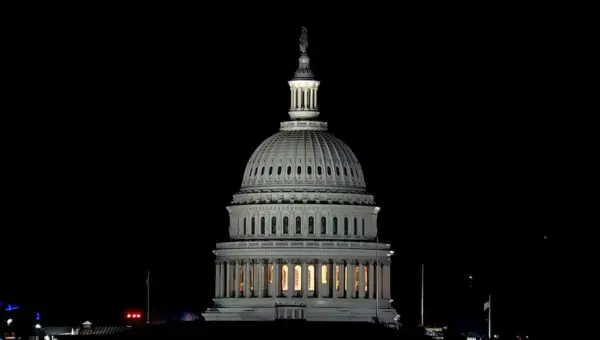
The House of Representatives has passed a bill to fund the Department of Homeland Security, but the measure is unlikely to pass the Senate. TSA workers, who have faced missed paychecks and disruptions, may receive some pay soon due to a presidential order, but the broader shutdown continues.