Germany Navigates China Ties Amid Economic Reliance and Geopolitical Risks
German Chancellor Olaf Scholz is in Beijing for crucial talks with President Xi Jinping, aiming to balance economic interdependence with geopolitical concerns. Germany seeks to address trade imbalances and fair competition while China eyes market access and strengthening its role in global trade.

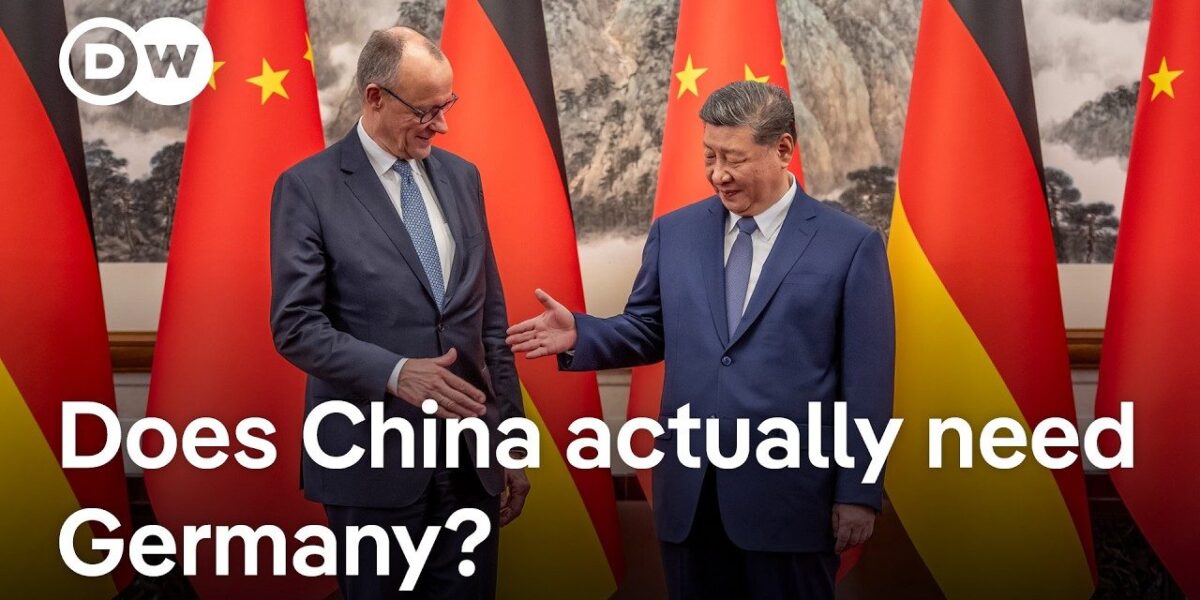
German Chancellor in Beijing Amid Economic and Security Concerns
German Chancellor Olaf Scholz is in Beijing for high-stakes talks with Chinese President Xi Jinping, marking his first visit to China since assuming office. The meetings are expected to address a complex agenda encompassing economic cooperation, security issues, and Germany’s significant trade relationship with China, which was its largest trading partner in the previous year. Scholz’s visit positions him as the latest Western leader attempting to recalibrate diplomatic and economic ties with Beijing.
Key German Priorities: Trade Imbalances and Fair Competition
Dr. Yuen Yuen Ang, a senior research fellow on China at Chatham House, outlined three primary objectives for Germany during the visit. Firstly, Germany aims to address the substantial trade imbalances that exist between the two nations. Secondly, German companies are seeking a commitment from Chinese authorities to a more equitable “level playing field” in the market. This includes concerns over critical mineral export controls imposed by Beijing, which disproportionately affect Western businesses. Thirdly, Germany is looking to ascertain China’s precise stance on Russia’s invasion of Ukraine, a critical geopolitical issue.
“These are three incredibly difficult discussions and conversations that this chancellor is going to have with the presidency,” Dr. Ang commented on the complexity of the agenda.
China’s Objectives: Market Access and Multilateralism
From China’s perspective, President Xi Jinping is likely keen to leverage the visit ahead of the Chinese Communist Party’s upcoming five-year plan. Many Chinese companies are actively seeking opportunities beyond their domestic market, viewing Germany as a prime destination for investment. These companies are looking for alternative markets to sell their goods and secure returns on investment. Furthermore, the Chinese government appears interested in positioning itself as a defender of the existing multilateral trading system, aiming to foster closer partnerships with U.S. allies in both Europe and Asia.
Mutual Dependence: A Complex Economic Interplay
The question of economic dependence between Germany and China is multifaceted. While trade figures suggest a greater German reliance on the Chinese market, the dynamic is not entirely one-sided. Dr. Ang noted that with China’s current domestic economic slowdown, many Chinese companies are actively seeking alternative investment destinations, with Germany, the UK, and other European countries being key targets. This indicates that while Germany depends heavily on China, China also relies on Germany for market access.
Avoiding a “New Dependency”: The D-Risking Strategy
Recalling Germany’s past reliance on Russian gas for energy security, concerns have been raised about the potential for a “sleepwalking” into a new dependency on trade with China. The current German government, along with its predecessor, has extensively discussed a “de-risking” strategy. However, the practical implementation of this strategy remains a significant challenge. Dr. Ang emphasized that this debate needs to extend beyond political elites in Berlin to the broader German electorate, fostering a clear understanding of the benefits and costs associated with engagement with China.
Navigating a Tightrope: Balancing Economic Interests and Political Values
DW political correspondent Barbara Vormeier highlighted the delicate balancing act Chancellor Scholz must perform. On one hand, he must champion German economic interests, given the nation’s significant reliance on China as its largest trading partner. On the other hand, he is compelled to maintain a political distance from China’s autocratic, one-party system, where human rights remain a significant concern, and China’s continued support for Russia’s war in Ukraine is a major point of contention.
Chancellor Scholz himself has stressed that the partnership with China must be “difficult” and “fair,” aiming to bolster existing ties while simultaneously urging China to alter its policies in specific areas. Vormeier described this as finding an “equilibrium” between distance and partnership.
Limited Leverage in a China-Centric Global Economy
The tools at Germany’s disposal to influence China’s policies are considered limited. The German economy and its companies are deeply integrated into global supply chains, with significant dependencies on China for crucial resources like rare earth elements and semiconductors. German companies also establish manufacturing bases in China due to lower production costs.
Conversely, Germany and other EU nations argue that competition is often unfair, citing Chinese state subsidies and a low-valued currency that enables the flooding of European markets with inexpensive goods. However, the leverage appears to rest more with China, given the widespread dependencies of Germany and other EU countries on Chinese imports.
Furthermore, Chancellor Scholz must coordinate his policies within a broader European framework. The recent visits of French President Emmanuel Macron and British Prime Minister Rishi Sunak to Beijing underscore the diverging interests and approaches among European nations. While these leaders also seek to assert their own national interests, their economic leverage is constrained. Politically, demands for China to sever ties with Russia are unlikely to yield results, making it challenging for the German Chancellor to achieve tangible outcomes on the ground.
Looking Ahead: The Future of German-Chinese Relations
Chancellor Scholz’s visit underscores the complex and often contradictory nature of the relationship between Germany and China. As Germany seeks to “de-risk” its economic ties without completely severing them, the coming months will be crucial in observing how these strategies are implemented. The ability of Germany and the EU to present a united front and exert meaningful influence on China’s trade practices and geopolitical stances will be a key determinant in shaping the future of this critical global partnership.
Source: How dependent are Germany and China on each other? | DW News (YouTube)

Related Articles
Germany on US-Israel Strikes: No “Lecturing” Partners
Germany's Chancellor Scholz calls on Iran to end its attacks and nuclear program but refrains from "lecturing" US-Israel on international law regarding recent strikes. Berlin increases security for Jewish institutions amid fears of retaliation.


Germany’s Fake Laws: AI Disinformation Campaign Exposed
Viral AI-generated videos falsely claim Germany has enacted absurd laws, including fines for flushing toilet paper. Experts reveal a disinformation campaign aiming to portray Germany as chaotic, with potential commercial or political motives behind the fabricated content.
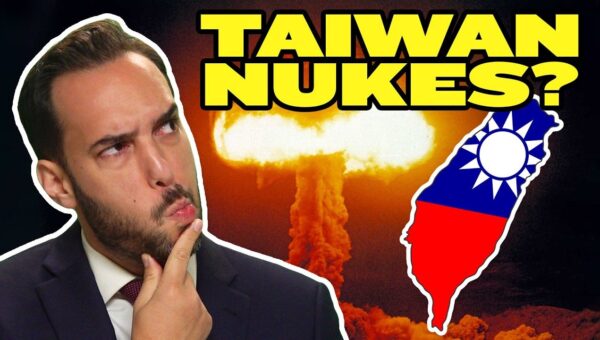
Taiwan’s Nuclear Dilemma: Deterrence or Disaster?
As China expands its nuclear arsenal and military presence, the question of whether Taiwan should possess nuclear weapons or host U.S. nuclear arms gains urgency. The debate weighs the potential for deterrence against the risks of escalation, drawing parallels to Ukraine's disarmament and Taiwan's own past nuclear ambitions.