Germany Limits Fuel Price Hikes to Once Daily
Germany has implemented a new law restricting gas stations to raising fuel prices only once per day, aiming to increase market transparency. While intended to curb price gouging, many drivers remain skeptical, citing the ongoing financial strain of high fuel costs. Experts suggest the measure may offer psychological comfort but won't fundamentally alter price increases, potentially leading to longer queues before the daily adjustment.

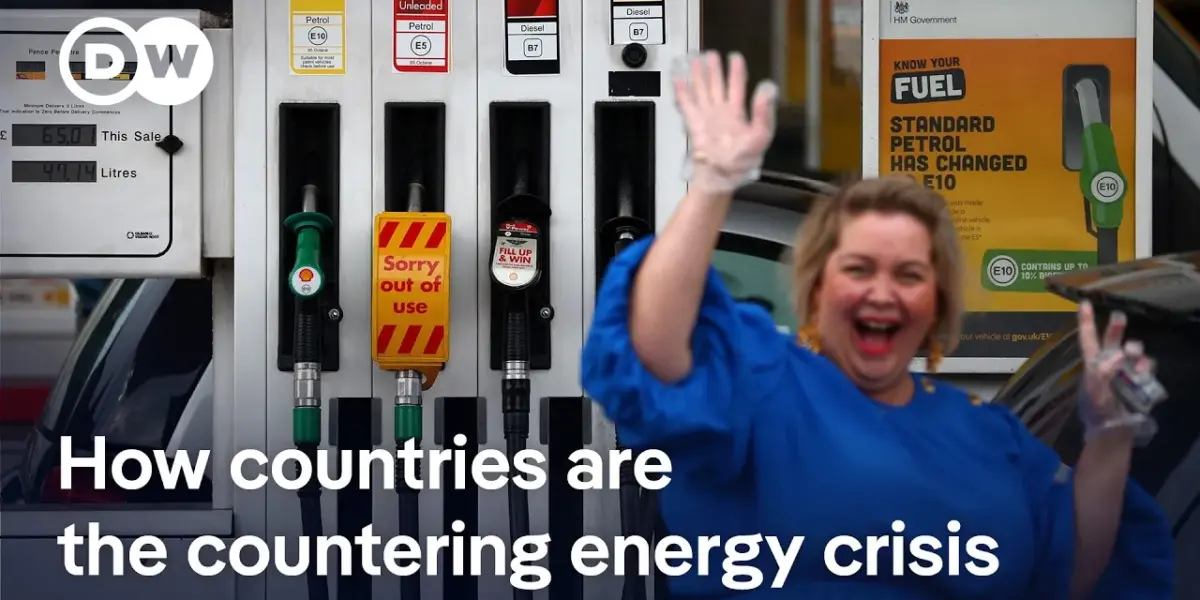
Germany Restricts Fuel Price Changes to Once Daily Amid Energy Crisis
Germany has introduced a new law limiting gas stations to increasing fuel prices only once per day. This measure, effective immediately, aims to bring transparency and stability to the volatile energy market. Regulators will also have more power to combat illegal price gouging and fixing. The change means that fuel prices can now only be adjusted upwards at noon each day, a system inspired by Austria’s approach.
Why the New Restrictions?
The German government’s decision comes as global oil prices continue to climb, driven partly by ongoing conflicts in the Middle East. Politicians stated the goal is to make the fuel market more understandable for consumers and to prevent rapid, frequent price changes. Previously, prices could fluctuate multiple times within a single day. “We will stop prices from being changed up to 50 times a day,” a government spokesperson explained. However, not everyone believes this will solve the problem.
Drivers Express Skepticism
Many drivers at the pump remain unconvinced that the new law will significantly ease their financial burden. For individuals like taxi drivers or those who rely heavily on their vehicles for work and daily life, the cost of fuel is a major concern. “I can’t really afford it, but I have no choice. I work as a taxi driver. I need fuel. Otherwise, I can’t make a living,” shared one driver. Another individual, who uses their car due to a disability, added, “I have to drive a car. I’m disabled. I can’t walk far. I rely on my car.”
Personal Adjustments to High Fuel Costs
Some people are already making changes to cope with the rising prices. One person mentioned switching to a bicycle for their 5-kilometer commute to work, supported by fuel vouchers from their employer. “So for me it’s not that bad. I can manage the higher prices,” they said. Others have proactively reduced their driving. “I had already started driving less and that’s paying off now,” a commuter noted.
Calls for Stronger Government Action
Critics argue that the new measure doesn’t go far enough and point to a perceived lack of political will to address the root causes of high energy costs. “What’s the point? Refineries still aren’t being transparent. They raise prices however they want just to fill their own pockets,” one concerned citizen stated. They also contrasted the struggles of ordinary people with the financial security of politicians. “At the politicians, they earn €30,000 a month. And they don’t need to worry about this at all. I think there were levers they could pull, but I don’t see much interest in doing that right now.”
Expert Analysis: Psychological Comfort vs. Real Relief
Sean Hyatt, an energy expert and professor at the University of Southern California, offered his perspective on Germany’s new approach. “I think psychologically this is one way to alleviate some of the price at the pump if individuals know that the prices will only rise once a day,” Hyatt explained. However, he cautioned that prices will still increase. “Instead of having smaller jumps during the day, you’re going to have a larger jump at noon. So, they’ll still be paying it.” Hyatt also predicted a possible unintended consequence: longer queues at gas stations just before the noon price change. “The only unintended consequence could be like longer lines at about 11:00 in the morning,” he noted.
Broader Implications: Energy Security and Imports
When asked about potential heavier government interventions if the crisis continues, Hyatt highlighted the complexities. “There’s not much you can do at this point because all of this takes infrastructure,” he stated. Many oil and gas companies have reduced refinery operations in Europe over recent years, making the continent heavily reliant on imports. “Europe has become extremely dependent upon imports; that imports 60% of all of its essentially energy needs,” Hyatt revealed. This situation is prompting many countries to rethink their energy security strategies.
Individual Actions and Macroeconomic Impact
Regarding the impact of individual actions like carpooling or using public transport, Hyatt suggested it has a dual effect. On a personal level, it conserves resources and saves money, especially as rising energy prices affect other goods like food. “You’re obviously going to conserve those resources for your own household for food which are which by the way as energy prices rise everything else rises in tandem,” he said. On a larger scale, widespread adoption of these habits could extend existing fuel reserves, particularly in countries with dwindling supplies, like South Korea or Europe. “If people start carpooling, they ride their bike, and there’s less consumption, that essentially extends the amount of days of stocks that Europe has,” Hyatt explained.
The Debate Over Windfall Profit Taxes
The conversation also touched upon the profitability of major oil companies during the current crisis and the idea of windfall profit taxes. Hyatt acknowledged that such taxes could be a short-term measure to redistribute profits and help citizens. However, he warned of potential long-term negative effects. “Historically, these windfall taxes always have a long-term negative effect,” he stated. Citing examples like the UK and Norway, Hyatt noted that companies might choose to leave, reducing future production capacity and increasing reliance on imports. “The companies just leave. And so what that does then is it leads to every subsequent potential crisis becomes even larger because now there’s just nobody producing,” he concluded.
Looking Ahead
Germany’s new rule is a step towards managing fuel price volatility, but its long-term effectiveness remains to be seen. As global energy markets continue to be influenced by geopolitical events and supply chain issues, consumers and governments alike will be watching closely for further developments and potential solutions to ensure energy security and affordability.
Source: Germany restricts fuel price hikes to once a day as energy crisis deepens | DW News (YouTube)

Related Articles
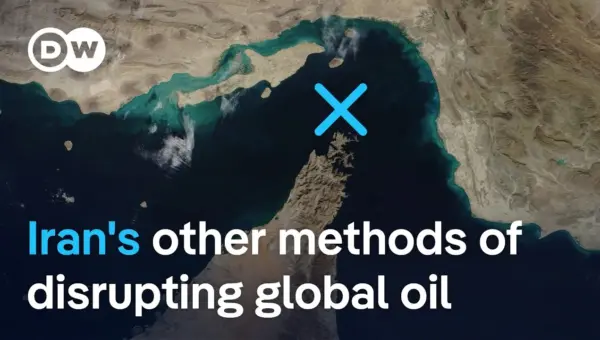
Iran Controls Strait of Hormuz, Threatens Global Economy
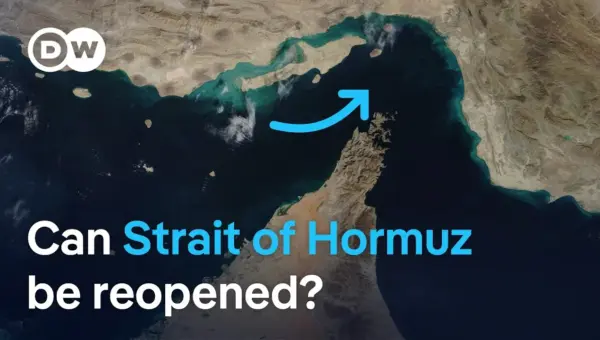
Iran has effectively gained control of the Strait of Hormuz, directing ships through its territorial waters and charging fees, a move that has slowed global shipping to a trickle. This "toll booth" strategy, rather than a full blockade, is causing significant economic disruption and raising concerns about global energy supplies and insurance liabilities.

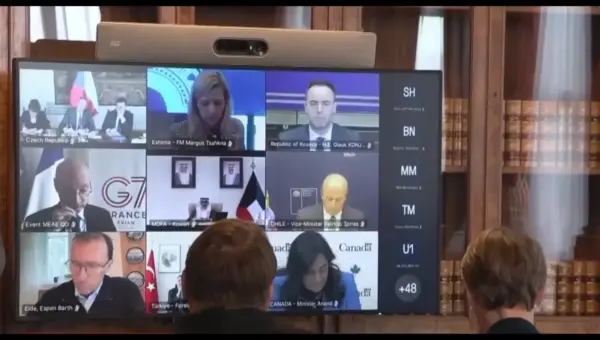
Global Powers Unite: 40 Nations Target Iran Over Strait of Hormuz
Over 40 nations have joined forces to discuss reopening the crucial Strait of Hormuz, which Iran is accused of blocking. The international effort follows calls for global responsibility in securing the vital waterway. Talks aim to restore the flow of oil traffic without resorting to force.
Allies Must Reopen Strait of Hormuz, US Urges
The critical Strait of Hormuz remains closed, impacting global oil prices and trade. Allies are urged to help reopen the vital passage, but military intervention is complex. Experts discuss diplomatic, economic, and military strategies, highlighting the distinction between naval and sea power.