Germany Faces Dilemma After US-Israel Iran Attacks
Germany faces a diplomatic dilemma following US-Israel attacks on Iran, forcing Chancellor Scholz to weigh international law against pragmatic power politics. The situation was highlighted during Scholz's recent visit to Washington, where he met with President Trump amidst escalating Middle East tensions and ongoing discussions on Ukraine and trade.

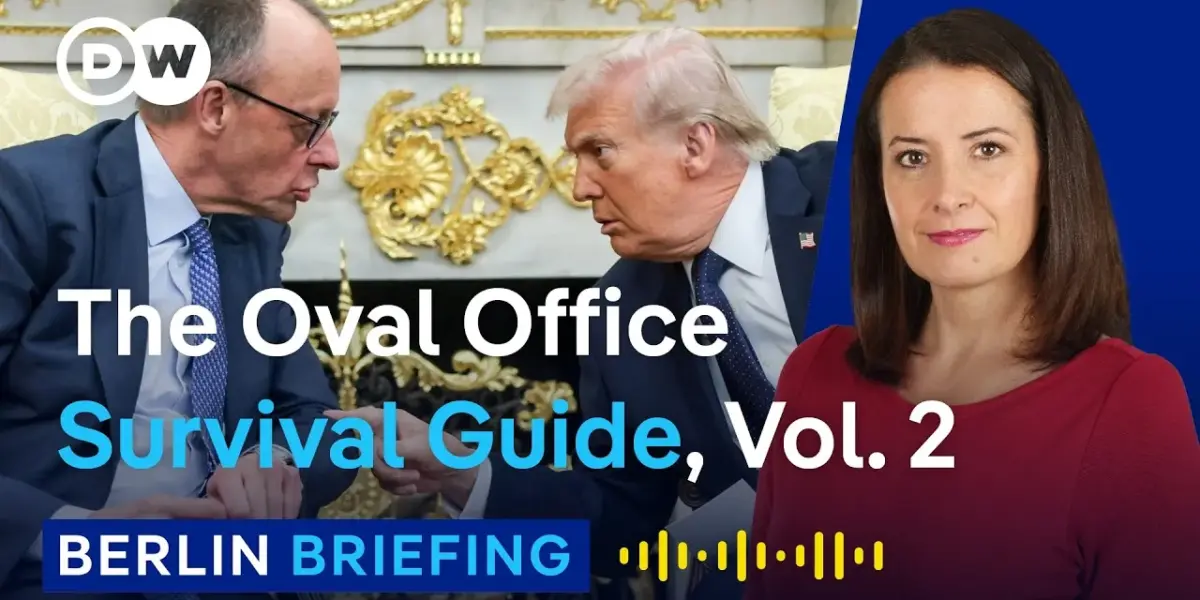
Germany Navigates Shifting Global Power Dynamics Post-Iran Strikes
In the wake of coordinated US and Israeli attacks on Iran last weekend, which have escalated tensions across the Middle East, Germany finds itself in a precarious diplomatic position. The situation has forced Chancellor Olaf Scholz to confront a stark choice: condemn the actions as a violation of international law or accept a pragmatic approach prioritizing power over legal principles. This dilemma was underscored during Scholz’s recent visit to Washington D.C. to meet with President Donald Trump.
Scholz’s Pragmatic Stance on International Law
Upon the news of the attacks, Chancellor Scholz articulated a position that acknowledged the complexity of the situation. He stated that while condemning Iran’s violations of law and imposing sanctions had proven ineffective over decades, there might be a point where military action becomes a necessary, albeit unwelcome, option. “Now is not the time to lecture our partners and allies,” Scholz remarked, signaling a departure from the more principled stance often adopted by previous German administrations. This approach contrasts sharply with the reaction of Spanish Prime Minister Pedro Sanchez, who unequivocally condemned the intervention as “unjustified, dangerous military intervention that is outside international legality” and lacking authorization from the UN Security Council.
“Now is not the time to lecture our partners and allies. Despite all our doubts, we share many of their goals without being able to actually achieve them ourselves.”
Olaf Scholz, Chancellor of Germany
Washington Visit: Ukraine, Trade, and the Iran Conflict
Chancellor Scholz’s visit to Washington was dominated by the escalating situation in the Middle East. However, his primary objectives were to secure further support for Ukraine, including pushing President Trump for stronger commitments against Russian aggression, and to address unresolved trade disputes, particularly concerning US tariffs. The meeting in the Oval Office, a setting often used by Trump for public pronouncements, became a focal point for international press inquiries regarding the Iran conflict.
Enis Paul, Deutsche Welle’s Washington bureau chief, who was present in the Oval Office, noted the differing discourse in the US compared to Europe. While European nations debated the legality of the strikes, the US public and political sphere were more concerned with the implications for American military personnel and the potential for broader conflict. Paul also highlighted the internal political dynamics within the US, where Trump’s promise to avoid prolonged foreign wars is a key factor for his base.
The Oval Office Spectacle: Trump’s Style and German Diplomacy
The press encounter in the Oval Office, a format largely shaped by President Trump himself, was characterized by its unpredictable nature. Journalists jostle for a chance to ask questions, and Trump often veers into tangential criticisms. During the meeting with Scholz, Trump notably lashed out at Spain for its perceived lack of contribution to NATO defense spending, even threatening trade repercussions. This outburst left Chancellor Scholz in an awkward position, appearing to not defend a fellow European ally publicly at that moment.
However, following the closed-door discussions, Scholz attempted to mitigate the damage. He stated that he had advocated for Spain and Britain, emphasizing their importance as partners. “We are trying to convince Spain to catch up with the 3% or 3.5% which we agreed on in NATO,” Scholz said, attempting to frame the issue as a matter of collective security commitments.
Germany’s Shifting Role in International Law
The events have prompted a re-evaluation of Germany’s traditional adherence to international law as a cornerstone of its foreign policy. The podcast hosts and guests discussed whether Germany, under current geopolitical pressures, is moving towards a more power-centric foreign policy. “He [Scholz] has given up on the whole concept of international law to define the future division of power in the world. He doesn’t insist on it anymore,” one commentator observed, suggesting a significant historical shift for Europe’s leading economy.
This perceived shift leaves Spain, represented by Prime Minister Sanchez, to voice the principles that Germany appears to be de-emphasizing. The situation highlights a broader concern about the erosion of international legal frameworks and the increasing reliance on military power. The United Nations and other international institutions are also facing challenges, with the US’s commitment to funding and upholding these bodies in question.
European Unity Tested Amidst Global Instability
The fragmentation of European responses, exemplified by the differing stances of Germany and Spain, raises questions about the continent’s ability to present a united front on critical global issues. While there is a consensus among many Europeans that the current trajectory is dangerous, achieving a common voice remains a challenge. Factors such as upcoming elections in Hungary and China’s role in global affairs are seen as significant variables that could influence future European unity and the broader geopolitical landscape.
The podcast also touched upon the unexpected role Ukraine might play, given its expertise in countering Iranian-supplied drones used by Russia. This could potentially shift leverage in favor of Kyiv in its dealings with the US. The ongoing conflict in the Middle East and its potential to draw in more global actors, coupled with the US’s upcoming midterm elections, adds another layer of uncertainty to the already volatile situation.
Looking Ahead: The Future of Global Order
As the Middle East teeters on the brink of further escalation, and with the US under a presidency known for its unpredictable foreign policy, the international order faces a critical juncture. Germany’s apparent shift from strict adherence to international law towards a more pragmatic, power-based approach signals a significant change in global diplomacy. The coming weeks will be crucial in determining whether Europe can forge a cohesive response and how the evolving dynamics between major global powers will shape the future of international relations.
Source: Principle vs power: Merz, Trump & the Iran War | Berlin Briefing Podcast (YouTube)

Related Articles
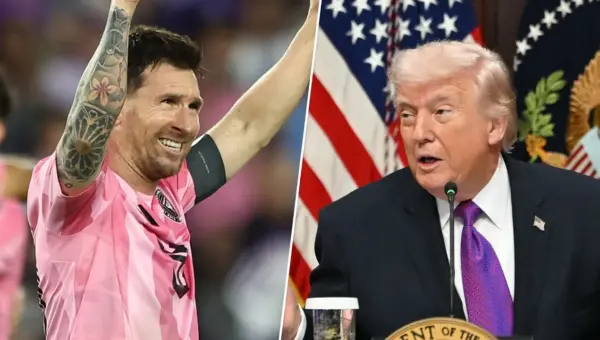
Trump Welcomes MLS Champs Inter Miami to White House
Former President Donald Trump hosted Major League Soccer champions Inter Miami CF at the White House on Tuesday to celebrate their historic MLS Cup victory. The ceremony recognized the team's remarkable season and featured the presence of global soccer star Lionel Messi.
New Epstein Files Ignite Pressure on AG Pam Bondi
Thousands of previously withheld documents related to the Jeffrey Epstein investigation are set to be released by the Justice Department, intensifying scrutiny on Attorney General Pam Bondi. The files reportedly include unverified claims of sexual misconduct against President Trump, raising significant transparency concerns.

Israel Hijacked US War Plans, Trump Caught in Iranian Quagmire
Leaked information suggests Israel manipulated U.S. war plans against Iran, leading to a conflict Trump allegedly sought to avoid. The U.S. may be drawn into a prolonged war due to divergent objectives and Israeli strategic actions.