German Women Seek Fertility Treatment Abroad Due to Egg Donation Ban
German women are traveling abroad to undergo egg donation procedures due to a national ban, forcing them to seek fertility treatments outside the country. While some propose limited legalization, concerns about exploitation and the effectiveness of proposed laws persist.

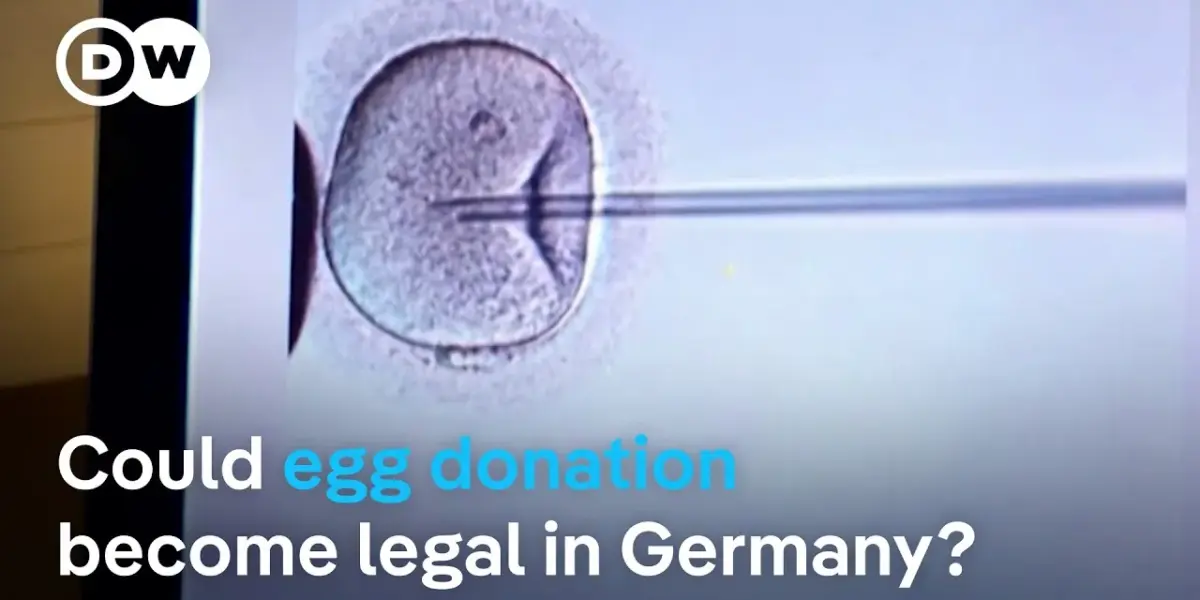
German Women Travel Abroad for Egg Donation Amidst Strict National Laws
In Germany, a strict law enacted in 1990 prohibits egg cell donation, leaving many women with no other options to conceive. This law, known as the Embryo Protection Act, considers it a crime for doctors to transfer a fertilized egg from one woman to another, with potential jail time for offenders. Consequently, thousands of German women travel to other European countries, like Denmark and Spain, to undergo the procedure.
Daniela V’s Journey to Motherhood
Daniela V, a mother of two, shared her experience of being unable to conceive through numerous in-vitro fertilization (IVF) treatments in Germany. “I just thought it was all over,” she said, describing the emotional toll. “And that really felt like someone had pulled the rug out from under me.” Her life plan as a mother seemed impossible until she learned about egg donation abroad. Although initially skeptical, she realized her primary desire was to experience pregnancy and have a child, regardless of genetic connection. “And to be honest, I didn’t really care whether the child had my genes or not,” she explained.
Egg Donation Procedures and Legal Frameworks
Egg donation involves a healthy young woman undergoing hormonal treatment for about 8 to 12 days. This is followed by retrieving her eggs, fertilizing them in a lab with sperm from the recipient’s partner, and transferring the resulting embryo to the recipient’s womb. The legal landscape for egg donation varies significantly across Europe. In Spain, donors are guaranteed anonymity, preventing children from later contacting them. Other countries allow recipients and donors to decide between anonymous or open donations.
Choosing an Open Donation in Denmark
Daniela chose Denmark for her procedure, opting for an open donation. “I decided on an open egg donation so the children will have the opportunity to meet the donor later on,” she stated. She believes it is only fair, as the donor contributes half of the child’s genetic heritage. This aligns with the German principle that a child has a right to know their origins. The procedure in Denmark cost around €3,000, significantly less than her previous IVF attempts in Germany. The experience of finally holding her son after a decade of trying was profoundly emotional. “When I heard my son’s first cry, it was such a relief,” she recalled. “It just came over me. He’s here now. He’s crying.”
Debate Over Legalization in Germany
In Germany, one in six couples struggle with infertility, a situation that can cause significant psychological distress. The current ban on egg donation is facing renewed debate. The original justification for the ban, citing the potential harm of a “split motherhood” to the child, is now questioned by studies. Claudia Visamman, an ethics expert who advised a government commission, argues that the state should not prevent individuals from making their own choices about family building. “The state always needs a very good reason to intervene into individual freedom,” she said. “And the question is why should the state protect women from doing from donating their eggs?”
Potential Risks and Stigma
Visamman also highlighted potential dangers arising from the ban. Women who undergo egg donation abroad may be reluctant to inform their German gynecologists about the procedure due to fear of stigma or legal repercussions. This lack of transparency can be risky, as egg donation carries a slightly higher risk of complications like pre-eclampsia for the carrying mother. “These women are often reluctant to tell their gynecologist the story, the true story because they’re afraid that they might be stigmatized,” Visamman noted.
Political Proposals and Opposition
German Health Minister, Nina Warken, has proposed a plan to allow the donation of frozen eggs originally intended for IVF treatment, under strict conditions. This initiative has received mixed reactions. The Social Democratic Party (SPD), the conservative CDU’s coalition partner, supports the proposal and wants to go further. However, the far-right Alternative for Germany (AfD) party opposes legalization. The Green Party and the Left Party are not against Warken’s plan but caution against the risk of exploiting women.
Concerns About Exploitation and Viability
Zik Growman, also part of the government commission, supports Warken’s proposal but warns against broader legalization, citing economic disparities. “Egg donation is really only possible if there is significant economic disparity between the egg donors and the women who receive the donated eggs,” she stated. She fears that without careful regulation, poorer women, often migrants, could be exploited for their eggs. On the other hand, proponents argue that Warken’s plan may not be sufficient. They point out that most women who freeze eggs for IVF have fertility issues themselves, making them unsuitable as donors. “That’s such a small niche with so many issues that I can foresee if this is going to be say the umbrella under which egg donation will be allowed in Germany, it will not be a viable model,” one expert frankly stated.
The Path Forward: Compensation and Counseling
Experts agree that some form of compensation for egg donors is necessary, acknowledging the invasive and time-consuming nature of the procedure. The aim is to prevent exploitation while ensuring donors’ interests are protected. “I think commercial egg donation should be banned in Germany to prevent the exploitation of women,” one expert recommended. “There should be appropriate remuneration and women should receive independent counseling.” This approach is compared to sperm donation in Germany, where donors receive compensation. The debate continues, with many hoping for a more liberal law than currently proposed, ensuring that families can build their lives without being forced to seek treatment abroad under potentially less regulated conditions.
Source: 'I Had No Other Choice': Why Women Leave Germany to Have Children | DW News (YouTube)

Related Articles


Senate Hopeful Seeks Affordable IVF Abroad Amid High US Costs
Maine Senate candidate Graham Platner and his wife are seeking affordable IVF treatment in Norway due to high costs in the U.S. The couple's journey highlights the growing trend of fertility tourism and the ongoing debate over accessible reproductive healthcare.


Germany Weighs Hungary’s Future as Orban Faces Election
Germany's government officially remains neutral on Hungary's upcoming elections, but privately hopes for Prime Minister Viktor Orban's defeat. Orban's obstructionist stance within the EU, particularly regarding aid to Ukraine, has strained relations with Berlin. Experts suggest a change in Budapest could bring a more pragmatic partner to the EU.


Germany Boosts Digital Defenses Amid Rising Cyber Threats
Germany is planning to boost its digital defenses and potentially launch offensive cyber operations, including 'hackbacks,' in response to a rise in cyber attacks. The controversial strategy aims to counter threats targeting critical infrastructure and government agencies, but faces criticism over identification challenges and potential unconstitutionality. Experts also highlight a severe shortage of IT professionals as a major hurdle.