German Opposition Leader Merz Issues Stark Warning to US on Tariffs, Signals Pivot to China
German Opposition Leader Friedrich Merz has issued a strong warning to the United States, stating that Europe will retaliate with its own tariffs if the US imposes high duties, contrary to previous agreements. Merz also announced plans to seek strategic partnerships with China, signaling a potential shift in global alliances amidst growing frustration over US protectionist trade policies. His remarks underscore Europe's determination to defend its economic interests and explore alternatives in a volatile global landscape.

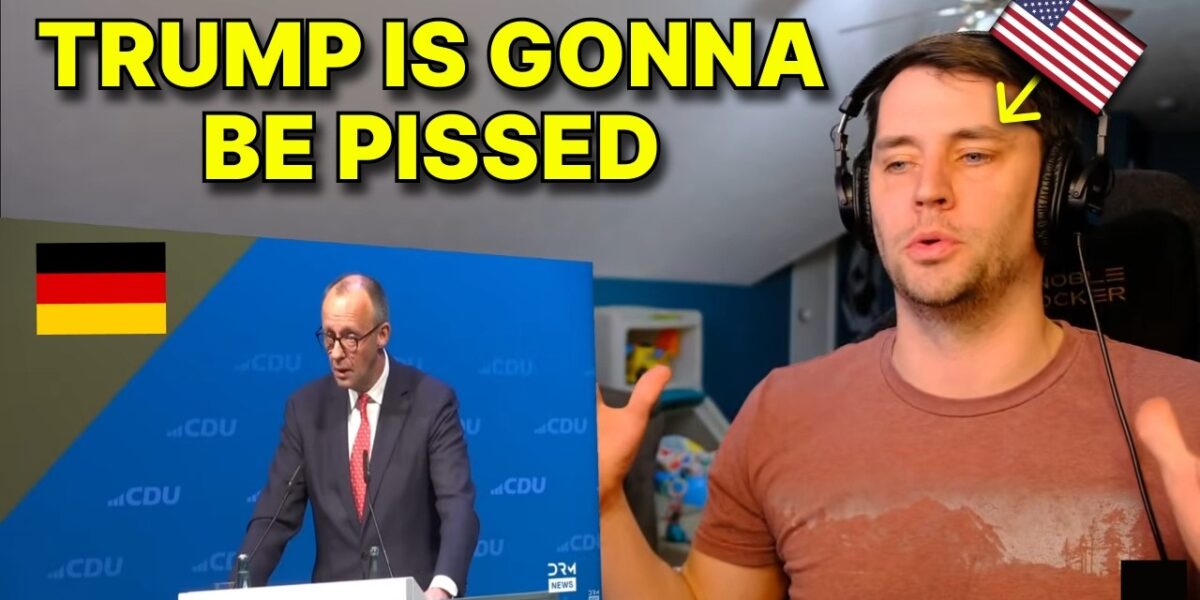
German Opposition Leader Merz Issues Stark Warning to US on Tariffs, Signals Pivot to China
In a significant escalation of transatlantic trade rhetoric, Friedrich Merz, leader of Germany’s Christian Democratic Union (CDU) and the country’s main opposition party, has delivered a strong warning to the United States regarding its protectionist trade policies. Merz explicitly stated that if the U.S. were to impose high tariffs, Germany and Europe would retaliate with their own duties, signaling a potential shift in global alliances and a strategic pivot towards China.
Merz’s remarks, which have garnered considerable attention, underscore growing frustration within European political circles over the unpredictable nature of U.S. trade policy. His statement, captured in a recent clip and further elaborated in a Reuters report, highlights Europe’s determination to defend its economic interests and seek alternative partnerships in a rapidly evolving geopolitical landscape.
A Direct Challenge to US Trade Policy
Speaking with notable resolve, Friedrich Merz articulated a clear message: “If the Americans believe that they can now go one better with high tariffs, contrary to the agreement we reached in August last year and put us under pressure once again, then we in Germany and Europe will respond with high tariffs of our own.” He stressed that while the U.S. is free to determine its own economic policies, Europe would not passively accept measures deemed detrimental to its prosperity.
This assertive stance from the leader of Germany’s traditionally pro-transatlantic party is particularly noteworthy. The CDU has historically been a staunch advocate for strong ties with the United States. Merz’s public warning suggests a deepening concern within Germany’s political establishment about the reliability of U.S. trade relations, especially in an era marked by increasing protectionist sentiment globally.
Merz further emphasized Europe’s capacity for self-defense: “If you overdo it, if you overdo it, we Europeans are perfectly capable of defending ourselves.” This declaration signals a readiness to engage in a tit-for-tat tariff battle, a scenario that could have significant repercussions for global trade and economic stability.
The Economic Perils of Tariffs: A European Perspective
The European skepticism towards tariffs is rooted in a widely held economic view that such measures often harm the imposing nation as much as, if not more than, the target. Economists generally agree that tariffs are effectively a tax paid by domestic consumers and businesses, rather than foreign exporters.
When a country imposes tariffs on imported goods, the cost of those goods typically increases for domestic importers. These importers then pass on the elevated costs to consumers through higher retail prices. This process can lead to inflation, as goods become more expensive, eroding purchasing power and potentially slowing economic growth. Furthermore, tariffs are often considered a regressive form of taxation, disproportionately affecting lower and middle-income households who spend a larger percentage of their income on consumer goods, many of which are imported or rely on imported components.
Merz implicitly highlighted this economic reality, stating, “If they believe that tariffs are more important than taxes in their own country…” This statement subtly critiques the economic rationale behind tariffs, suggesting they are an inefficient and harmful way to generate revenue or protect domestic industries. Instead of fostering competitiveness, they can insulate inefficient domestic producers from global competition, leading to higher prices and lower quality for consumers.
For Germany, Europe’s largest economy and a major export nation, open trade is fundamental to its prosperity. The imposition of tariffs by key trading partners like the U.S. directly threatens German industries and jobs, making the defense of free trade principles a paramount concern for its political leaders.
Forging a Unified European Front and Broader Alliances
A crucial aspect of Merz’s warning is his emphasis on European unity and the forging of broader alliances. He affirmed his intention to coordinate this retaliatory strategy with a wide array of European leaders, including French President Emmanuel Macron, Italian Prime Minister Giorgia Meloni, the Benelux countries, Northern and Southern European nations, and even non-EU partners like the British and Norwegians. This inclusive approach underscores a concerted effort to present a united front against perceived U.S. protectionism.
Beyond Europe, Merz also highlighted the strengthening ties with Canada, stating that the Canadian government “has moved closer to Europe than it has ever thought and acted in a European way.” This signals a broader realignment of trade and foreign policy interests among traditional Western allies, driven by a shared concern over the direction of U.S. policy.
The unification of foreign and economic policy, along with defense and domestic policy, was a recurring theme in Merz’s address. He stressed that these domains are no longer separable, reflecting a comprehensive approach to national and continental security that integrates economic resilience with geopolitical strategy.
Looking East: The Strategic Pivot to China
Perhaps the most striking element of Merz’s announcement was his intention to travel to China to discuss future cooperation. “That is why I will be traveling to China next week to discuss future cooperation between Europe and Germany on this side and China on the other with this great middle kingdom as it calls itself,” Merz stated. This planned visit, explicitly linked to the context of U.S. tariff policies, signifies a willingness to explore strategic partnerships with the world’s second-largest economy as an alternative to reliance on the United States.
The Reuters report cited by the observer further elaborated on this, quoting Merz as saying: “While the US leans on tariffs… We have a strategic interest in finding partners in the world who think the way we do, who act the way we do… and who above all are prepared to shape the future together so that we remain a country with prosperity and a high level of social security.”
This move is particularly significant given the ongoing geopolitical tensions between the U.S. and China, and Europe’s delicate balancing act between its transatlantic alliance and its substantial economic ties with Beijing. For a prominent German politician to openly state that Europe is seeking partners who “think the way we do” and then immediately reference China, suggests a re-evaluation of traditional alliances and a pragmatic pursuit of economic stability.
Such a pivot, even if primarily driven by economic necessity, carries profound geopolitical implications. It could reshape global supply chains, influence technological standards, and alter the balance of power in international institutions. While Europe has often sought to “de-risk” its economic relationship with China, Merz’s statement implies a readiness to deepen engagement if traditional allies like the U.S. prove unreliable on trade matters.
Broader Implications for Transatlantic Relations and Global Trade
Friedrich Merz’s strong warning serves as a stark reminder of the fragility of established international trade norms and the potential for traditional alliances to be strained by protectionist policies. The transatlantic relationship, a cornerstone of post-World War II global order, faces significant challenges as economic interests diverge and political priorities shift.
Should the U.S. indeed pursue a path of escalating tariffs, Merz’s statements indicate that Europe is prepared not only to retaliate but also to actively seek out new strategic partners, potentially accelerating a fragmentation of the global trading system. This would have far-reaching consequences for businesses, consumers, and geopolitical stability worldwide.
The debate over tariffs also highlights a fundamental difference in economic philosophy. While some argue for tariffs as a tool to protect domestic industries and jobs, a broad consensus among economists points to their inflationary nature, their regressive impact on consumers, and their potential to trigger retaliatory measures that harm all parties involved. Merz’s intervention brings this debate to the forefront of international diplomacy, emphasizing Europe’s commitment to multilateralism and open trade in the face of growing protectionist pressures.
As the global economy navigates uncertainties, the statements from influential European leaders like Friedrich Merz signal a determined effort to safeguard national and continental interests, even if it means challenging long-standing alliances and exploring new, complex partnerships.
Source: American reacts to German's Merz Issues Strong Warning to U.S. (YouTube)

Related Articles
Germany on US-Israel Strikes: No “Lecturing” Partners
Germany's Chancellor Scholz calls on Iran to end its attacks and nuclear program but refrains from "lecturing" US-Israel on international law regarding recent strikes. Berlin increases security for Jewish institutions amid fears of retaliation.
Bondi’s Court Blunder Could Cost US Billions
A court filing from Pam Bondi's Department of Justice may have committed the U.S. to refunding $170 billion in tariffs. This legal promise was made during challenges to Trump-era tariffs, with the DOJ assuring the court that collected funds would be repaid if the tariffs were overturned.


Germany’s Fake Laws: AI Disinformation Campaign Exposed
Viral AI-generated videos falsely claim Germany has enacted absurd laws, including fines for flushing toilet paper. Experts reveal a disinformation campaign aiming to portray Germany as chaotic, with potential commercial or political motives behind the fabricated content.