German Numbers: The Brain-Bending Linguistic Puzzle
A viral video reveals the baffling German method of pronouncing numbers, where '21' is 'one-and-twenty,' sparking global fascination. Despite its linguistic complexity and challenges for learners, the tradition faces strong public resistance to reform, even as Germany boasts numerous world-changing innovations.

German Numbers: The Brain-Bending Linguistic Puzzle
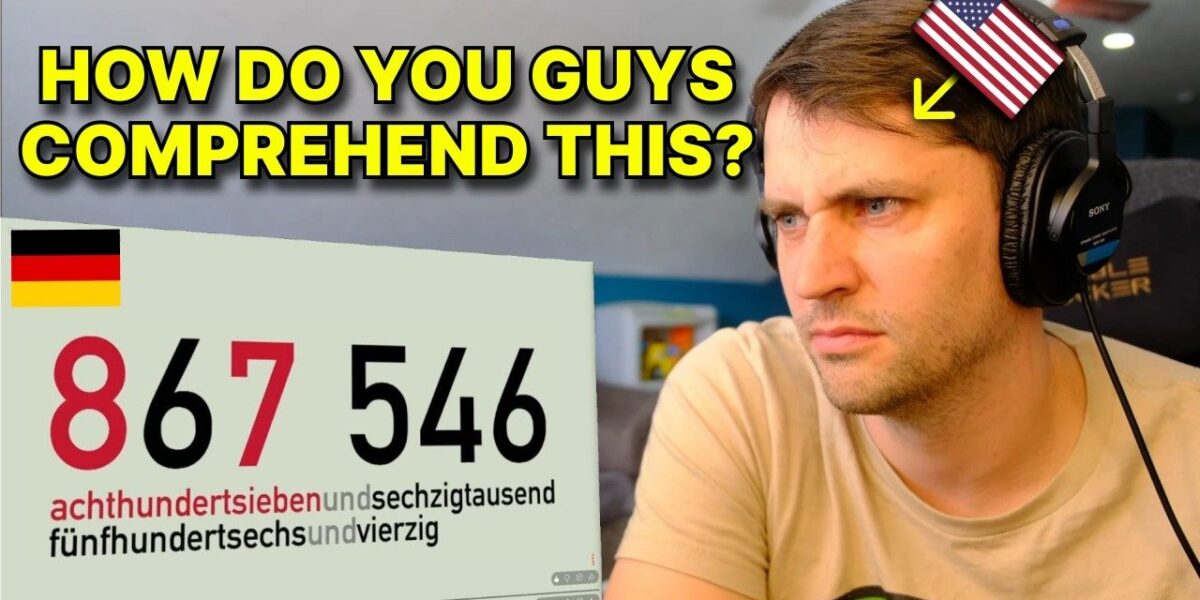
A viral video exploring the peculiar German method of pronouncing numbers has sparked widespread fascination and debate, highlighting a linguistic quirk that many find baffling. The video, which has garnered over 2.3 million views on the channel Arte, features an American reacting to the counterintuitive structure of German numerical pronunciation, where the units are often stated before the tens, a stark contrast to the standard practice in most other languages.
The ‘Acrobatic’ Nature of German Numbers
The core of the fascination lies in how Germans say numbers like ’21’. While English speakers say “twenty-one,” directly following the order of the digits, Germans pronounce it as “einundzwanzig” – literally “one-and-twenty.” This inversion, where the unit (one) precedes the ten (twenty), is not just a minor difference; it’s a fundamental departure from the reading and writing order of numbers in most of the world.
“We Germans don’t do that. We say 21. First the one, then the 20. When someone dictates a number to us, we first hear the one and then the tens. But we have to write the tens before the one.”
This linguistic phenomenon extends to larger numbers, creating what the video describes as “mental acrobatics.” For example, the number 67,546 is pronounced “sechsundsechzigtausendfünfhundertsechsundvierzig,” which translates to “six-and-sixty-thousand-five-hundred-six-and-forty.” The presenter in the video expresses sheer disbelief, stating, “With large numbers, we mentally jump back and forth like a monkey in a circus.” This complex structure is highlighted as being particularly challenging for non-native speakers, with the presenter admitting, “I would simply never be able to comprehend that. Now, if I lived in Germany for 20 years, I don’t think I would.”
Historical Roots and Linguistic Inertia
The video delves into the historical origins of this numerical peculiarity. The introduction of the Indo-Arabic numeral system in Europe during the 13th century, which relies on positional value, revolutionized mathematics. However, the pronunciation of numbers did not immediately adapt. Early practices varied, with figures like Martin Luther consistently writing numbers in reverse order in his Bible translation.
Over centuries, a consensus emerged in most of Europe to align numerical pronunciation with the written order, especially for numbers above twenty. Countries like Norway, Denmark, and the Czech Republic have officially or unofficially moved towards this modern standard. Yet, Germany, along with a few other regions, has largely retained the older, inverted system.
“We Germans cling to this relic of the Middle Ages, either because of Luther’s translation of the Bible or or because of German pettiness, which could have made a centralized change in language habits more difficult.”
The Debate Over Reform
Despite the challenges it presents, there is significant resistance to changing the traditional German numbering system. An association advocating for the adoption of both pronunciations faces considerable opposition. When the topic of reform is raised, reactions from the public range from dismissive to outright hostile, with terms like “ridiculous,” “unnatural,” “barbaric,” and “idiotic” being used to describe the idea.
The presenter notes the irony, drawing a parallel to American debates over the imperial system versus the metric system. “We get a lot of [criticism] for Fahrenheit and using the imperial system here in America, rightfully so. Um, I don’t know. I think I might have to give you guys [criticism] for this,” the presenter muses.
German Ingenuity Beyond Numbers
While the German approach to numbers might seem inefficient or even nonsensical to outsiders, the video acknowledges Germany’s immense contributions to science, technology, and culture. The presenter lists inventions and innovations such as the printing press, X-rays, aspirin, the automobile engine, contact lenses, the theory of relativity, and the beloved gummy bear.
“Be that as it may, our numerical inertia has not prevented us from inventing the printing press, X-rays, aspirin, a few car engines, contact lenses, the theory of relativity, and the gummy bear.”
This juxtaposition prompts the question: what further achievements might Germany unlock if its citizens could navigate numerical concepts with greater ease? The video concludes with the presenter expressing admiration for German ingenuity, albeit with a lingering sense of bewilderment regarding their numerical system.
Looking Ahead
The discussion around German number pronunciation highlights the fascinating diversity of linguistic evolution and the deep-seated nature of cultural habits. While a formal reform appears unlikely in the near future due to public sentiment, the ongoing debate underscores a subtle tension between tradition and the potential benefits of modernization. It remains to be seen whether this linguistic “relic of the Middle Ages” will persist indefinitely or eventually yield to a more globally aligned system.
Source: American reacts to The Incredible Way Germans Say Numbers (YouTube)

Related Articles


Americans Mocked for Internet Ignorance in Viral Video
A viral video is drawing attention for showcasing what its American creator calls "the dumbest things" Americans post online, ranging from geopolitical misunderstandings to linguistic confusion. The clips highlight a perceived global reputation for American ignorance expressed with confidence, sparking debate about online discourse and national perception.


Chinese Friend’s American Road Trip Reveals Stark Contrasts with Media Portrayals
A Chinese friend's road trip across the USA revealed surprising truths about American life, challenging negative portrayals often seen in Chinese media. From pristine blue skies and free amenities to encountering universal kindness, the experience offered a stark contrast to her preconceived notions.


Beyond Tea and Crumpets: An American’s Deep Dive into the Quirks of British Life
An American observer recently embarked on an online journey, reacting to 15 viral posts that offer a candid and often humorous glimpse into the unique facets of British life. From the surprising precision of UK package tracking and ancient, boisterous traditions like the Atherstone Ball Game to the distinctive British sense of humor and the pervasive culture of tea and baked beans, the commentary unpacks a Britain that is both familiar and strikingly unique. This exploration highlights the cultural nuances that differentiate nations, fostering a deeper understanding and appreciation for the UK's distinctive charm.