German Leader Delivers Stark Warning to America: Transatlantic Trust at a Crossroads
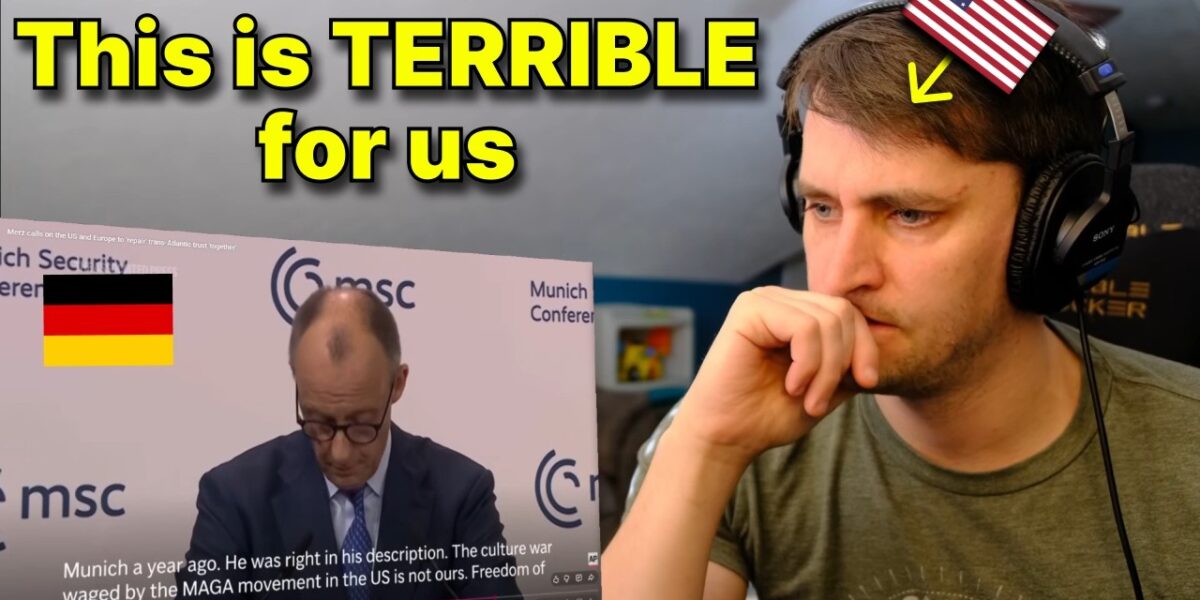
German opposition leader Friedrich Merz delivered a powerful warning to the United States, emphasizing the critical importance of transatlantic trust and the NATO alliance amid a crumbling global order. His speech underscored that even America cannot "go it alone" in an era of great power rivalry, pushing Europe to seek greater independence. The message highlights deep concerns over US reliability and the far-reaching implications of domestic politics on international relations.

German Leader Delivers Stark Warning to America: Transatlantic Trust at a Crossroads
A recent powerful address by Friedrich Merz, leader of Germany’s opposition Christian Democratic Union (CDU), has sent ripples across the transatlantic alliance, serving as a potent warning to the United States about the fragility of global order and the indispensable role of trust among allies. Delivered likely at the prestigious Munich Security Conference, Merz’s speech underscored the critical importance of the NATO alliance and the rules-based international system, suggesting that America’s reliability is under scrutiny and that Europe may be forced to forge its own path if trust erodes further.
The speech, which included a direct appeal to Americans in English, highlighted concerns that have been simmering for years, particularly in the wake of former President Donald Trump’s rhetoric and actions concerning international alliances. For many, Merz’s message resonated as a “final warning,” a pragmatic and earnest assessment of a geopolitical landscape teetering on the brink of significant transformation.
The Indispensable Fabric of Trust: NATO’s Foundation
Merz opened his address by emphasizing the bedrock of the transatlantic partnership: trust. “For three generations, trust amongst allies, partners, and friends has made NATO the strongest alliance of all times,” he stated, a sentiment that immediately struck a chord with observers. The German leader stressed that Europe “knows deeply how precious this is,” implicitly contrasting this understanding with what is perceived as a diminishing appreciation in some American political circles.
The North Atlantic Treaty Organization (NATO), founded in 1949, represents more than just a military pact; it is a political and security alliance built on shared democratic values and mutual defense commitments, enshrined most notably in its Article 5. This article, which states that an attack on one member is an attack on all, has historically been the cornerstone of collective security for its members. However, the perception that some US leaders view such alliances merely as transactional contracts, rather than a deep, underlying fabric of shared interests and values, has caused considerable alarm in Europe.
The American reactor to Merz’s speech articulated this concern clearly, noting that NATO is “so much bigger than just on a piece of paper.” The reactor criticized the notion that alliances are mere contracts, arguing that such a perspective demonstrates a fundamental misunderstanding of the credibility and underlying fabric required to sustain these partnerships. For the United States to maintain its leadership and influence, its word and actions as an ally must remain credible, lest the entire structure unravel, regardless of what remains on paper.
The ‘Peace Dividend’ and the Peril of Isolation
Merz further reminded his audience of the immense benefits derived from the post-Cold War era of relative peace – the “peace dividend.” This term refers to the economic benefits that accrue when a nation reduces military spending, allowing resources to be redirected towards social and economic development. The stability fostered by the rules-based international order, largely underpinned by the transatlantic alliance, allowed nations to focus on commerce, innovation, and prosperity, rather than solely on defense and conflict.
The German leader’s starkest warning, however, came when he asserted that “in the era of great power rivalry, even the United States will not be powerful enough to go it alone.” This statement directly challenges the isolationist tendencies seen in some American political movements. It underscores the interconnectedness of global security and the reality that complex challenges – from geopolitical rivalries to climate change and economic instability – demand collective action. Merz positioned NATO not just as a European necessity but as a “competitive advantage” for the United States itself, implying that America’s strength is amplified, not diminished, by its alliances.
The alternative to a rules-based world order, as cautioned by Merz and echoed by the American observer, is a “violence-based world.” The post-World War II international system, built on international law, institutions, and multilateral cooperation, was designed precisely to prevent a return to the catastrophic conflicts of the past. The prospect of this order crumbling evokes a “scary” and “chilling” reality, suggesting that decades of peace and progress might have bred a dangerous naiveté about the permanence of global stability.
Europe’s Shifting Stance: Towards Strategic Autonomy
Merz’s speech was not merely a plea but also a declaration of Europe’s evolving resolve. “We the Europeans, we are doing our part,” he affirmed, signaling a growing European determination to assume greater responsibility for its own security. This sentiment was further amplified by a related clip, where Merz reportedly stated, “My absolute priority will be to strengthen Europe as quickly as possible so that step by step we can really achieve independence from the United States.”
This pursuit of “strategic autonomy” has become a central theme in European defense and foreign policy discussions, particularly since the first Trump presidency. Concerns about America’s long-term commitment to European security, coupled with Russia’s full-scale invasion of Ukraine, have galvanized European leaders to invest more in their own defense capabilities and to develop a more unified and independent foreign policy stance. The implication is clear: while Europe values the transatlantic alliance, it is also preparing for a future where American support may not be guaranteed, or at least not as consistently reliable as in the past.
The American reactor’s strong reaction – labeling the perceived US indifference to Europe’s fate as “despicable” – highlights the depth of concern that these shifts in US foreign policy evoke, not just among allies but also within American society. The notion that a significant portion of the American political establishment could be “largely indifferent to the fate of Europe” is seen as a profound betrayal of historical ties and shared security interests.
Domestic Politics and Global Repercussions
A significant portion of the American reactor’s analysis delves into the perplexing link between US domestic politics and its profound global impact. The reactor posited that the election of Donald Trump, and the rise of the “MAGA” movement, was driven by internal cultural issues such as debates over gender identity and perceived hostility towards masculinity from the political left, rather than foreign policy considerations like NATO or relations with Europe. “MAGA was not elected. It had nothing to do with Europe and our relationship with Europe,” the reactor observed, highlighting a disconnect between voter motivations and the far-reaching consequences of their choices.
Yet, the consequences are undeniably global. The reactor lamented the irony that a movement elected on domestic cultural grievances could inadvertently lead to “the downfall of America as you know, the world’s superpower” by undermining the very alliances that have sustained its global standing. This perspective underscores a critical challenge for democratic nations: how to ensure that domestic political discourse and electoral outcomes do not inadvertently dismantle the international architecture that benefits all.
Merz also touched upon the principle of free trade, stating that Germany does not believe in “protectionism.” This stance is particularly relevant given current global economic dynamics, including the rise of Chinese electric vehicles and their potential impact on established auto industries, such as Germany’s. The balance between upholding free trade principles and protecting domestic industries is a complex issue that continues to challenge policymakers worldwide, even within the context of a rules-based economic order.
A Crossroads for the Transatlantic Alliance
Friedrich Merz’s powerful warning to America serves as a critical reminder of the stakes involved in maintaining the transatlantic alliance and upholding the rules-based international order. His message is a call to action for both sides: for the United States to reaffirm its commitment to its allies and for Europe to strengthen its own capabilities. The erosion of trust, fueled by shifting political landscapes and a perceived indifference from a vital partner, poses an existential threat to an alliance that has secured peace and prosperity for generations.
The path forward demands a renewed understanding of mutual benefit, a strengthening of credibility, and a shared commitment to the principles that have long governed international relations. As the world faces an era of increasing great power rivalry and complex global challenges, the choices made by leaders in Washington and European capitals will profoundly shape the future of global security and the very nature of the international system.
Source: American reacts to Merz's POWERFUL Warning to America (YouTube)

Related Articles

America’s Fading Alliances: Munich Conference Signals a Global Realignment
The Munich Security Conference revealed a growing chasm between U.S. rhetoric and allied perceptions. Observers noted a cold reception for the American delegation, signaling a potential decline in U.S. influence and a strategic pivot by European nations towards greater self-reliance.
Europe Rethinks Nuclear Deterrence Amid US Uncertainty
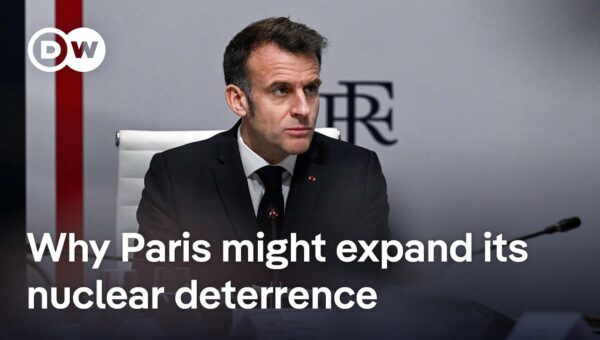
European leaders are contemplating an expansion of their nuclear arsenals due to growing uncertainty over the US nuclear umbrella. Discussions between France and Germany explore extending nuclear deterrence, though Germany remains committed to non-proliferation treaties. Experts warn of the immense costs and potential weakening of NATO.

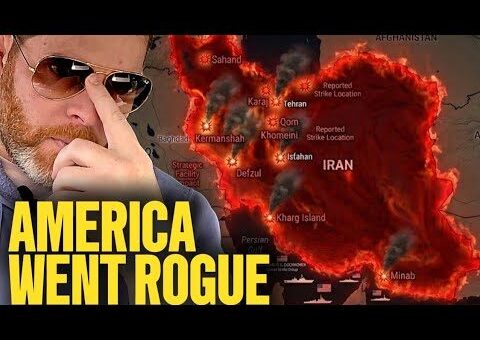
US Launches Iran Operation Alone as Allies Distance Themselves
The United States has launched a major military operation in Iran, "Operation Epic Fury," without the backing of NATO allies, who have publicly distanced themselves. Critics argue this unilateral action highlights America's growing international isolation and economic instability, while ordinary citizens face increasing domestic hardship.