German Court Blocks Intel Agency’s “Extremist” Label on AfD
A German court has temporarily blocked the domestic intelligence agency from labeling the far-right AfD party as a confirmed extremist group. The ruling, which cited insufficient evidence of overall anti-constitutional tendencies, could impact the party's electoral campaigns and ongoing efforts to ban it.

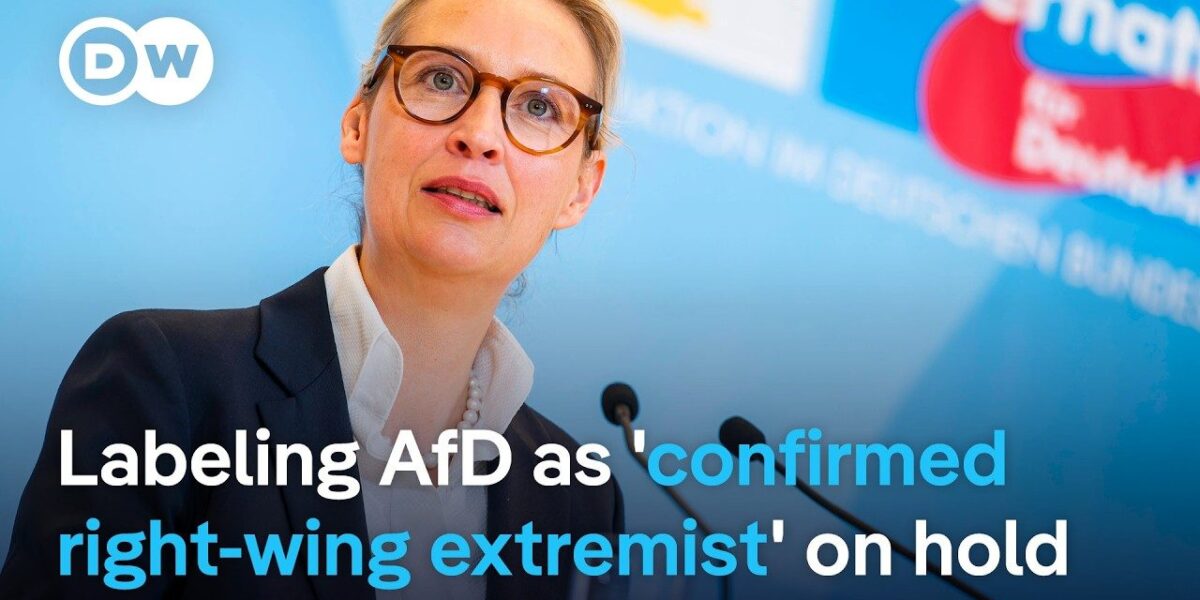
German Court Halts Intelligence Agency’s ‘Extremist’ Classification of AfD
Berlin, Germany – A German court has temporarily blocked the nation’s domestic intelligence agency from officially designating the far-right Alternative for Germany (AfD) party as a confirmed extremist organization. The ruling, issued by an administrative court, places the classification on hold pending the conclusion of legal proceedings challenging the agency’s authority to label the party as such. This decision could impact the intelligence agency’s ability to conduct more extensive surveillance on the AfD and potentially influence the party’s electoral prospects.
Background: The Intelligence Agency’s Concerns
The controversy stems from a 2025 assessment by Germany’s domestic intelligence agency, which stated it had grounds to classify the AfD as a confirmed right-wing extremist group. Such a designation would have granted the agency greater legal standing to implement intensive surveillance measures against the party. The AfD, however, appealed this classification, leading to the current legal challenge.
Court’s Ruling and Reasoning
In its ruling, the court acknowledged that certain elements within the AfD’s 2025 election program were unconstitutional. Specifically, the court pointed to proposals such as banning minarets and burqas, stating these could infringe upon religious freedom in Germany. However, the judges determined that these specific points were not sufficient to demonstrate an overall anti-constitutional tendency for the entire party.
“The court has temporarily blocked the domestic intelligence service from making this change until there’s a judgment in the substance of the case.”
The court’s decision means the intelligence agency cannot proceed with the formal classification of the AfD as a confirmed extremist organization at this time. While this is a setback for the intelligence agency, it does not entirely prevent surveillance. The agency can still treat the party as a *potentially* extremist organization, which allows for a certain level of monitoring.
AfD’s Reaction and Potential Electoral Impact
Leaders of the AfD have hailed the court’s decision as a positive development for both the party and German democracy. The temporary injunction provides the AfD with political ammunition, allowing them to argue that allegations of extremism are not as substantiated as authorities have suggested. This could be particularly significant in the lead-up to five state elections scheduled for this year, including in major eastern states and Berlin.
Political correspondent Simon Young noted the potential impact on voters who may be drawn to some of the AfD’s messages but have been hesitant due to concerns about the party’s constitutional standing. “This may sort of give those people the feeling that the stigma has partly been removed,” Young explained.
What Happens Next?
The legal battle is far from over. The intelligence agency may choose to appeal the court’s injunction, which could prolong the process for months. The core case, examining the substance of the allegations against the AfD, will continue, potentially taking a significant amount of time to reach a final verdict.
Furthermore, this ruling could have implications for broader efforts to ban the AfD entirely. While some parliamentarians have indicated they will continue to pursue a ban, the party’s ability to leverage its legal battles with authorities could influence public and political perceptions. The question remains whether the AfD can, as it has in the past, benefit electorally from its confrontations with the state.
Source: What does a German court injunction on AfD party designation mean for the intel agency tracking it? (YouTube)

Related Articles

Germany on US-Israel Strikes: No “Lecturing” Partners
Germany's Chancellor Scholz calls on Iran to end its attacks and nuclear program but refrains from "lecturing" US-Israel on international law regarding recent strikes. Berlin increases security for Jewish institutions amid fears of retaliation.


Germany’s Fake Laws: AI Disinformation Campaign Exposed
Viral AI-generated videos falsely claim Germany has enacted absurd laws, including fines for flushing toilet paper. Experts reveal a disinformation campaign aiming to portray Germany as chaotic, with potential commercial or political motives behind the fabricated content.


Germany Navigates Tricky US-China Balancing Act
Germany faces a complex geopolitical challenge, needing to balance its alliance with the US and its economic ties with China. Experts suggest a 'smart approach' focusing on diversification and strategic autonomy, rather than a forced choice, is the most viable path forward.