Georgia Runoff Signals GOP Divisions Amidst Midterm Push
A special election in Georgia's 14th Congressional District has led to a runoff between Republican Clayton Fuller and Democrat Sean Harris, signaling potential GOP divisions. Meanwhile, incumbent Bennie Thompson won his primary in Mississippi, highlighting the ongoing debate over voter ID laws.

Georgia Special Election Heads to Runoff, Highlighting GOP Fractures
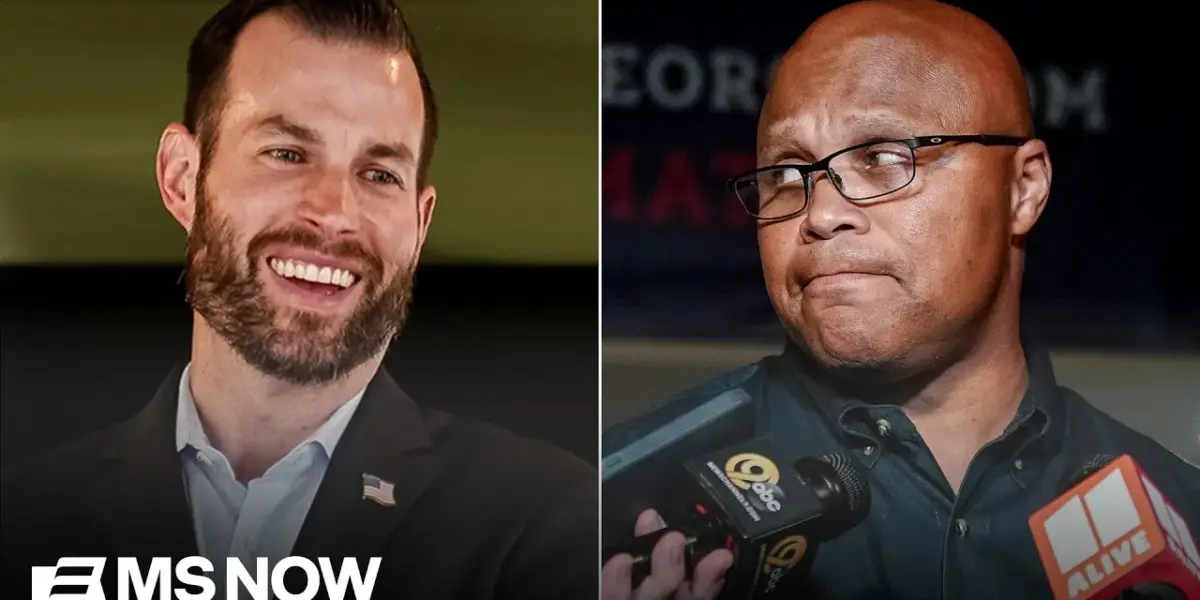
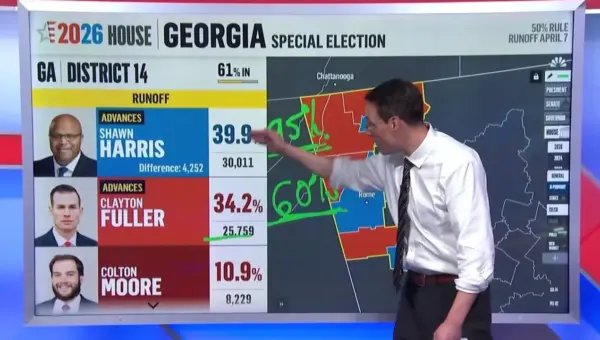
ATLANTA, GA – A closely watched special election in Georgia’s 14th Congressional District has resulted in a runoff, with Trump-backed Republican Clayton Fuller and Democrat Sean Harris advancing to a second round of voting on April 7th. The outcome, revealed Tuesday, underscores the complex political landscape as the nation approaches the midterm elections, offering a glimpse into potential party dynamics and voter sentiment.
No Majority Winner in Georgia’s 14th
The special election was called to fill the vacancy left by Marjorie Taylor Greene, who resigned from her House seat in January following a public rift with former President Donald Trump. Under Georgia’s election law, a candidate must secure an outright majority of votes to win without a runoff. In this instance, with 11 Republican candidates vying for the seat, no single candidate achieved the necessary 50% threshold.
Clayton Fuller emerged as the top Republican vote-getter, securing the endorsement of Donald Trump. However, the race’s most compelling narrative may be the strong performance of Democrat Sean Harris, a retired Brigadier General. Harris, who previously challenged Greene, garnered 37.33% of the vote, outperforming his previous showing. When combined with the votes for two other Democrats in the race, the Democratic performance in this traditionally conservative district registered a notable uptick.
Analysis: A Divided Republican Field, A Resilient Democratic Challenger
The aggregation of votes among the 11 Republican candidates suggests that, collectively, they secured approximately 60% of the vote. This indicates that, on paper, the district remains a Republican stronghold. However, the specific vote distribution among the GOP candidates reveals internal divisions. While Fuller secured Trump’s endorsement, another candidate, Colton Moore, was described as even more aligned with the “Trumpy” faction of the party. This fragmentation within the Republican field allowed Harris to remain competitive.
Harris’s performance was particularly strong in the suburban counties surrounding Atlanta, areas typically leaning Democratic. His ability to also gain traction in the northern parts of the state, closer to the Tennessee border, signals a broader appeal than initially anticipated. Despite this Democratic outperformance, analysts caution against interpreting it as a massive swing, noting that Harris’s gain is modest compared to larger swings seen in other special elections across the South.
“Sean Harris outperformed himself… When you look at some of the special elections we’ve seen, particularly in the South and Tennessee and Texas, Democrats have been ahead in some cases or they flipped it by 15 or 17 points. Sean Harris is about four points ahead of where he was. So this is not a big flip. But I will remind you, this is the northwest part of Georgia. This is perhaps some of the most conservative Trumpy parts of the country… So there’s movement. It shows you some swing, but not much swing.”
Mississippi Primary: Incumbent Bennie Thompson Secures Re-election
In Mississippi, the focus was on the Democratic primary in the 2nd Congressional District, where long-serving Representative Bennie Thompson faced a primary challenger, Evan Turnage. Thompson, who has represented his district for over three decades, secured a decisive victory, winning approximately 86% of the vote. The primary had been framed by some as a potential generational contest, pitting the veteran incumbent against a younger challenger. However, Thompson’s strong showing indicates his continued political strength and broad support within his district.
Beyond Thompson’s race, Mississippi’s other congressional districts saw expected outcomes, with no significant surprises emerging from the state’s primary elections.
Broader Implications: Voter ID Laws and Election Integrity
The election night coverage also touched upon the national debate surrounding election integrity, particularly concerning voter identification laws. Former President Trump has been a vocal proponent of stricter voter ID measures, linking their passage to Republican success in the upcoming midterms. He has reportedly pushed for an even more stringent version of the SAVE Act, a voter identification bill making its way through Congress.
Trump has indicated he would not sign any other legislation until a comprehensive voter ID law, including measures on citizenship verification and restrictions on mail-in ballots, is approved. The proposed SAVE Act would require voters to present valid photo identification and proof of citizenship to register. Critics, citing data from the Brennan Center, argue that such requirements could disenfranchise millions of eligible voters who lack readily accessible identification, such as passports or birth certificates.
The Brennan Center estimates that approximately 21 million eligible voters do not have the necessary documents readily available, with at least 3.8 million having no access to them at all. Concerns are also raised about the cost of obtaining these documents, which can range from $65 to $200 for a passport, potentially creating a financial barrier to exercising a constitutional right. Furthermore, issues such as married women who have changed their names may find their birth certificates insufficient for identification purposes.
Proponents of stricter voter ID laws frame them as essential for preventing voter fraud. However, critics contend that instances of confirmed voter fraud are exceedingly rare, and that these measures serve as a solution in search of a problem, potentially disenfranchising legitimate voters without a demonstrable increase in election security.
What’s Next?
The runoff election in Georgia’s 14th District on April 7th will be closely monitored for further insights into voter sentiment and the evolving political landscape. The broader implications of the debate over voter ID laws and their potential impact on voter access will continue to be a significant point of discussion as the midterm election cycle progresses.
Source: What do key elections in GA, MI signal about the midterms? (YouTube)

Related Articles


Democrat Forces Runoff in GOP Stronghold, Trump’s Influence Questioned
Democrat Sean Harris has forced a runoff in Georgia's 14th Congressional District, challenging the Republican stronghold. The retired brigadier general's campaign focuses on local issues and broad appeal, potentially signaling shifts in voter priorities.


Georgia Special Election: Democrat Leads as Trump’s Endorsement Tested
Georgia's special election for Marjorie Taylor Greene's former House seat is testing the strength of Trump's endorsement. Early results show Democrat Sean Harris leading, with a fractured Republican field struggling to consolidate votes. The outcome could signal broader trends in voter sentiment and the influence of the "MAGAverse."
Trump Endorsement Fuels Fuller to Runoff in Georgia Race
Clay Fuller, backed by Donald Trump, secured a spot in a Georgia special election runoff. Democratic candidate Sean Harris also performed strongly, potentially forcing a runoff in a district Trump won by 37 points. The results highlight Trump's influence and energized Democratic voters.