Geopolitical Turmoil Clouds Market Outlook, But Bullish Signs Emerge
Escalating Middle East tensions and attacks on oil infrastructure are creating market uncertainty, with recession fears rising. However, historical patterns suggest geopolitical crises can be buying opportunities, and upcoming economic data coupled with potential banking sector support could offer a bullish outlook.


Geopolitical Turmoil Clouds Market Outlook, But Bullish Signs Emerge
The global economy faces significant headwinds from escalating geopolitical tensions in the Middle East, yet potential catalysts for a market rebound are beginning to surface. Recent attacks on oil refineries in Saudi Arabia and Israel, coupled with Iran’s defiant stance, have sent shockwaves through energy markets and raised concerns about global economic stability. However, historical patterns and upcoming economic data suggest a possible shift towards optimism for investors.
Middle East Tensions Escalate, Impacting Oil and Markets
A series of attacks on critical oil infrastructure has intensified fears of a wider conflict. Iran has been implicated in strikes on the Seamref oil refinery in Saudi Arabia and, more recently, the Haifa oil refinery in Israel, a facility crucial for Israel’s fuel supply, providing 60% of its diesel and 50% of its gasoline. These actions directly contradict earlier statements suggesting a de-escalation, highlighting the volatile nature of the situation.
Iran’s leadership has warned of “zero restraint” if its own infrastructure is targeted again, while also asserting that damage to civilian sites must be addressed. This rhetoric, combined with the ongoing attacks, fuels concerns about potential disruptions to global oil supply. The threat of Iran disrupting shipping lanes, particularly through the Strait of Hormuz, remains a significant risk, which could drive oil prices even higher.
US Military Strategy Explores Island Control in Strait of Hormuz
In response to the escalating threats, the Wall Street Journal has reported on a potential strategy involving U.S. Marines to secure islands near the Strait of Hormuz. This plan could involve using approximately 2,200 Marines and 2,500 sailors, who are en route to the region, to establish a presence on islands such as Hormuz Island or Qeshm Island. The objective would be to counter any Iranian assaults on the strait and ensure freedom of navigation.
Such a move carries significant risks. While securing the Strait of Hormuz is vital for global trade, particularly oil exports, military action could lead to further retaliation from Iran. The prospect of amphibious assault units, expected to arrive by the end of next week, taking control of strategic islands presents a complex scenario with both potential benefits and severe downsides.
Economic Forecasts Warn of Recession Risks
The prolonged conflict in the Middle East could have a substantial impact on the global economy. The European Central Bank (ECB) has outlined two potential scenarios: an adverse scenario where inflation reaches 4.4% by 2026, and a severe scenario predicting a recession in Europe during the second and third quarters of 2026, with inflation soaring to 6.3% by early 2027. This is unusual, as recessions typically lead to lower inflation.
In the United States, Goldman Sachs estimates that oil prices reaching $150 per barrel could trigger a recession. A Wall Street Journal survey of economists suggests that $138 per barrel might be sufficient to signal a U.S. recession. While current recession risks are estimated at 32%, the market is largely pricing in a short-term downturn. Copper prices, often seen as a leading economic indicator, have already turned negative year-to-date, signaling underlying economic weakness.
Potential Bullish Catalysts Emerge
Despite the prevailing bearish sentiment, several factors offer potential reasons for optimism:
- Historical Precedent: Geopolitical crises have historically presented “buy the dip” opportunities for investors. Events like 9/11 and the Russia-Ukraine conflict, despite initial market panic, eventually led to market recoveries as supply chains adjusted and stability returned.
- Banking Sector Liquidity: Anticipated looser capital rules could inject around $200 billion into the banking sector. This influx of capital may lead to significant stock buybacks by major banks like JPMorgan Chase, Citigroup, Wells Fargo, and Bank of America, potentially boosting their stock prices. Furthermore, this capital can be used for lending, which typically supports GDP growth.
- Strait of Hormuz Reopening: If U.S. Marines are successful in securing the Strait of Hormuz, it would remove a significant supply chain risk and act as a strong bullish catalyst for markets. The arrival of amphibious units around April 3rd could coincide with this development.
- Upcoming Jobs Report: The upcoming jobs report on April 3rd is crucial. Investors will be looking for a rebound from February’s figures, with data encompassing revisions for January and February, along with March’s initial figures. A strong report could signal economic resilience.
What Investors Should Know
The immediate future remains uncertain, with significant risks tied to the ongoing conflict. Iran’s decentralized command structure, often described as a “mosaic style leadership,” makes traditional negotiation difficult, as localized units can launch strikes independently. This complicates efforts to de-escalate tensions.
The potential eradication of Qishm Island by former President Donald Trump, should Iran strike more oil infrastructure, could devastate global supply chains and push oil prices to $150 per barrel. This threat underscores the precarious balance and the potential for rapid escalation.
Time Frame for Decision: The period around April 3rd appears to be a critical juncture. By this date, investors should have more clarity on the success of the military operation to secure the Strait of Hormuz, the outcome of the U.S. jobs report, and whether the geopolitical tensions have begun to subside. Patience is advised, as buying into the dip before this data becomes available might be premature.
While the current news cycle is dominated by bearish developments, history suggests that geopolitical shocks often create opportunities. The confluence of potential banking sector support, a key economic data release, and the resolution of immediate military threats could pave the way for a market recovery. However, the risk of prolonged conflict and further escalation cannot be ignored.
Source: Reasons to be Bullish. (YouTube)

Related Articles

G7 Allies Clash Over Iran War Strategy, Urge Focus on Russia
G7 foreign ministers met in Paris, revealing deep divisions over the U.S. war with Iran. European allies urged the U.S. to pressure Russia, linking its actions to the conflict and fearing support for Ukraine will wane.

Iran Blocks China Ships, Exposing Beijing’s Weak Grip
Iran's recent decision to block Chinese ships at the Strait of Hormuz is exposing the limits of Beijing's influence in the Middle East. This action is causing delays and cancellations for Chinese manufacturers, turning a perceived geopolitical win into an economic strain.
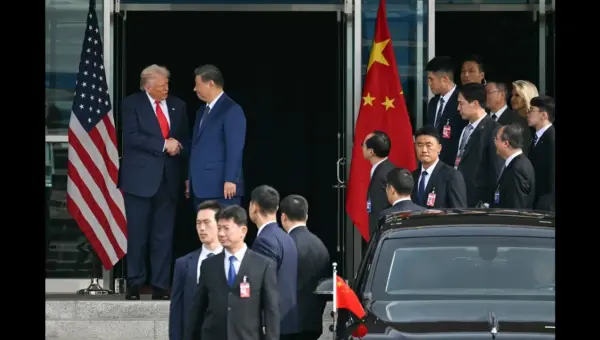
Trump’s “Walk Away” Tactic Signals Tougher Stance on China
Retired Air Force Brigadier General David Stillwell believes President Trump's strategy of being willing to walk away from negotiations puts pressure on China. This tactic, combined with US global actions and strengthened alliances, signals a more assertive American foreign policy.