Genetic Genealogy Offers Hope in Missing Person Cases
The disappearance of Nancy Guthrie from her Arizona home has sparked a nationwide search. Her daughter, Savannah Guthrie, has revealed new details, including the discovery of propped-open doors and blood at the scene. Investigators are focusing on specific dates and potential evidence left behind. A key hope lies in investigative genetic genealogy, a technique that has solved decades-old cold cases by building family trees from DNA samples.


Genetic Genealogy Offers Hope in Missing Person Cases
The disappearance of Nancy Guthrie from her Arizona home on February 1st has left her family in deep anguish. Her daughter, Savannah Guthrie, recently spoke out, sharing new details about the investigation. The search for Nancy spans the nation, with a $100,000 reward offered for information leading to an arrest. Sunday marked eight weeks since Nancy was reported missing, and new information has surfaced about the night she vanished.
Savannah revealed that two back doors of the home were found propped open. Her mother was reportedly taken without shoes, and blood was discovered at the front of the house. Despite these clues, the case remains a mystery with no solid leads or arrests. Savannah expressed her determination to find her mother, leaning on her faith and refusing to let the situation destroy her family’s joy or hope.
Key Dates and Potential Evidence
Investigators are focusing on specific dates: January 11th, January 24th, and the early morning hours of February 1st. This suggests the person responsible may have been near Nancy’s home before she disappeared. The FBI is looking for any planning or digital or biological evidence left behind. Renowned defense attorney Mark Geragos, who has been following the case, believes there might be tracking-type evidence showing someone was in the area for some time before the abduction.
The Guthrie family continues to appeal to the public for help, emphasizing that it is never too late to do the right thing. They believe their mother is still alive and needs to be brought home. The family is asking everyone to remember Nancy and to help find her.
Genetic Genealogy: A Powerful Tool
A key piece of evidence that could break the case is DNA. Investigative genetic genealogy, the technology used to find the Golden State Killer and Brian Coburn, may hold the key to finding Nancy Guthrie. This technique uses DNA from a crime scene to build a family tree, which can then lead investigators to the suspect.
CeCe Moore, a leader in this field, believes genetic genealogy will solve the Guthrie case. She pointed to a past case where this method was instrumental. In 1986, a 12-year-old girl named Michelle was abducted and murdered in Tacoma, Washington. The case went cold for over 30 years. Police hired CeCe Moore, who solved the crime within hours using genetic genealogy. She built a family tree from a crime scene DNA sample, leading her to the killer, Gary Hartman, a psychologist who lived in the same area. Detectives confirmed his identity by collecting DNA from a restaurant napkin.
Lessons Learned and Future Scenarios
CeCe Moore has used genetic genealogy to solve over 300 cases. She is confident it will crack the Nancy Guthrie case. Moore explained that if investigators can get a viable DNA profile from the kidnapper, genetic genealogy will identify him. Even if there isn’t a usable profile now, finding a second crime scene, such as where Nancy was held or her remains, could provide new DNA opportunities.
Moore believes that any place Nancy was held against her will, or any vehicle involved, would serve as a second crime scene. She stated, “It’s just a matter of time before authorities close in on something like that.” She finds it hard to imagine that with the resources given to this case, there isn’t a car or a location out there containing both Nancy’s DNA and the perpetrator’s DNA. “We leave DNA everywhere,” Moore said, “Nancy would have left DNA everywhere she was taken and the perpetrator would have as well.”
The Truth of the Matter podcast features a full conversation with CeCe Moore, discussing her work and the lessons learned from solving cold cases, including how the killer in the Michelle case was found to be within her own family tree. The podcast offers a QR code for listeners to access the full interview.
Global Impact
The application of genetic genealogy in missing person cases like Nancy Guthrie’s highlights a significant advancement in forensic science. This technology offers a new avenue for solving crimes that have gone cold for decades. It provides hope to families of victims who may have lost faith in the justice system. The success of genetic genealogy in identifying perpetrators and locating missing individuals can serve as a deterrent to future crimes. It also raises important discussions about privacy and the ethical use of DNA databases.
Historical Context
The use of DNA in criminal investigations began in the 1980s. However, investigative genetic genealogy, which combines DNA analysis with traditional genealogical research, is a more recent development. It gained widespread attention with the identification of Joseph James DeAngelo as the Golden State Killer in 2018. This method builds upon decades of advancements in DNA sequencing and database management, transforming how law enforcement approaches complex and historical cases.
Economic Leverage
While not directly applicable to this specific case as presented, genetic genealogy is a resource-intensive scientific endeavor. The cost of DNA analysis, database subscriptions, and skilled personnel represents a financial investment for law enforcement agencies. However, the potential to solve crimes, bring closure to families, and prevent future offenses often outweighs these costs.
Regional Alliances and Power Balances
This case is primarily a domestic issue within the United States, involving local and federal law enforcement agencies. The use of genetic genealogy is a tool employed by these agencies, rather than a diplomatic or military strategy involving international alliances. The power balance here lies in the investigative capabilities of law enforcement against the unknowns of a criminal act.
Future Scenarios
One likely scenario is that genetic genealogy will successfully identify a suspect in Nancy Guthrie’s disappearance. This could lead to an arrest and provide closure for the family. Another possibility is that new evidence will emerge from ongoing searches or public tips, complementing the DNA investigation. Less likely, but still possible, is that the case remains unsolved, though the persistence of genetic genealogy offers a strong chance for resolution.
Source: How genetic genealogy may crack the case in the search for Nancy Guthrie | NewsNation Prime (YouTube)

Related Articles


Justice Served: Cold Cases Finally Cracked by New Tech!
Incredible advances in DNA technology and forensic science have finally cracked some of the most chilling cold cases. From the 1991 Yogurt Shop murders to a 1978 Oregon killing, justice is being served decades later. These breakthroughs offer closure to families and highlight the power of modern investigative tools.


DNA Tech Hunts Killer, Offers Hope in Cold Cases
Investigative genetic genealogy is revolutionizing cold case investigations, offering new hope for families like Nancy Guthrie's. CC Moore, a pioneer in the field, explains how DNA technology helped solve the decades-old murder of Michella Welch, identifying a killer who had evaded justice for years. This powerful tool is now being applied to current missing person cases, potentially bringing closure.

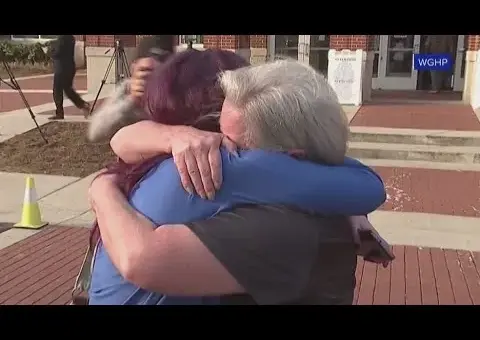
Mother’s 24-Year Absence Ends in Courtroom Reunion
A mother who vanished 24 years ago has been reunited with her daughter in an emotional encounter outside a North Carolina courthouse. Michelle disappeared in 2001, leaving her family searching for over two decades. She was found last month and recently appeared in court, leading to a tearful reunion with her daughter, Amanda.