Generals Urge Exit as Iran Conflict Escalates
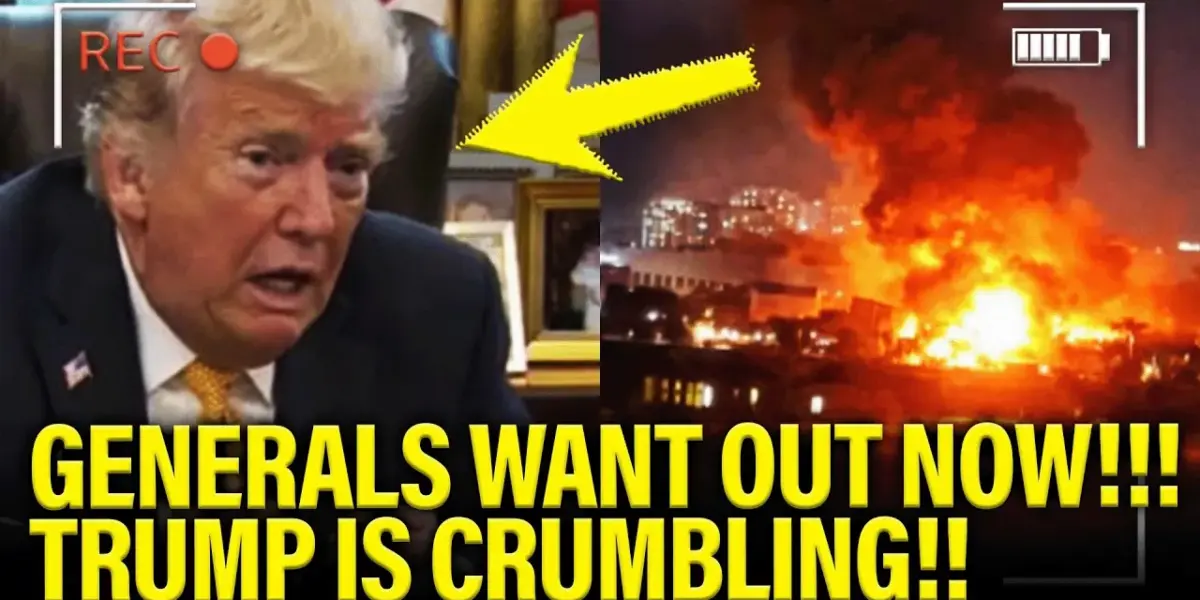
Top U.S. generals are reportedly urging President Trump to exit the escalating conflict in Iran, citing disastrous war conditions and strained alliances. The situation is fraught with mounting casualties, advanced drone warfare, and contested narratives.

Generals Urge Exit as Iran Conflict Escalates
Recent reports suggest a growing divergence between the Trump administration’s approach to the escalating conflict with Iran and the recommendations of its top military brass. According to NBC News, leading generals and admirals are reportedly including options for disengagement from the war in their daily briefings to President Trump, signaling a desire to de-escalate or withdraw from what is being described as a “disastrous war.” This internal military pressure to find an exit strategy comes amidst a backdrop of significant military losses, strained international alliances, and escalating tensions in the Middle East.
Allies Balk at U.S. Naval Demands
A key point of contention appears to be the deployment of naval assets in the Strait of Hormuz. Reports, including one from the Financial Times, indicate that traditional U.S. allies have rejected requests to send warships to the region. The sentiment among these allies, as portrayed in the transcript, is one of frustration, with many feeling blindsided by the U.S.-led escalation and unwilling to be drawn into a conflict they did not initiate. “You started this war. You didn’t consult us. You and Benjamin Netanyahu rushed into this disastrous war. Try to figure it out without us,” is the reported sentiment, highlighting a significant rift in international cooperation.
Mounting Costs and Casualties
The human and material costs of the conflict are becoming increasingly apparent. The official count of wounded U.S. service members has surpassed 200, with a dozen in very serious condition. Tragically, at least 13 service members have been reported killed. Beyond personnel losses, the U.S. has also lost approximately a dozen expensive MQ9 Reaper drones, with one reportedly shot down accidentally by a Gulf State. The U.S. embassy in Baghdad has also been targeted, underscoring the volatile security situation.
Naval Readiness and Infrastructure Issues
Adding to the complexities, the USS Gerald R. Ford aircraft carrier, a key asset deployed in the region, has reportedly experienced significant operational challenges. The ship, nearing the end of an extended deployment, has faced issues including plumbing problems and a fire that disrupted living conditions for over 600 sailors, forcing many to sleep on floors. These internal issues raise questions about the readiness and sustainability of naval operations in a prolonged conflict.
Iran’s Counter-Messaging and Proxy Operations
Iran, meanwhile, appears to be employing a strategy of asymmetric warfare and robust counter-messaging. The transcript highlights reports of Iranian one-way attack drones striking near the U.S. embassy in Baghdad and hitting other diplomatic locations. Iran’s foreign minister has reportedly denied any interest in a ceasefire and stated that the goal is to “teach the United States a lesson,” directly contradicting claims of diplomatic outreach. Furthermore, there are indications that Iran is leveraging its proxies, including Shiite groups in Iraq, and potentially holding back further escalation, such as activating Houthi forces in the Red Sea, possibly in coordination with other global powers like China and Russia.
Shifting Narratives and International Perceptions
The narrative surrounding the conflict is highly contested. President Trump has been quoted claiming significant U.S. victories and decimation of Iranian capabilities, while also suggesting that large pro-government rallies in Iran are generated by AI. These claims are met with skepticism, with reports from outlets like the New York Times confirming the existence of substantial pro-government demonstrations. The transcript suggests that Iran is using these domestic rallies and international perceptions to frame the conflict, drawing parallels between the U.S. administration and figures like Jeffrey Epstein to criticize U.S. actions.
Regional Spillover and Diplomatic Confusion
The conflict shows signs of regional spillover, with reports of airspace closures in the UAE and warnings issued to Saudi Arabia regarding their stance. Iran has reportedly indicated that locations like Dubai and Abu Dhabi could be considered fair targets due to their perceived alignment with the U.S. The situation is further complicated by conflicting public statements from President Trump regarding the need for international assistance. At times, he has asserted U.S. self-sufficiency and military dominance, while at other times, he has strongly encouraged allies to join the effort with “great enthusiasm,” creating an impression of strategic uncertainty.
Historical Context and Future Outlook
The current situation evokes parallels with past U.S. foreign policy decisions characterized by rapid escalation and subsequent challenges in finding stable exits. The transcript touches upon historical grievances and the perception of U.S. actions, such as the alleged failure to support democratic movements in Iran in the past, as factors contributing to current anti-American sentiment. The use of proxies by Iran and the broader geopolitical maneuvering by global powers suggest a complex and potentially protracted regional struggle.
Why This Matters
The escalating conflict in Iran, characterized by internal military pressure for de-escalation, strained alliances, and significant costs, carries profound implications. It raises critical questions about strategic decision-making, the effectiveness of U.S. foreign policy in the Middle East, and the potential for wider regional destabilization. The reported disconnect between military recommendations and presidential directives, coupled with the erosion of allied support, highlights a precarious geopolitical moment. The narrative battles, the use of proxies, and the potential for miscalculation underscore the urgent need for clear communication, strategic clarity, and a re-evaluation of objectives to prevent a more devastating outcome.
Implications, Trends, and Future Outlook
The current trajectory suggests a period of heightened tension and potential further escalation. The reliance on drones, the targeting of diplomatic infrastructure, and the involvement of proxy forces are trends that could define future conflicts in the region. The international community faces the challenge of managing this volatile situation, preventing a full-scale war, and addressing the underlying geopolitical grievances. The future outlook depends heavily on whether diplomatic channels can be effectively reopened and whether a consensus can be found among key stakeholders to de-escalate the conflict and pursue a peaceful resolution.
Source: Trump PANICS as US Generals WANT OUT OF WAR!!! (YouTube)

Related Articles

G7 Allies Clash Over Iran War Strategy, Urge Focus on Russia
G7 foreign ministers met in Paris, revealing deep divisions over the U.S. war with Iran. European allies urged the U.S. to pressure Russia, linking its actions to the conflict and fearing support for Ukraine will wane.

Iran Blocks China Ships, Exposing Beijing’s Weak Grip
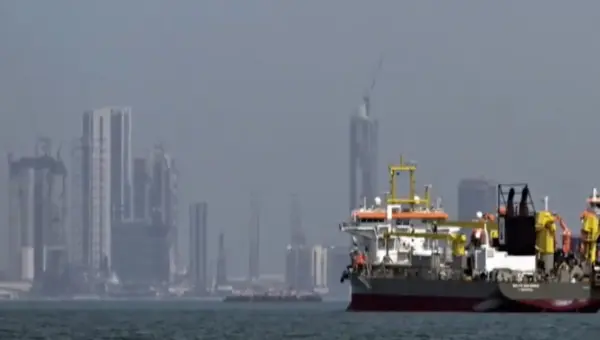
Iran's recent decision to block Chinese ships at the Strait of Hormuz is exposing the limits of Beijing's influence in the Middle East. This action is causing delays and cancellations for Chinese manufacturers, turning a perceived geopolitical win into an economic strain.
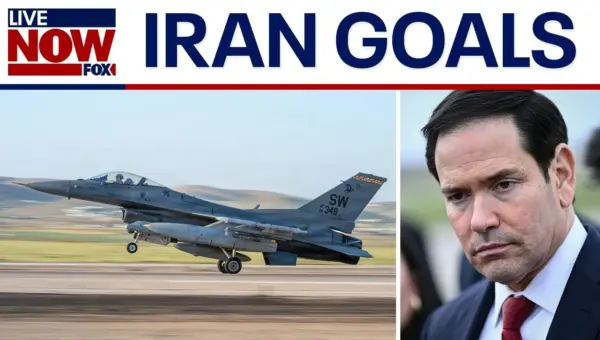
Rubio: US Can Achieve Iran War Goals Without Troops
Senator Marco Rubio outlined a strategy to counter Iran without deploying U.S. ground troops, focusing on weakening the regime and enhancing maritime security. He also criticized Cuba's economic system and expressed concerns about West Bank violence.