General Slams ‘War Criminal’ Rhetoric Amid Iran Conflict
Retired Major General Randy Manor has labeled Defense Secretary Pete Hegseth's rhetoric surrounding the Iran conflict as the "words of potential war criminals." Manor criticized the administration's 'no rules of engagement' stance, the rapid depletion of munitions, and the erosion of international alliances amid the escalating war.

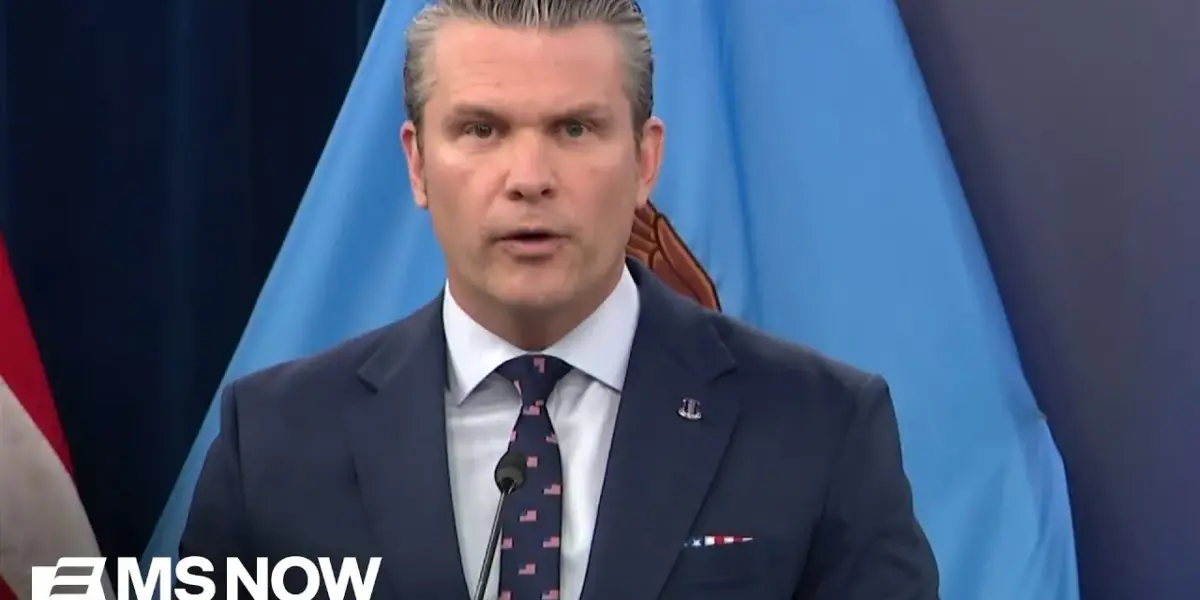
Retired General Condemns ‘Words of Potential War Criminals’ in Iran Conflict
As the U.S.-led conflict with Iran enters its third week, retired Major General Randy Manor has sharply criticized the rhetoric surrounding the war, particularly from Defense Secretary Pete Hegseth, calling his statements the “words of potential war criminals.” The escalating conflict has already seen a significant depletion of American munitions and mounting financial costs, raising serious concerns about military readiness and international law.
Munitions Burn Rate Fuels Cost Concerns
Reporting from the Financial Times, citing three individuals familiar with the matter, indicates that the U.S. has already expended munitions at a rate equivalent to years of normal usage. This rapid consumption is fueling concerns about the rising cost of the conflict and the nation’s capacity to replenish its stockpiles. Earlier in the conflict, Pentagon officials informed lawmakers that the first week alone cost over $11.3 billion. Further estimates, reported by Politico, suggest the Pentagon may be spending as much as $2 billion per day.
Defense Secretary’s ‘No Rules of Engagement’ Stance
The Trump administration’s approach to the conflict has been characterized by a departure from traditional military doctrines. Defense Secretary Pete Hegseth has publicly advocated for a war without “stupid rules of engagement,” “no nation-building quagmire,” “no democracy building exercise,” and “no politically correct wars.” His pronouncements include promises of “death and destruction from the sky all day long,” vowing to “keep pressing,” “keep pushing,” and “keep advancing,” with “no quarter, no mercy for our enemies.”
“The words that the secretary of defense said are absolutely the words of potential war criminals. Those are the kind of words in terms of no rules of engagement, the idea that no quarter be given.”
— Major General Randy Manor (Ret.)
International Law and Accountability
Major General Manor, a distinguished veteran and former acting vice chief of the National Guard Bureau, unequivocally stated that Hegseth’s language invokes the specter of war crimes. “The president cannot protect this secretary of defense,” Manor asserted, explaining that even a presidential pardon would not shield Hegseth from potential consideration by an International War Tribunal for crimes against humanity.
Manor also debunked the administration’s claims of unlimited resources. “There is this kind of arrogance to dismiss the fact that resources are being spent, not just financial resources but human resources as well,” he stated. He highlighted the logistical strain, including the redeployment of assets like THAAD batteries from South Korea to the Middle East, as evidence that resources are finite. “Every missile that we fire over there is one less than we have to actually use for legitimate defense of our country,” Manor explained, underscoring the impact on U.S. military readiness and its ability to defend allies like Taiwan and the United States itself.
Shifting Criteria and Public Confusion
The lack of clear objectives and the shifting rationale for the war have contributed to public confusion. “The criteria for what the purpose of the war is keeps changing,” Manor observed. “And therefore, the American people do not know and the world does not know when will all this nightmare end?” He further expressed concern over statements like the president’s remark about hitting targets “just for fun,” describing such language as deeply disturbing and indicative of a casual approach to the profound consequences of warfare.
Civilian Casualties and Reduced Oversight
Addressing the issue of civilian casualties, Manor expressed deep concern over the administration’s approach to accountability. He noted that Secretary Hegseth personally reduced the number of personnel dedicated to investigating potential war crimes from 200 to just 40. “Those rules are meant to be able to ensure that we only hit military targets, that we minimize or recognize whenever civilian targets are hit,” Manor explained, contrasting this with the current administration’s perceived absolution of responsibility under traditional rules of war and the Geneva Convention.
“This administration is basically says we are above the law or they are above the law. This is extremely unfortunate. I think it’s indicative of not only where we are, but where we are going in the next two years.”
— Major General Randy Manor (Ret.)
Erosion of Alliances and Unilateral Action
The unilateral nature of the current conflict stands in stark contrast to previous military engagements, such as those under Presidents Bush. Manor recalled that those administrations spent months working to build public consensus and forge strong international coalitions. “In this case, the president is acting unilaterally, and we are losing friends every single day,” he stated. European and Middle Eastern allies, he noted, are feeling “abandoned” due to a lack of notification and inclusion.
Future Implications
The rhetoric and actions surrounding the Iran conflict raise significant questions about the future of American foreign policy, military conduct, and international relations. The potential for war crimes, the strain on military resources, and the erosion of alliances suggest a challenging road ahead. The international community will be closely watching whether the U.S. adheres to established norms of warfare and international law, and how these actions will reshape global partnerships and perceptions of American leadership.
Source: Major General on Hegseth’s rhetoric around the war with Iran: ‘Words of potential war criminals’ (YouTube)

Related Articles

Pentagon Chief Blocks Black, Female Officers’ Promotions
Pentagon chief Pete Hegseth is reportedly blocking the promotions of four Army officers, two Black and two women, to one-star general. This decision follows reports of alleged discriminatory remarks made by a top aide to Secretary Hegseth regarding President Trump's comfort standing with Black female officers.

G7 Allies Clash Over Iran War Strategy, Urge Focus on Russia
G7 foreign ministers met in Paris, revealing deep divisions over the U.S. war with Iran. European allies urged the U.S. to pressure Russia, linking its actions to the conflict and fearing support for Ukraine will wane.


Iran War Exodus: Refugees Flee to Turkey Amidst Bombings
A train from Tehran brings refugees to Turkey, fleeing daily bombings and economic collapse. Many express deep fear for loved ones left behind, while some hold onto national pride and hope for victory. The conflict's impact is also felt economically in Turkey, with rising gas prices.