General Slain as Jihadists Attack Nigerian Military Base
A top Nigerian Brigadier General and several soldiers were killed in a brutal jihadist attack on a military base in Borno state. The assault highlights a surge in militant violence and raises concerns about the security forces' ability to counter increasingly bold attacks.

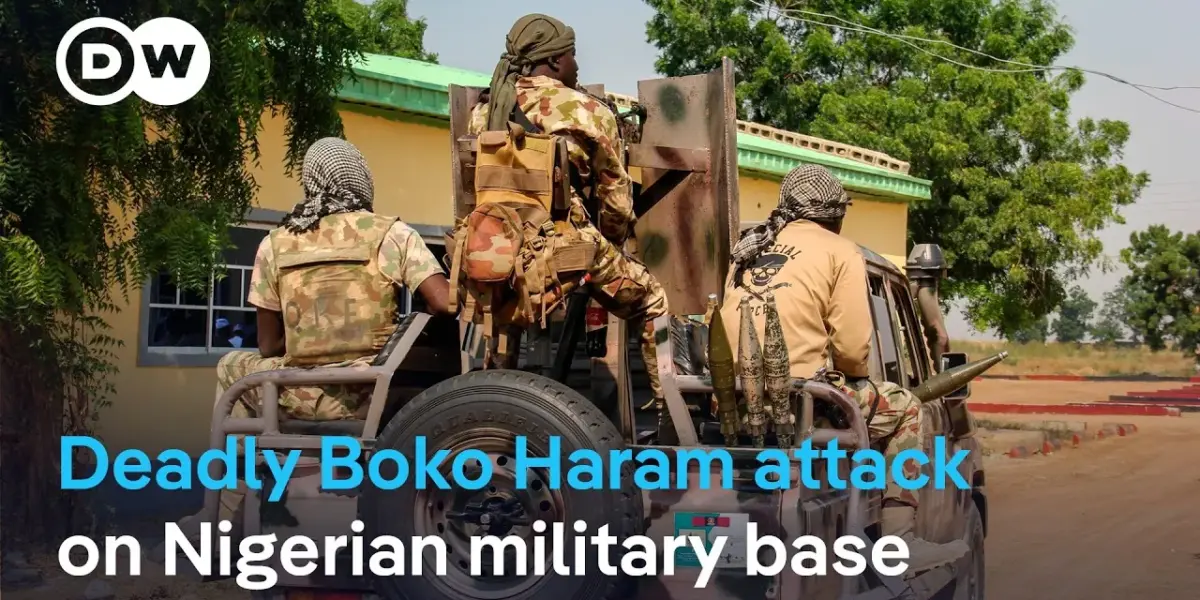
General Slain in Jihadist Attack on Nigerian Military Base
A Nigerian Brigadier General and several soldiers were killed in an overnight jihadist attack on a military base in northeastern Borno state. The attack, which occurred in Benishek, highlights a recent surge in militant violence targeting the country’s security forces. While troops eventually repelled the attackers, the military described the assailants as terrorists, a term used for Islamic militant groups.
Broader Violence Grips Northern Nigeria
This incident comes amid wider violence across northern Nigeria. In recent days, at least 90 civilians have been killed by jihadists and armed gangs. The scale of the violence underscores a persistent and evolving security crisis in the region.
Assault on the Nigerian State
Amaka Okoya, DW’s Bureau Chief in Lagos, described the attack as one of the strongest seen recently and an assault on the Nigerian state and its military. The base attacked is located just about 75 kilometers from the state capital. “This is just 75 km away from the state capital where this terrorist… went in and killed dozens of soldiers and a very senior official there,” Okoya stated.
Targeting Top Brass
The slain Brigadier General, identified as Oima, was a highly regarded officer. His death is particularly significant as he is the second senior military official to be killed in such an attack within the last five months. General Oima possessed international experience, having served as Nigeria’s Defense Advisor in Islamabad, Pakistan, for three years. He was in his second year of commanding the Benishek base, a typical tenure of two years. “If these terrorists are now targeting the top-notch, the finest of them, the most trained and grounded brigadiers in the country, then it is definitely very worrying,” Okoya explained. This targeting of senior, experienced officers suggests a disturbing escalation by militant groups.
Government Claims vs. Reality on the Ground
The Nigerian government has characterized the attack as a sign of desperation from the militants. However, the ability of attackers to penetrate a well-guarded base and kill a senior officer raises questions about the effectiveness of security measures. “This looks like either success on their part or slackness on the part of the Nigerian army,” Okoya commented. While the government aims to project strength, the reality on the ground suggests militants are gaining ground and access to previously secure areas.
A Multifaceted Insurgency
The insurgency in Nigeria is not a monolithic threat. It has evolved over the past decade, moving beyond the initial dominance of Boko Haram. Today, the security landscape involves multiple groups, including splinter factions and newly emerging organizations. “We are seeing different sorts of groups coming up. Criminal gangs, sometimes they try to say they also named differently. We have bandits, also we have those who are kidnapping, and we have these terrorists who are arming themselves and kind of regrouping, rebranding but also very tenacious in their attacks,” Okoya noted. This fragmentation and rebranding make the conflict harder to track and combat. The violence has spread beyond Borno state, affecting the northeast and northwest regions. The increasing boldness and reach of these groups are a significant concern.
Evolving Threat Landscape
The attacks on military bases and the killing of senior officers indicate a shift in the militants’ strategy. Instead of solely targeting civilians, they are now directly confronting the military, demonstrating an increasing capability and willingness to engage. This poses a grave challenge to Nigeria’s efforts to restore peace and stability in its northern regions. The complex nature of the insurgency, with various groups employing different tactics, requires a multifaceted approach to security and counter-terrorism efforts.
Looking Ahead
The coming months will be critical in assessing the Nigerian military’s response to these escalating attacks. Continued assaults on security forces and the growing civilian casualties will likely draw further international attention. Understanding the dynamics between the different militant factions and the government’s strategy to counter them will be key to observing the future trajectory of this persistent conflict.
Source: Nigerian general killed in jihadist attack in Borno state | DW News (YouTube)

Related Articles


US Destroys Iran’s Military Power in 38 Days
The U.S. military has inflicted devastating damage on Iran's capabilities in a 38-day campaign, significantly weakening the regime. Key objectives include dismantling Iran's nuclear program and ensuring free navigation in the Strait of Hormuz.


Ex-Pilot Counters Trump Iran Comments Amid Rescue
A former U.S. Air Force combat pilot argued that Donald Trump's recent comments on Iran were misunderstood. He stated Trump's focus was on the Islamic Revolutionary Guard Corps, not the Iranian people.


Bizarre Signs Point to Major US Troop Surge
Unusual signs, including a surge in Pentagon pizza orders and increased military visits to strip clubs, suggest a major troop deployment might be imminent. Service members reportedly express fear and a sense of impending danger.