General Refuses to Yield Amidst Pentagon Power Play
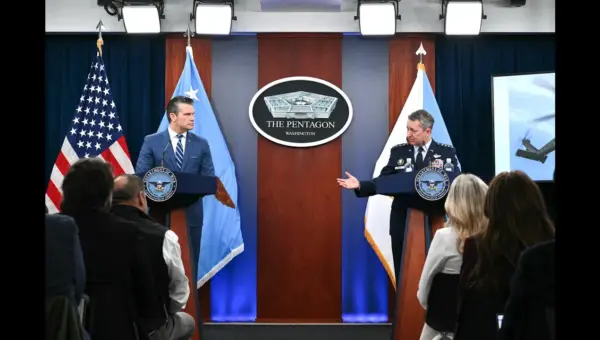
Defense Secretary Pete Hegsath has dismissed top Army leaders, including General Randy George, amidst escalating tensions with Iran. These firings, coupled with disputes over promotions and allegations of bias, reveal deep divisions within the Pentagon. Public confidence in the conflict is also waning, raising questions about the stability of US military leadership.

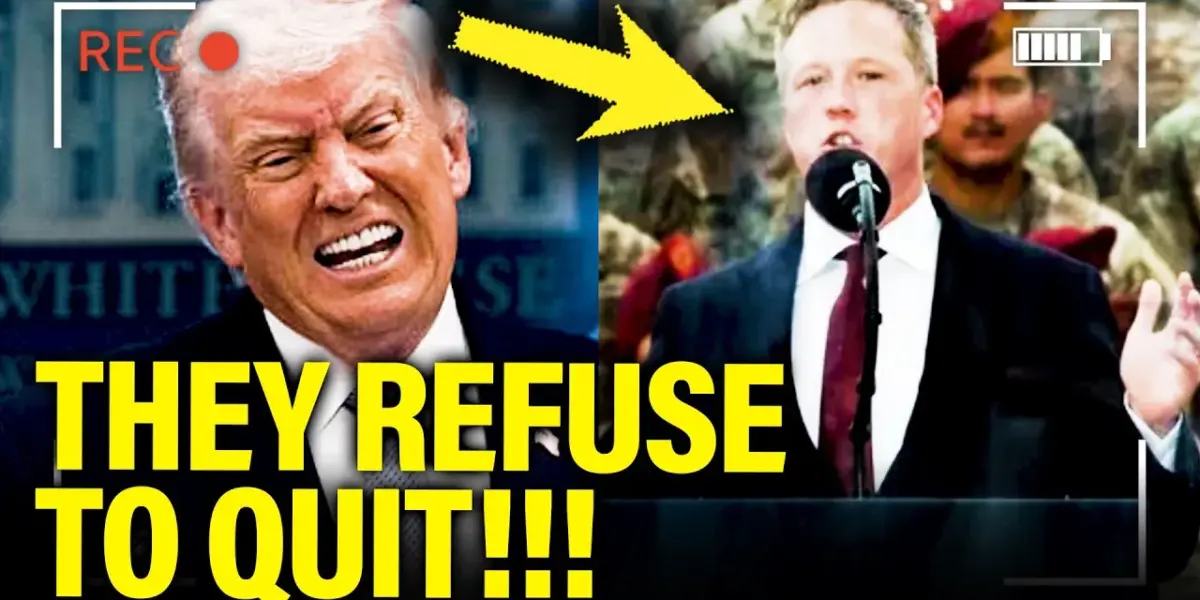
Military Leadership Faces Unprecedented Shake-Up
The US military is experiencing intense internal turmoil, with Defense Secretary Pete Hegsath making significant leadership changes during a critical period of potential escalation. In a surprising move, Hegsath dismissed Army Chief of Staff General Randy George and two other top generals. This occurred as the United States considered increasing strikes and a possible ground invasion in Iran. A Pentagon spokesman announced General George’s departure as an immediate retirement, but a US official told CNN that senior Army leadership was caught off guard, calling the decision “not a very thoughtout decision.”
A Respected Leader’s Unexpected Removal
General Randy George is a figure known for his strategic thinking and dedication to his service members. Having covered his career for 15 years, including his warnings about the dangerous placement of Combat Outpost Keading in Afghanistan in 2006, the author highlights George’s commitment to the best interests of the US. His dismissal, along with Major General William Green Jr. and General David Hodney, marks the latest in a series of abrupt firings by Hegsath. Hegsath has replaced over a dozen senior officers in the past year, nearly overhauling the Joint Chiefs of Staff. Only two officials remain from before President Trump took office.
Questions of Loyalty and Integrity Emerge
The firings have sparked questions about the message being sent, especially during a time of potential conflict. Army Secretary Dan Driscoll stated he has no plans to resign despite increasing tensions with Hegsath. Reports suggest that Driscoll and Hegsath have clashed on several issues, including Hegsath’s attempts to block the promotions of several Army officers. General George and Secretary Driscoll reportedly refused to remove two Black and two female officers from a promotion list for one-star generals. They cited the exemplary service of these four officers as justification, while most of the other 29 candidates were white men.
The message it sends that is that loyalty is prized over integrity.
DEI Under Fire in Military Promotions
Defense Secretary Hegsath has made his stance on Diversity, Equity, and Inclusion (DEI) clear, stating that “the era of DEI is gone at the defense department and we need the best and brightest.” He emphasized the need for high, gender-neutral physical standards. This approach contrasts with the diversity seen in the US military, where nearly 33% of active duty members are of color and about 18% are women in 2024. Critics point out that two of the first leaders dismissed were General CQ Brown, the second Black officer to chair the Joint Chiefs, and Admiral Lisa Franchetti, the first woman to lead the US Navy.
Allegations of Bias in Promotion Decisions
The New York Times reported that Hegsath was blocking promotions for four Army officers, two of whom are Black and two are women. Pentagon spokesman Shawn Parnell defended the process as apolitical. However, Army Secretary Dan Driscoll reportedly refused to remove these officers from the promotion list. He faced pressure from Hegsath’s chief of staff, Ricky Berea, who allegedly told Driscoll that President Trump would not want to stand next to a Black female officer at military events. This raises serious concerns about potential racial and gender bias influencing military leadership appointments.
War Escalation and Civilian Target Concerns
These internal power struggles occur as the conflict with Iran escalates. President Trump’s rhetoric has fluctuated between threats of war and diplomacy. There are reports, though secondhand, that the Secretary of Defense has recommended strikes on civilian targets, which have been rejected by CENTCOM commanders. One incident mentioned involved the potential targeting of a bridge under construction, which some believe fell into a gray area and was permitted because it was not yet in use by civilians.
The Oath to the Constitution and Refusing Illegal Orders
The actions of military leaders are under scrutiny. Senator Alyssa Slotkin, a former CIA officer, has urged service members to remember their oath to the Constitution and to refuse illegal orders. While a military official rejected the premise that President Trump would issue illegal orders, the discussion highlights the importance of upholding legal and constitutional boundaries. A group of six military and intelligence veterans in Congress released a video emphasizing that service members can, and must, refuse orders that violate the law or the Constitution. They stressed that the threats to the Constitution can come from within the country as well as from abroad.
Public Opinion on the Iran Conflict
The instability within the military leadership coincides with declining public confidence in the ongoing conflict with Iran. Polls show that only about 27% of Americans support strikes on Iran, while 43% disapprove. Furthermore, over 70% oppose sending ground troops, and only 14% support deploying troops. This stands in stark contrast to President Trump’s claims of widespread support. He stated that a CNN poll showed “100% support” among MAGA voters, though he also acknowledged that these voters would like to see the conflict end quickly.
Shifting Political Landscape and Non-Interventionism
Some analyses suggest that Trump’s rhetoric, including discussions of targeting infrastructure like bridges and power plants, may alienate the non-interventionist voters who helped elect him. These voters were reportedly tired of prolonged wars and sought to avoid involvement in Iran. While some on the right have become more vocal about potential military action, concerns about escalation resonate with those who prioritize peace and stability. The debate highlights a complex dynamic where opposition to specific military actions does not necessarily equate to opposition to the United States itself.
Why This Matters
The turmoil within the Pentagon, marked by rapid leadership changes and disputes over promotions, raises critical questions about the integrity and stability of US military command. The alleged bias in promotion decisions based on race and gender, coupled with the potential for politically motivated firings, erodes trust and confidence. Furthermore, the escalating conflict in Iran, coupled with declining public support and concerns about the legality and morality of potential targets, creates a dangerous environment. The emphasis on loyalty over integrity, and the potential disregard for established diversity initiatives, could weaken the military’s effectiveness and its connection with the diverse nation it serves. The refusal of a senior general to step down, even after being dismissed, underscores the depth of the internal conflict and the challenging times ahead for US military leadership. The situation demands transparency, adherence to constitutional principles, and a reaffirmation of the values that underpin a strong and just military.
Future Outlook
The coming months will be crucial for the US military. The ongoing conflict in Iran, combined with the internal leadership battles, creates a volatile situation. The Pentagon’s decisions will be closely watched, both domestically and internationally. The public’s declining support for military action suggests a growing desire for de-escalation and diplomatic solutions. The emphasis on reviving a “warrior ethos” and eliminating “dei” by Secretary Hegsath signals a potential shift in military culture and priorities. It remains to be seen how these changes will impact military readiness, morale, and its ability to effectively respond to global challenges while upholding constitutional values and public trust.
Source: Military Leader REFUSES TO QUIT as Trump WAGES WAR (YouTube)

Related Articles

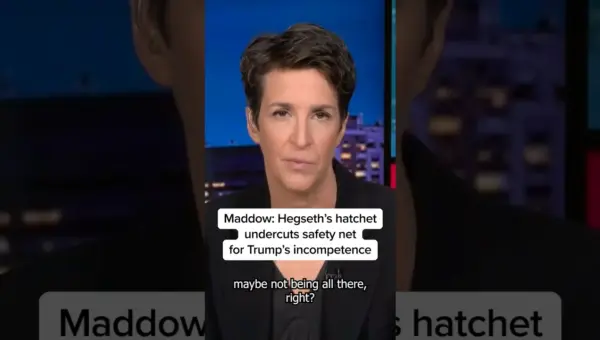
Maddow: Hegseth’s Firings Harm Military Safety Net
Rachel Maddow criticizes Pete Hegseth's "frenzy of firings" of top U.S. military leaders, arguing it undermines the military's ability to withstand political incompetence. This disruption, she warns, occurs at a critical time for national security, weakening the nation's defenses.
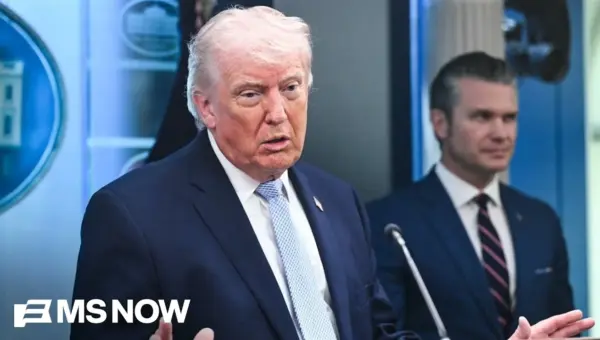
Iran Turns Strait of Hormuz Into ‘Toll Booth,’ Ex-Pentagon Official Warns
A former Pentagon spokesperson warns that Iran has turned the Strait of Hormuz into a 'toll booth,' significantly increasing its leverage. Shipping has dwindled, and fears of disruption persist. The situation also raises concerns about eroding U.S. deterrence and weakening NATO unity.
US Keeps Military Near Iran to Free Vital Shipping Lane
The US is maintaining a military presence near Iran to ensure the Strait of Hormuz remains open for global shipping. International allies and shipping giants support this effort, warning of significant economic consequences if the vital waterway is blocked.