Gen Z Founders Drive Boom in Prediction Market Trading
Young entrepreneurs are driving a massive boom in prediction markets, platforms where users can bet on future events. Startups like Kairos are emerging to simplify trading, but critics warn of a lack of regulation. The industry is projected to reach $1 trillion in annual trading volume by 2030.

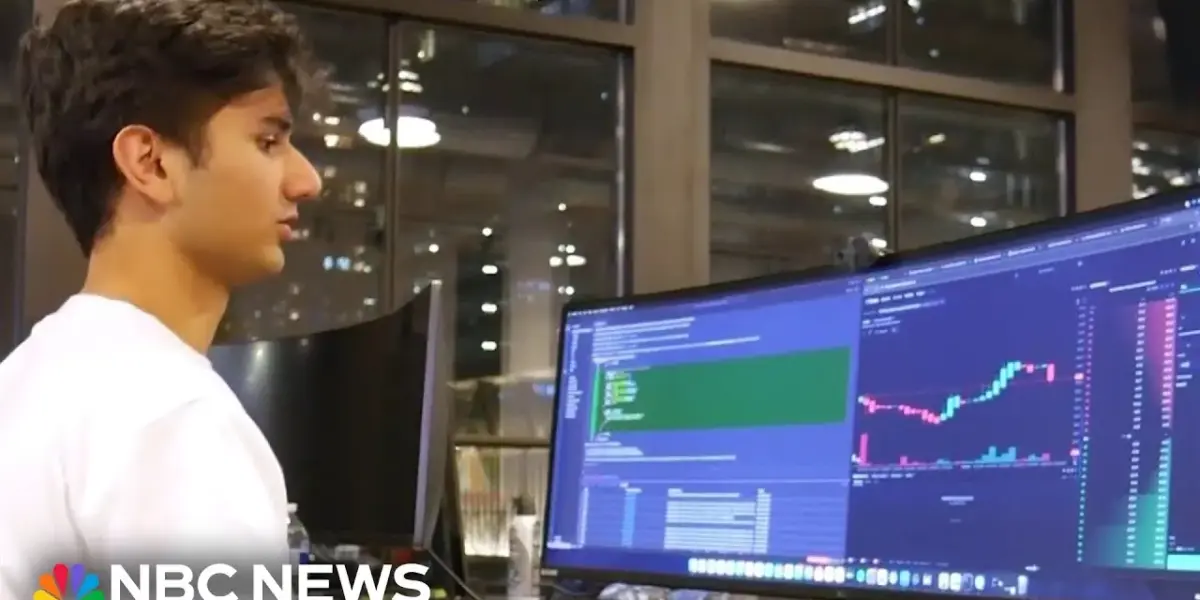
Prediction Markets Explode as Young Entrepreneurs Launch New Trading Industry
In a rapidly evolving digital landscape, prediction markets are experiencing an unprecedented surge in popularity, attracting a new generation of traders and entrepreneurs. These platforms, where users can wager on the outcomes of virtually any event – from sports and music charts to global politics – are not only capturing widespread public interest but also spawning a burgeoning industry driven by young founders. At the forefront of this movement are individuals like 22-year-old Jay Malaviya, who dropped out of college to co-found Kairos, a startup aiming to streamline trading across multiple prediction markets.
The Rise of Kairos and a New Trading Paradigm
Malaviya, along with his friend Zaid Al-Zain, recognized a significant barrier to entry in the burgeoning prediction market space: fragmentation. Currently, traders often need multiple accounts to participate in various markets, a cumbersome process that inhibits growth. Kairos aims to solve this by offering a unified platform where users can access and trade across diverse markets with a single account. Despite being in its testing phase, Kairos has already secured deals with prominent companies like Kalki and Polymarket, signaling strong industry confidence in its innovative approach.
“Right now you need various accounts to trade across all these markets. What we do in Kairos is you just need one Kairos account; you can trade across all these markets,” explains Malaviya, highlighting the platform’s core value proposition.
The appeal of prediction markets lies in their ability to allow individuals to hedge against uncertainty. As Malaviya notes, users are increasingly looking to these platforms to manage the unpredictability inherent in life. This growing demand fuels the influx of capital and innovation, paving the way for a new era of financial engagement.
Polymarket and the Modern Era of Prediction Markets
The modern iteration of prediction markets gained significant traction in 2020 with the emergence of Polymarket. Since then, the sector has seen exponential growth, attracting a diverse user base eager to test their foresight and potentially profit from it. These platforms offer a unique blend of entertainment and financial strategy, allowing participants to speculate on a wide array of future events.
Regulatory Concerns and the ‘Wild West’ Atmosphere
However, the rapid expansion of prediction markets has not gone unnoticed by regulators and watchdog groups. Critics argue that the oversight mechanisms have not kept pace with the industry’s growth, creating a potentially risky environment for consumers. Michael Klawe, who leads communications for the Campaign for Accountability, a nonpartisan watchdog organization, expressed serious concerns about the lack of robust regulation.
“The regulatory gate is completely down, the vault is open, and people are rushing in to grab what money they can at the time being before the vault shuts back up,” Klawe stated, painting a picture of a largely unregulated market.
Currently, prediction markets are federally regulated by the Commodity Futures Trading Commission (CFTC), a distinction that has allowed them to operate in jurisdictions where traditional sports betting might be restricted. Unlike traditional sportsbooks, which face stringent capital requirements and tight state-level regulations, prediction markets have found a more accessible pathway into the market. This regulatory arbitrage has contributed to their rapid proliferation.
The Future Outlook: Growth and Inevitable Regulation
Despite the current regulatory gray areas, the trajectory of prediction markets appears to be upward. Industry reports forecast a staggering $1 trillion in annual trading volume by the year 2030. This explosive growth suggests that prediction markets are not just a fleeting trend but a significant emerging financial sector.
While the ‘wild west’ era may offer opportunities, it is widely expected that regulatory frameworks will eventually be implemented to provide greater consumer protection and market stability. As Jay Malaviya aptly puts it, prediction markets offer “the ability to trade the future.” The coming years will likely see a delicate balance struck between fostering innovation and establishing necessary guardrails to ensure the long-term health and integrity of this dynamic industry.
What to Watch Next
The key developments to monitor will be the evolving regulatory landscape and the continued innovation from startups like Kairos. As more capital flows into prediction markets, the pressure for clearer rules and consumer safeguards will intensify. The success of platforms that can effectively combine user-friendly interfaces with robust risk management will be crucial in shaping the future of this rapidly growing sector.
Source: How prediction markets are spawning an entire trading industry (YouTube)

Related Articles


Agentic Commerce Will Transform Payments, Expert Predicts
Michelle Mellish of Elevon predicts 'agentic commerce' will revolutionize payment acceptance. The company is expanding its embedded payment solutions to offer broader support and deeper integrations for businesses of all sizes.


Yo-Chi’s $13.19 Fro-Yo Frenzy: A Sweet Success Story
Yo-Chi, a popular Australian frozen yogurt chain, has expanded to nearly 60 outlets by offering a highly customizable, self-serve experience that appeals to Gen Z and millennials. A single $13.19 serving highlights the indulgent nature of the product, while a loyalty app aims to capture repeat business.

Bitcoin Surges Past $70K: Are Investors Prepared for What’s Next?
Bitcoin has surged past $70,000, but market analyst Kyledoops warns that many investors are ill-prepared for the ensuing market dynamics. The current rally highlights a readiness gap, emphasizing the need for strategic positioning and active risk management in the volatile crypto space.