Gemini 3.1 Pro: Google’s AI Achieves Major Reasoning Leap
Google's Gemini 3.1 Pro model demonstrates a significant leap in AI reasoning, achieving 77% on the AGI 2 abstract reasoning benchmark. The update positions Gemini at the forefront of the new 'agentic era,' excelling in complex tasks across new benchmarks like Browse Comp and Apex Agents.

Gemini 3.1 Pro Ushers in New AI Era with Advanced Reasoning
Google has unveiled Gemini 3.1 Pro, a significant upgrade to its core reasoning model that powers the entire Gemini ecosystem. Early benchmark results indicate a dramatic improvement in abstract reasoning capabilities, signaling a new frontier in artificial intelligence development. This advancement shifts the focus from mere question answering to more complex, real-world task completion and autonomous operation.
Quantum Leap in Abstract Reasoning
The most striking improvement highlighted by early tests is Gemini 3.1 Pro’s performance on abstract reasoning benchmarks. The previous iteration, Gemini 3 Pro, scored 31.1% on the AGI 2 benchmark, a measure designed to assess abstract reasoning. Gemini 3.1 Pro has now achieved an impressive 77% on the same benchmark. This jump from 31% to 77% in just three months represents a substantial leap in the model’s ability to understand and process complex, non-concrete concepts.
The Rise of Agentic AI
The AI landscape is rapidly evolving, with a noticeable shift towards what is being termed the ‘agentic era.’ Many of the benchmarks used to evaluate the latest models, including those for Gemini 3.1 Pro, did not exist even a year ago. The industry’s focus has moved beyond simply answering questions accurately to assessing an AI’s capability to perform real work in realistic scenarios and operate autonomously. This involves skills like web research, handling long-term professional tasks, effectively using command-line interfaces, and engaging in natural human interaction, such as in customer service roles.
Key Benchmarks and Gemini 3.1 Pro’s Performance
Several new benchmarks are at the forefront of evaluating these agentic capabilities:
- Browse Comp: Developed by OpenAI, this benchmark tests an AI’s ability to navigate the internet to find difficult-to-discover, entangled facts. Humans typically solve only about 29% of these tasks, often giving up after hours of searching. Gemini 3.1 Pro now leads this benchmark with a score of 85.9%, surpassing previous leaders like GPT 5.2 (84%) and Opus 4.6 (84%).
- Apex Agents: This productivity benchmark simulates a full office environment, where AI agents must use documents, spreadsheets, emails, and messaging platforms to produce client-ready output. Tasks can be incredibly tedious, mimicking real-world professional work that often takes humans hours to complete. Gemini 3.1 Pro, along with Opus 4.6, has achieved a score of 33.5%, a near doubling from Gemini 3 Pro’s 18.4% in just 90 days. While 100% represents perfect, human-level completion, 33.5% indicates significant progress towards automating white-collar tasks. For instance, in management consulting scenarios, the score reaches 41%.
- Terminal Bench 2.0: This benchmark, created in part with the Stanford Institute, assesses an AI’s proficiency in operating a command-line interface. AI models often perform better with text-based commands than with visual interfaces. Gemini 3.1 Pro leads this benchmark with a score of 68.5%, a notable improvement from its predecessor Gemini 3 Pro (56.2%) and surpassing GPT 5.2 (64.7%) and Opus 4.6 (65.4%). This capability is crucial for tasks like configuring web servers and processing data.
- TOAO 2 Bench: This benchmark evaluates conversational agents in dual-control environments, essentially testing how well they can collaborate and coordinate with a partner, whether human or AI. This is critical for roles like customer support, where an agent must understand user prompts, track progress, and adapt to the conversation’s flow. While Claude Opus 4.6 currently leads overall with 91.9%, Gemini 3.1 Pro shows strong performance, achieving 90.8% in retail scenarios and an almost flawless 99.3% in telecom support simulations.
Why This Matters: The Future of Work and AI Interaction
The advancements seen in Gemini 3.1 Pro, particularly its enhanced agentic capabilities, point towards a future where AI plays a far more active and autonomous role in professional settings. The ability of these models to perform complex, multi-step tasks, navigate the web for information, and interact intelligently in conversational contexts suggests a potential for significant automation of tasks previously requiring human expertise. This could redefine job roles, increase productivity, and change how businesses operate. The rapid progress across these new, demanding benchmarks within a short timeframe underscores the accelerating pace of AI development. While benchmarks provide valuable metrics, the true test will be how Gemini 3.1 Pro performs in real-world applications and for individual users.
Availability and Next Steps
Gemini 3.1 Pro is the core reasoning model powering Google’s Gemini ecosystem. While early benchmarks are promising, real-world testing is ongoing. Users looking to experiment with the API may encounter initial launch day issues due to high demand, but these are typically resolved quickly. Google’s framing of these new agentic benchmarks signals their strategic direction, emphasizing practical, task-oriented AI capabilities.
Source: GEMINI 3.1 PRO is the new era… (YouTube)

Related Articles

Gemini 3.1 Pro: AI Benchmarks Face ‘Vibe Era’ Confusion
Google's Gemini 3.1 Pro launch highlights a shift in AI evaluation, moving beyond traditional benchmarks to a more nuanced 'Vibe Era.' Specialized training creates domain-specific strengths, often at the expense of general performance, leading to conflicting user experiences and raising questions about true AI intelligence.
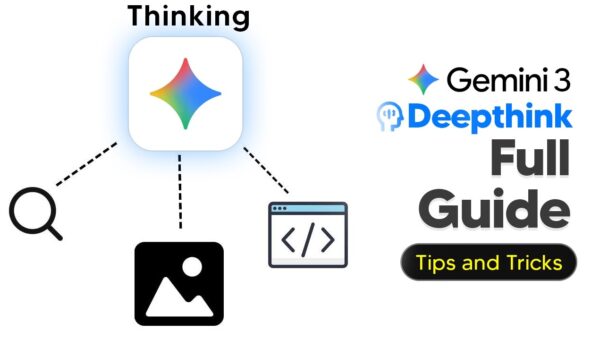
Google Gemini Deep Think: AI for Deeper Reasoning
Google's new Gemini Deep Think model offers advanced reasoning capabilities for complex tasks, transforming sketches into 3D models, conducting in-depth research, and analyzing data. Available to Ultra subscribers, it prioritizes depth over speed, taking 10-20 minutes per query to provide comprehensive insights.

Grok 4.20 Agents: A New Era for AI Reasoning
Grok 4.20 beta introduces a groundbreaking multi-agent system, moving beyond single AI models to a collaborative framework of specialized agents. This system enhances reasoning capabilities and accuracy, particularly for complex and open-ended questions. Access requires a premium subscription, and users are advised to be mindful of computational limits.