Gas Prices Soar Amidst Iran Conflict; Bills Set to Rise
Utilita Chairman Derek Licorice warns that escalating conflict between Israel and Iran is driving up gas prices, with no immediate end in sight for soaring energy bills. Domestic customers may see increases from July, while businesses face immediate impacts due to a lack of price protection.


Global Tensions Spark Energy Crisis
The escalating conflict between Israel and Iran is sending shockwaves through global energy markets, with the chairman of energy supplier Utilita warning that gas prices are likely to continue their upward trajectory until the conflict subsides. Derek Licorice, chairman of Utilita, a company serving over 800,000 customers, stated that the current geopolitical instability poses a significant threat to energy prices, making any reduction in consumer energy bills highly improbable in the near future.
Dramatic Price Hikes Emerge
Licorice detailed the volatility of the market, noting that just last week, gas prices surged by approximately 100%, from around 75 pence per therm to 155 pence per therm, before settling slightly lower. While this surge is not yet comparable to the extreme spikes of over 1,000% seen in 2022, the ongoing conflict presents a substantial and unpredictable threat. “There is big anxiety, you know, how high will gas prices go? We just don’t know,” Licorice admitted, highlighting the unprecedented nature of the current situation, where two major global shocks—the war in Ukraine and the current Middle Eastern conflict—have occurred within a short span.
Impact on Consumers and Businesses
The immediate impact on domestic customers is somewhat buffered by the energy price cap. Licorice assumes that most suppliers are fully hedged for the upcoming months of April, May, and June. However, he cautioned that a price increase is expected when the new price cap takes effect from July onwards. This is particularly concerning for businesses, which are not protected by the same price caps. Many businesses are facing contract renewals throughout the year, and those on tracker accounts, which directly reflect wholesale price fluctuations, will feel the pinch almost immediately. “It is going to be a white knuckle ride,” Licorice warned.
The Storage Dilemma
The conversation also turned to the UK’s gas storage capacity, with Licorice pointing out that the nation is an outlier compared to its European counterparts. He referenced the closure of the Rough gas storage facility in 2017, noting that while partially reopened, its capacity is significantly less than that of countries like France and Germany. “We definitely do need more gas storage,” he asserted, emphasizing that this is a crucial part of the solution for energy resilience.
The Renewable Energy Transition and Grid Challenges
Beyond storage, Licorice stressed the urgent need to accelerate the transition to renewable energy sources. While acknowledging the low marginal cost of renewables like solar and wind, he highlighted the substantial expense associated with connecting these new energy sources to the national grid. He advocated for a longer-term approach to recovering these connection costs, suggesting a period of 70-80 years rather than the current shorter recovery cycles. This, he believes, would significantly reduce electricity costs for consumers and businesses alike.
The discussion also touched upon the broader challenges facing the UK’s energy infrastructure. The surge in renewable projects has exposed weaknesses in grid connectivity, with an estimated £90 billion set to be spent on grid reinforcement by 2050. Currently, these costs are being recovered regressively through customer bills, disproportionately affecting lower-income households and potentially hindering business investment. “We have not had a strategy as a nation of investing ahead of need,” was a stark assessment of the situation.
Exploiting North Sea Resources
When asked about increasing domestic oil and gas production from the North Sea, Licorice supported the idea from an energy security perspective. He clarified, however, that this would not necessarily lower gas prices, as the market is international. “For energy security, we should certainly be making use of the assets we’ve got and we’re not,” he stated.
Government Support and Future Outlook
The government’s commitment to providing financial relief, such as the £150 reduction on energy bills, came under scrutiny. Licorice suggested that such support might be insufficient or even in doubt if the current geopolitical situation persists and energy prices continue to climb. He recalled the substantial government expenditure in 2022 to subsidize energy bills, costing billions, and warned that such interventions are unsustainable in the long run. “We can’t afford to keep doing that,” he concluded. The overarching sentiment is one of uncertainty and a challenging period ahead for energy consumers, with the current geopolitical climate making a return to lower energy prices seem unlikely in the foreseeable future.
Looking Ahead
The current energy crisis, fueled by international conflict and exacerbated by long-standing infrastructure and planning issues, presents a complex challenge. With energy prices showing no immediate signs of abating, attention will remain fixed on the geopolitical landscape, government policy responses, and the pace of the UK’s energy transition. The coming months will be critical in determining the extent of the impact on households and businesses, and whether strategic investments in storage and grid infrastructure can be accelerated to mitigate future shocks.
Source: ‘We Just Don’t Know’ How High Gas Prices Will Go As Iran War Continues Warns Utilita Chair (YouTube)

Related Articles


Iran Conflict Backfires: Trump’s War Fuels Unrest, Profits
Donald Trump's approach to Iran is reportedly backfiring, fueling public unrest in Tehran and sparking accusations of family members seeking to profit from a new drone company. The conflict's economic impact is evident with disruptions to oil infrastructure, while political rhetoric focuses on internal divisions.

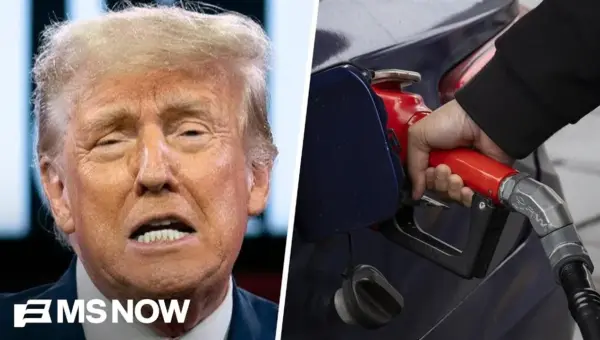
Gas Prices Surge: Americans Pay $200M More Daily Amidst Global Instability
Americans are now paying an additional $200 million daily for gasoline due to escalating global tensions and the closure of critical oil transit routes. The conflict's impact extends beyond fuel prices, affecting industries like agriculture and prompting significant financial aid requests from the government.


Iran Conflict: Military Success Masks Diplomatic Uncertainty
Retired General Barry McCaffrey assesses the remarkable military successes against Iran, including air dominance, but warns of significant diplomatic challenges ahead. The effectiveness of advanced technology in warfare is contrasted with the uncertain political endgame and potential for Iranian economic pressure and terrorism.