Gaia’s Precision Reveals Our Solar System’s Uniqueness
The Gaia mission's advanced astrometry is poised to reveal the true rarity of solar systems like ours. By detecting subtle stellar wobbles, Gaia can find distant gas giants, providing a comprehensive census of planetary architectures across the galaxy.

Gaia’s Precision Reveals Our Solar System’s Uniqueness
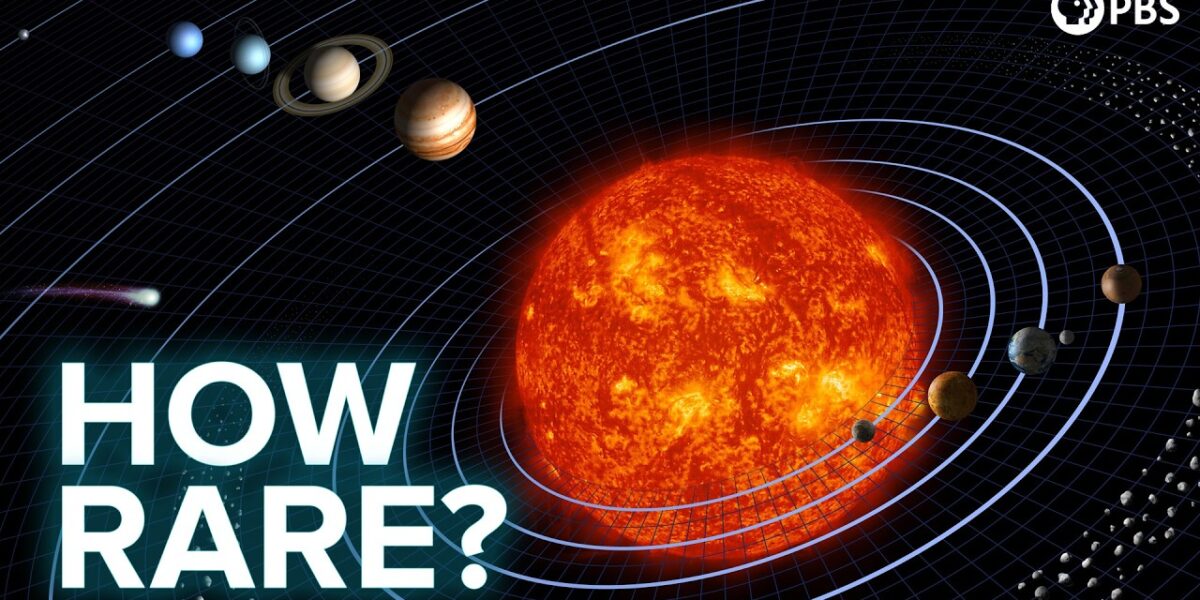
For decades, astronomers have scoured the cosmos for planets beyond our solar system, driven by the profound question: are we alone? While the discovery of exoplanets has surged, revealing a universe teeming with worlds, a new era of observation, spearheaded by the European Space Agency’s Gaia mission, is poised to answer an even more fundamental question: how common is a solar system like our own? Recent insights suggest our planetary arrangement might be exceptionally rare, a conclusion that could soon be solidified by the torrent of data from Gaia.
The Unexpected Diversity of Planetary Systems
The journey to understanding exoplanets began with the realization that most stars host planetary systems. However, as our observational capabilities sharpened, a surprising pattern emerged: many of these alien solar systems bear little resemblance to our own. The dominant configuration appears to be planets of similar sizes, often forming compact chains around their stars. Systems with a distinct separation between inner rocky worlds and outer gas giants, like our solar system, seem to be the exception rather than the rule.
This observation has profound implications. If our solar system’s architecture is indeed rare, it raises questions about the specific conditions that allowed for the development of complex life on Earth. Some theories posit that our solar system’s unique configuration, particularly the presence of Jupiter’s massive gravitational influence, played a crucial role in shielding Earth from devastating asteroid impacts, thereby providing a stable environment for life to evolve. The confirmation or refutation of our solar system’s uniqueness hinges on our ability to detect and characterize a wider variety of planetary system architectures, especially those with large, distant gas giants.
A Revolution in Exoplanet Detection: From Doppler Shifts to Astrometry
The quest to find exoplanets has evolved through several key methodologies. Initially, the discovery of planets around the pulsar PSR B1257+12 in 1992 utilized subtle timing variations in the pulsar’s signals, revealing the gravitational tug of orbiting bodies. This was followed by the radial velocity, or Doppler, method, which detects the slight wobble of a star caused by the gravitational pull of its orbiting planets. This method proved most effective at finding massive planets in close orbits.
The Kepler space telescope, launched in 2009, revolutionized exoplanet discovery with the transit method. By precisely measuring the dimming of a star’s light as a planet passes in front of it, Kepler identified thousands of exoplanet candidates. This method opened the door to finding smaller, potentially Earth-sized planets, especially those within their stars’ habitable zones. However, both the Doppler and transit methods have limitations, particularly in detecting large planets with long orbital periods, like Jupiter, which require years or even decades of observation to confirm.
Enter astrometry, a technique that measures the precise positions of stars. The Gaia mission leverages this method with unprecedented accuracy. Since stars and their planets orbit a common center of mass, even distant planets cause their host stars to exhibit a subtle wobble in their apparent position against the background sky. This wobble, though minuscule, can be detected by Gaia’s incredibly sensitive instruments, making it uniquely suited for finding exoplanets with wide orbits, including gas giants similar to Jupiter.
Gaia: Unveiling the Galactic Census
Launched in 2013, Gaia’s primary mission has been to create the most precise 3D map of our Milky Way galaxy. By observing billions of stars repeatedly, Gaia measures their positions, distances (through parallax), and motions with astonishing accuracy. Its astrometric capabilities, however, extend beyond mapping stellar positions; they are precisely what’s needed to detect the gravitational dance between stars and their planets.
Gaia’s third data release (DR3) in 2023 already provided tantalizing hints, with the identification of two ‘super-Jupiters’ (Gaia 4b and Gaia 5b) orbiting nearby low-mass stars. These discoveries, achieved through painstaking analysis of stellar wobbles, confirmed Gaia’s potential to find gas giants in wide orbits, a population of planets previously difficult to detect. These findings alone suggested that such systems, once thought rare, might be more common than anticipated.
The Promise of Gaia Data Releases
The true impact of Gaia on our understanding of planetary systems will unfold with its upcoming data releases. Gaia Data Release 4 (DR4), expected in December 2026, will incorporate time-series measurements of stellar positions, spanning 5.5 years of observations. This extended timeline will significantly enhance Gaia’s sensitivity to planets with longer orbital periods, allowing for the detection of more gas giants and potentially even analogs of Jupiter within 1 to 5 astronomical units (AU) from their stars.
Astrophysicists predict that DR4 could lead to the detection of around 7,500 exoplanets, more than doubling the currently known catalog. The ultimate prize lies in Gaia Data Release 5 (DR5), anticipated in the early 2030s. With 10.5 years of astrometric data, DR5 is projected to yield a staggering 120,000 exoplanet detections. This vast dataset will not only dramatically increase the number of known exoplanets but also provide an unprecedented view of the architecture of planetary systems across the galaxy.
The Search for Our Solar System’s Twin
The combined power of Gaia’s astrometric discoveries and the transit data from missions like TESS (which focuses on inner planetary systems) will offer a near-complete census of exoplanetary systems. This comprehensive picture will allow scientists to refine models of planet formation and evolution. Crucially, it will enable us to determine whether systems resembling our own—with a distinct inner terrestrial zone and an outer giant planet region—are common or exceedingly rare.
If Gaia and TESS find numerous systems with both Earth-like planets in habitable zones and Jupiter-like giants in outer orbits, it would suggest that our solar system’s configuration is a common outcome of stellar system formation. Conversely, if such systems remain elusive, or are found only in very small numbers, it would strongly support the hypothesis that our solar system is a unique, perhaps even rare, configuration capable of fostering habitability amidst the vast diversity of the cosmos. The answer, soon to be unveiled by Gaia’s precision gaze, will fundamentally shape our understanding of our place in the universe.
Source: Do We Live in the Rarest Solar System In The Universe? We're about to find out! (YouTube)

Related Articles


Humans May Return to the Moon by 2030, Experts Predict
As humanity gears up for a return to the Moon by 2030, new technologies promise unprecedented broadcast experiences. Meanwhile, scientists ponder the survival of planets near supernovae and the intriguing possibility of 'shadow life' deep within Earth.


Asteroid Bennu Sample Reveals Life’s Building Blocks
NASA's OSIRIS-REx mission returned samples from asteroid Bennu, revealing a surprising abundance of life's building blocks, including amino acids and nucleobases. This discovery offers crucial insights into the early solar system and the potential for extraterrestrial life.


Cosmic Questions Answered: A Universe Today Deep Dive
Fraser Cain of Universe Today hosted a live Q&A session on March 1st, 2026, delving into exoplanets, orbital mechanics, and the search for extraterrestrial life. The event highlighted Universe Today's commitment to making space science accessible.