Gabbard Dodges Crucial Iran Threat Question, Undermining Own Testimony
Tulsi Gabbard faced intense scrutiny for refusing to directly answer questions about Iran's nuclear threat during a congressional hearing. Her evasiveness, seemingly aimed at protecting a political narrative, contrasted sharply with her own previous statements and intelligence assessments, raising concerns about the politicization of national security information.

Gabbard Dodges Crucial Iran Threat Question, Undermining Own Testimony
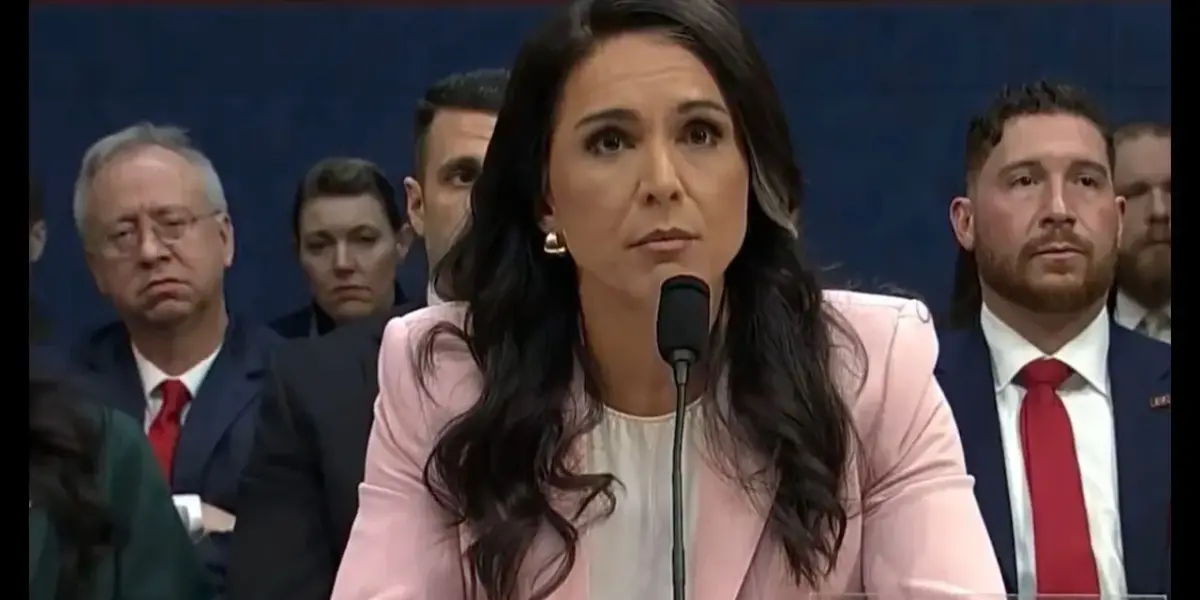
During a recent congressional hearing, former Representative Tulsi Gabbard faced a direct question about Iran’s nuclear capabilities. A congressman pressed her to answer with a simple “yes or no” whether Iran was weeks away from achieving a nuclear weapon. Gabbard’s response, however, was far from direct. She stated it would be a “disservice to the American people to answer with a mere yes or no.” This evasion sparked immediate criticism, suggesting a reluctance to provide a clear answer that might contradict previous statements or political stances.
The Core Conflict: Truth vs. Loyalty
The central argument presented is that Gabbard’s inability or unwillingness to answer the question directly stems from a need to avoid undermining former President Trump’s narrative. Trump had previously declared an imminent threat from Iran, a justification used to launch military action. Answering truthfully, according to this analysis, would have contradicted Trump’s assertion and potentially weakened the rationale for the military campaign. The transcript suggests that Gabbard’s primary role in this context was not to present objective intelligence but to defend Trump’s position, a common tactic described as “officiating and deflecting and filibustering” to avoid contradicting the leader.
Contradictory Statements Emerge
Adding to the controversy, the analysis highlights that Gabbard had, in fact, made statements in a Senate hearing the previous day that seemed to contradict the idea of an imminent threat. She reportedly stated that Iran’s nuclear enrichment program was “obliterated” by U.S. air strikes last summer and that there had been “no effort since then to try to rebuild their enrichment capability.” This admission, if accurate, directly challenges the White House’s claim of an “imminent nuclear threat” that justified the military action. The analysis points out the logical inconsistency: if the program was obliterated and not being rebuilt, how could it pose an immediate danger?
Broader Context: The Pragmatism of Iran’s Nuclear Stance
The discussion expands to include the perspective of former Defense Department official Joe Kent, who also testified. Kent explained that Iran had a religious ruling, a Fatwa, against developing nuclear weapons since 2004. He also noted that Iran’s nuclear strategy appeared pragmatic, balancing the desire to maintain enrichment capabilities with the fear of actions taken against countries like Libya and Iraq. Kent suggested that Iran was likely several months or even years away from developing a weapon, not weeks. This intelligence, he argued, indicated no imminent threat and suggested Iran’s actions were aimed at maintaining leverage rather than immediate weaponization.
“The White House stated on March 1st of this year that this war was launched and was quote a military campaign to eliminate the imminent nuclear threat posed by the Iranian regime end quote. That’s a statement from the White House. Quote, ‘The imminent nuclear threat posed by the Iranian regime.'”
Echoes of Past Warnings: The Cost of War
The analysis revisits Gabbard’s past statements regarding a potential war with Iran. Previously, she had issued strong warnings, calling a war with Iran far more devastating and costly than the war in Iraq. She emphasized the potential for a regional conflict, a greater refugee crisis, and a significant loss of life. These past warnings are contrasted with her current perceived role of defending the Trump administration’s actions, suggesting a shift in priorities driven by political ambition rather than consistent policy positions. The current situation is described as the U.S. being “in a war with Iran right now,” with the key question being whether this war will escalate further and to what end.
Why This Matters
This situation highlights a critical tension in American foreign policy and political discourse: the balance between intelligence assessment, presidential authority, and public accountability. When intelligence is presented as a justification for military action, the public has a right to clear, unvarnished information. The alleged evasion of direct questions by officials, even those with a history of strong opinions, raises concerns about the politicization of intelligence and the potential for decisions of war and peace to be based on political expediency rather than objective facts. The analysis suggests that this dynamic is not unique to Gabbard but reflects a broader trend in the current political environment, where loyalty to a leader may supersede factual accuracy.
Implications and Future Outlook
The implications of this event extend beyond the specific testimony. It raises questions about the credibility of intelligence assessments presented to Congress and the public, especially when they seem to align with a particular political agenda. The potential for any administration to shape the narrative around threats, even in the face of contradictory intelligence, poses a significant challenge to democratic oversight. Moving forward, there is a clear need for greater transparency and a commitment to factual reporting from all government officials, particularly when discussing matters of national security and potential military conflict. The analysis implies that public trust is eroded when officials appear to prioritize political loyalty over truth, making it harder to have informed debates about foreign policy.
Historical Context
The discussion implicitly references the historical pattern of using perceived threats to justify military interventions. The comparison to the Iraq War, a conflict whose stated justifications later came under intense scrutiny, serves as a cautionary tale. The analysis also touches upon the volatile geopolitical landscape of the Middle East, where regional rivalries and nuclear proliferation concerns have been ongoing issues for decades. Understanding Iran’s nuclear program requires looking at its history, its regional relationships, and the global non-proliferation efforts, rather than relying on simplistic, potentially politically motivated narratives.
Source: PANIC: Tulsi Gabbard hit with NIGHTMARE question at hearing (YouTube)

Related Articles

MAGA Faces Crisis: Internal Strife and Public Doubt Emerge
The MAGA movement is reportedly facing internal divisions and growing public doubt. Key issues like the Iran conflict and economic concerns are creating rifts within the base, while criticism questions the movement's appeal and direction. These factors suggest a potential fracturing of the once-unified political force.

Saudi Prince Pushes Trump Toward Iran War Escalation
Saudi Crown Prince Mohammed bin Salman is reportedly urging President Trump to escalate attacks on Iran, pushing for strikes on its energy infrastructure. This strategy would likely harm ordinary Iranians while benefiting Saudi economic interests and the U.S. military-industrial complex. The situation highlights concerns over foreign influence on U.S. foreign policy and the human cost of conflict.

Trump’s Iran Gambit: Can He Claim Victory in a Full Retreat?
Could President Trump claim a victory by withdrawing U.S. forces from Iran? This analysis explores how a retreat could be framed as a success, focusing on weakened Iranian capabilities and broader regional shifts. The core issue remains Iran's financing of proxy groups, a challenge that persists regardless of U.S. presence.