From Palaces to Ponds: Decoding the Absurdity of Unrealistic Tourist Expectations


From Palaces to Ponds: Decoding the Absurdity of Unrealistic Tourist Expectations
In an increasingly interconnected world, where global travel is more accessible than ever, a curious phenomenon continues to capture attention: the emergence of profoundly unrealistic and often absurd travel reviews. A recent compilation of such reviews, many attributed to American tourists, has sparked widespread discussion, highlighting a concerning trend of travelers arriving at iconic destinations with a notable lack of research, cultural awareness, and basic common sense.
These reviews, ranging from complaints about Buckingham Palace’s inaccessibility to the unexpected presence of fish in the sea, paint a vivid picture of a disconnect between pre-trip expectations and the realities of travel. While humor can be found in the sheer audacity of some complaints, the underlying issues point to broader implications for the travel industry, cultural exchange, and the very definition of a meaningful travel experience.
When Grandeur Isn’t Enough: Iconic Landmarks Under Scrutiny
Even the world’s most celebrated architectural and historical marvels are not immune to the scrutiny of the ill-informed traveler. Buckingham Palace, the official residence of the British monarch and a symbol of the United Kingdom, frequently tops visitors’ bucket lists. Yet, one Trip Advisor reviewer, identified as Christopher H, expressed profound disappointment, stating it "didn’t excite me at all." His primary grievance? The inability to "waltz right into the front door" and the perceived greed of the monarchy for occupying its vast 77,000 square meters.
This complaint underscores a fundamental misunderstanding of such a landmark’s purpose and accessibility. Buckingham Palace, a working royal residence, offers limited public access to specific areas during certain times of the year, a fact easily discoverable with minimal research. The expectation of unrestricted entry into a heavily guarded, historically significant private residence reflects a sense of entitlement that often baffles locals and fellow travelers alike.
Similarly, the Eiffel Tower, the undisputed icon of Paris and a triumph of engineering, has faced its share of bizarre criticism. Despite its universal recognition, some tourists have awarded it a one-star Google review, branding it "ugly and unattractive" or suggesting it "should be rebuilt." One particularly witty (or perhaps misguided) individual quipped, "More like awful tower." These reviews often overlook the tower’s original function as a radio tower and its subsequent evolution into a beloved global symbol, focusing instead on subjective aesthetic preferences that contradict its widespread appeal and historical significance.
Basic Expectations: The Missing Manual for Travel
Beyond the grand stages of international landmarks, a surprising number of complaints revolve around a profound lack of basic preparation and understanding of common scenarios. Consider the family who booked a day at a water park but were "woefully unprepared," complaining that "no one told us we had to bring our swimming costumes and towels. We assumed it would be included in the price." This sentiment, often met with incredulity, begs the question of whether these individuals have ever visited a public pool or beach, where personal swimwear and towels are standard requirements.
Another classic example involves international travel documentation. A traveler blamed their travel agent for a missed flight, stating, "We were not reminded to bring our passports and thought that we didn’t need them." The notion that one could travel internationally without a passport, a fundamental requirement for border crossing in nearly every country, highlights a startling lack of personal responsibility and due diligence. Such omissions are not merely inconvenient; they can lead to significant financial losses, disrupted itineraries, and considerable stress, all stemming from a failure to grasp elementary travel protocols.
The theme of unpreparedness extends even to activity-specific holidays. A family embarking on a "skiing holiday" expressed shock at the necessity of skiing, lamenting, "We weren’t informed that we would actually have to be able to ski." Compounding this, another complained it was "far too cold out on our skiing holiday." These comments reveal a detachment from the inherent nature of the activities chosen, suggesting a desire for the *idea* of an experience without engaging with its practical realities or environmental conditions.
Challenging Nature and History: A Quest for Perfect Environments
Perhaps the most bewildering category of complaints targets the intrinsic characteristics of natural wonders and ancient sites. Machu Picchu, the breathtaking ancient Incan citadel nestled high in the Peruvian Andes, has been branded "too high and too old." One reviewer even suggested that this UNESCO World Heritage site "would be improved with Wi-Fi." These criticisms demonstrate a profound disinterest in the historical, archaeological, and geographical significance of such a site, prioritizing modern conveniences over millennia of human ingenuity and natural grandeur.
Similarly, the natural world itself becomes a target for those with bizarre expectations. One traveler was "shocked to find fish in the sea," complaining, "No one told us there would be fish in the sea. The children were getting startled." Another found the "water in the Gulf of Mexico was too salty," remarking, "No one told me there was going to be salt in the water. It was gross." These reviews are not merely humorous; they underscore a concerning lack of basic scientific understanding and an expectation that natural environments should conform to personal comfort zones, rather than being appreciated for their inherent qualities.
The Digital Age Dilemma: Why Research Remains Crucial
In an era where information is literally at one’s fingertips, the prevalence of these ill-informed reviews is particularly striking. The internet offers a wealth of resources – travel blogs, official tourism websites, detailed itineraries, and countless user-generated videos – that can provide comprehensive insights into any destination or activity. Yet, a significant portion of travelers appears to bypass this preparatory phase, choosing instead to arrive with preconceived notions or, worse, no notions at all.
This lack of due diligence extends to consumer protection as well. A customer who purchased "Ray-Ban sunglasses for five euros from a street trader" only to discover they were fake, subsequently complained online. The expectation of acquiring genuine luxury goods at an impossibly low price from an unofficial vendor highlights a gullibility that could be easily circumvented by basic market awareness.
Even personal safety considerations are sometimes ignored. A hot air balloon passenger complained, "There was no sign telling me that you shouldn’t get in a hot air balloon if you’re afraid of heights." This kind of complaint illustrates a startling absence of self-awareness and personal responsibility, expecting service providers to anticipate and warn against deeply personal fears that should be self-identified.
Beyond the Laughs: Understanding the Broader Implications
While these reviews often elicit laughter, they also raise serious questions about the nature of modern tourism. For one, they contribute to negative stereotypes about certain nationalities, particularly the perception of American tourists as entitled or culturally insensitive. More significantly, they can detract from the genuine efforts of local communities and tourism operators to provide authentic and enriching experiences.
The ease of anonymous online reviews, while valuable for legitimate feedback, also provides a platform for disproportionate and often unfounded complaints. This can unfairly impact the reputation and livelihood of businesses, particularly smaller, independent operators who rely heavily on positive word-of-mouth and online ratings.
Ultimately, these absurd travel reviews serve as a stark reminder of the importance of responsible travel. A truly enriching travel experience begins long before departure, with thorough research into the destination’s culture, history, geography, and practicalities. It involves cultivating an open mind, an adventurous spirit, and a willingness to embrace the unexpected – even if that means encountering fish in the sea or discovering that ancient ruins are, indeed, old.
Travel is an opportunity for learning, growth, and connection, not merely a checklist of attractions to be consumed and critiqued through a narrow, self-centered lens. By approaching travel with respect, curiosity, and a basic understanding of the world, tourists can transform potentially frustrating encounters into memorable adventures, fostering a deeper appreciation for global diversity rather than simply complaining about its deviations from their personal bubble.
Source: When Americans Leave RIDICULOUS Travel Reviews | American Reacts | #3 (YouTube)

Related Articles


Trump Warns of More US Deaths in Escalating Conflict
Former President Donald Trump issued a somber warning on Truth Social, stating that further U.S. service member deaths are "likely" as geopolitical tensions escalate. He condemned Iran's former supreme leader, Ayatollah Ali Khamenei, and vowed retribution for fallen soldiers.

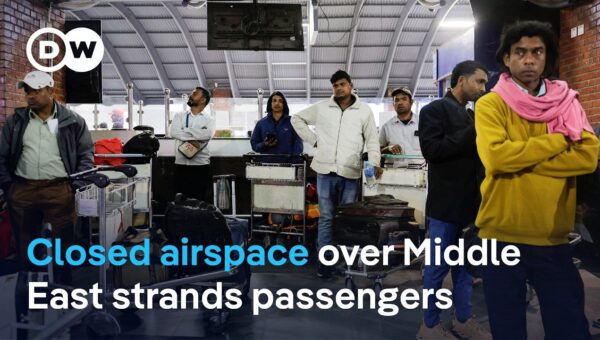
Air Travel Chaos Erupts as Gulf Conflict Shuts Skies
Tens of thousands of passengers are stranded as the conflict in the Persian Gulf forces widespread airspace closures, disrupting global air travel. A tourist in Israel described witnessing air strikes and the desperate search for escape routes amidst rapidly changing travel options.


Gulf States Caught in US-Iran Crossfire, Seek Stability
Gulf states are caught in the escalating US-Iran conflict, facing violations of sovereignty and national security threats. Leaders express a strong desire for stability and economic prosperity, contrasting with the unfolding scenes of regional instability.