From Kyiv’s Blue and Yellow Glow to Fading Echoes: Why Western Support for Ukraine Falters as War Escalates
Four years into Russia's full-scale invasion, global solidarity with Ukraine has waned significantly, transforming from a universal moral cause into a politicized and often overlooked conflict. Despite Russia's escalating brutality and territorial gains, a complex interplay of media fatigue, political opportunism, and the harsh realities of front-line reporting has diluted the West's initial outpouring of support, leaving Ukrainians to face compounding horrors with diminishing international attention.

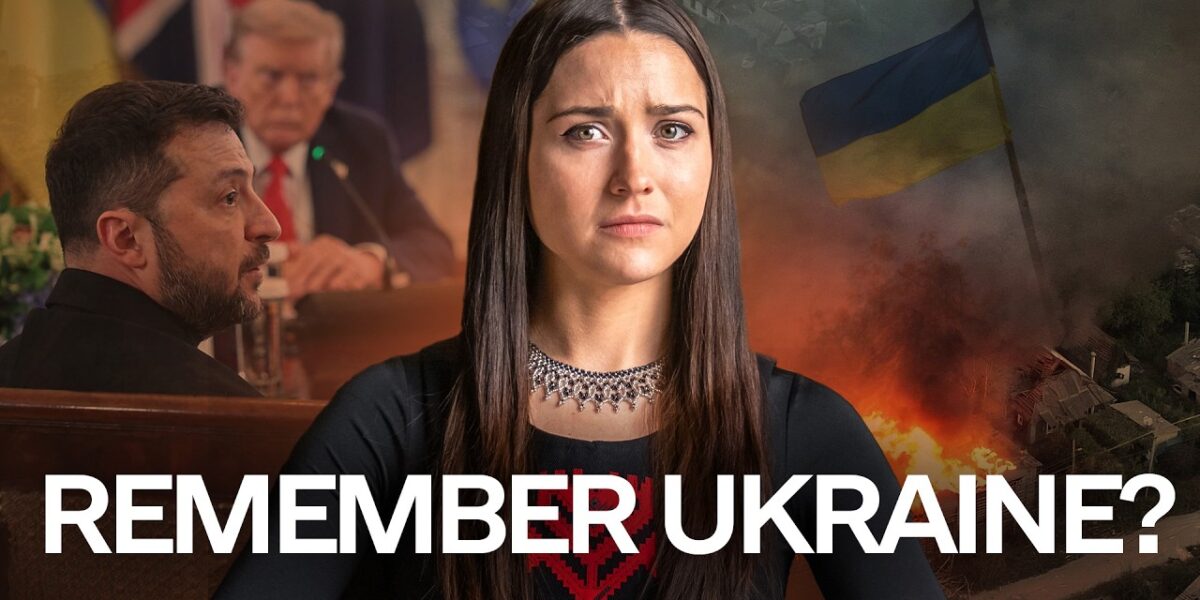
Four Years On: The Shifting Sands of Global Solidarity
February 24th, 2022, marked the beginning of Russia’s full-scale invasion of Ukraine, a brazen act that shattered decades of European peace and ignited an immediate, widespread outpouring of international support. The Kremlin had anticipated a swift victory, a “special military operation” concluded within days. Yet, as the calendar now turns to February 24th, 2026, Russia’s brutal war of aggression will enter its fifth year, a testament to Ukraine’s fierce resistance and the enduring, albeit evolving, geopolitical struggle it represents. The initial global solidarity, characterized by iconic landmarks bathed in blue and yellow and a unified Western front, has regrettably not endured. Instead, the narrative has shifted, support has fragmented, and a pervasive sense of weariness has set in, even as the conflict on the ground has only intensified in its brutality and human cost. This profound transformation from universal empathy to a more hesitant and politicized engagement raises a critical question: why has the West, once so galvanized by Ukraine’s plight, seemingly ‘fallen out of love’ with its cause, even as the stakes for both Ukraine and global security have never been higher?
The stark contrast between the early days of the invasion and the current climate is palpable. Four years ago, the sight of blue and yellow lights illuminating the Eiffel Tower symbolized a world united in defiance of aggression. Today, the very act of paying peaceful tribute to Ukrainian victims, such as an athlete disqualified from the Olympics for decorating a helmet with photos of his fallen countrymen, is deemed a political transgression. Ukraine has now endured full-scale invasion through two US presidencies, three Olympic Games, and the outbreak and even resolution of multiple other foreign conflicts. Since 2022, Russia has relentlessly ground forward on the ground, undeterred in its stated goal of capturing all of Ukraine’s eastern Donbas region. Concurrently, missile and drone strikes on cities across Ukraine have sharply intensified, leaving civilians without electricity, safety, or basic necessities. Yet, beyond Ukraine’s borders, the once near-universal solidarity of early 2022 has given way to something far more fragmented, politicized, and often hesitant. Understanding this drastic change requires a closer look at what initially captivated the world’s attention and the powerful forces that subsequently eroded it.
The Unifying Shock of 2022: When the World Stood with Ukraine
The initial phase of Russia’s full-scale invasion elicited an unprecedented wave of global empathy and outrage, largely due to several compelling factors that resonated deeply with Western audiences. Foremost among these was the sheer shock of witnessing a full-scale war unfold in modern European cities. The imagery of Russian tanks rolling past new high-rises, stores with recognizable brand names, and ordinary people, visibly terrified, brought the stark reality of conflict into the living rooms of millions. This wasn’t a distant war in an unfamiliar land; it was a brutal assault on a sovereign nation with a vibrant, contemporary culture, making it profoundly relatable.
The raw human suffering was captured with unflinching clarity by journalists and filmmakers. The Academy Award for Best Documentary in 2022, awarded to “20 Days in Mariupol,” stands as a powerful testament to how deeply these images shook people to their core. The film depicted the harrowing realities of a bombed hospital, the tragic death of a pregnant woman from a maternity ward, and the desperate pleas of residents begging filmmakers to “show the world what was happening.” This visual documentation of pure brutality, broadcast globally, fostered an immediate and visceral connection with Ukraine’s plight.
Beyond the immediate shock and the graphic imagery, there was a profound understanding that Ukraine was fighting an existential war—a battle not just for territory, but for its very identity and democratic future. For many European countries, the specter of Russian invasion was not an abstract concept; many had experienced it at some point in their history. In the United States, the Cold War remained vivid in public memory, framing the conflict as a clear-cut struggle between democracy and a larger, authoritarian power. This narrative resonated powerfully across the political spectrum in both the US and Europe. The dramatic defense of Kyiv and the subsequent revelation of Russian war crimes in Bucha and other surrounding towns solidified this unity, prompting almost uniform horror and outrage. The world was eager to see “David beat Goliath.”
This era of universal solidarity manifested in significant, highly visible ways. Elon Musk famously donated Starlink terminals to maintain Ukraine’s internet connectivity. Countries across Europe boasted about their superior refugee programs, opening their borders and homes to millions fleeing the conflict. Celebrities flocked to Lviv, a relatively safe city in western Ukraine, on high-profile PR tours, underscoring the widespread popular support. The New York Times, in May 2022, even published an op-ed declaring that President Volodymyr Zelenskyy had “single-handedly reinvented courage.” This period was marked by a clear moral clarity, where supporting Ukraine was seen as a fundamental stand for justice, freedom, and the international rule of law.
From Moral Clarity to Partisan Divide: The Erosion of Support
However, the initial surge of unity proved to be fleeting. By 2024, as America geared up for a contentious presidential election, Ukraine had been tragically transformed into a full-blown partisan issue. The “Make America Great Again” (MAGA) movement, spearheaded by figures like Donald Trump, began to propagate a narrative strikingly similar to the Kremlin’s: that support for Ukraine was financially and morally detrimental to Americans, and that it was not America’s responsibility. This rhetorical shift was quickly mirrored by right-wing European leaders, who launched campaigns claiming that military aid to Ukraine was devastating their economies and that Ukrainian refugees, now that the initial “outbreak of war” was over, no longer deserved ongoing support.
Donald Trump’s pronouncements further exacerbated this divide. He vowed to “end the war within 24 hours” of taking office, a promise that notably did not involve helping Ukraine defeat Russia. The transcript suggests a future scenario where he would explode at President Zelenskyy but welcome Vladimir Putin to US soil, breaking the dictator’s post-2022 exile from the West. This narrative pivot was profoundly damaging: Ukraine was no longer universally perceived as the consummate victim, even in the eyes of some of its former allies. It was being reframed as a “burden.”
Four years after Russia launched its ill-fated “3-day operation,” a drastic shift is evident. Foreigners express exhaustion with the subject of the war. Politicians, particularly in the West, now choose their words carefully, wary of aligning their political futures too closely with Ukraine’s. Russia, meanwhile, has quietly begun to re-enter nearly every major international event and competition. The scandal at the Winter Olympics, where a Ukrainian skeleton athlete was disqualified for a helmet tribute, starkly illustrates how merely expressing support for Ukraine is now considered a political act in 2026. This erosion of overt support, even as Russia’s invasion escalates, creates a profound sense of isolation and despair for Ukrainians on the ground.
The Fading Headlines: Media Fatigue and Competing Crises
A significant factor in the decline of international attention has been the evolving media landscape and the natural human tendency towards “news fatigue.” The most shocking images that initially tugged at foreign hearts and sensibilities were predominantly captured in the early weeks and months of the full-scale invasion. This wasn’t necessarily because all the “big stuff” happened at the beginning, but rather due to a dual dynamic: Russia was indeed committing widespread atrocities, and crucially, there were far more people documenting them, and many more news outlets publishing them. Newsrooms rapidly established on-the-ground presences, deploying reporters and hiring freelancers, allocating substantial resources to cover the unfolding tragedy.
Today, a profound sense of “insanity” grips those living in Ukraine, witnessing damage that would have been front-page news in 2022, screaming for justice, now barely appearing in the international columns. This decline in demand for news about Ukraine stems from several interconnected issues:
The Unraveling of Optimism:
In the beginning, many naively believed the war could be won militarily by one side within months. This optimism began to unravel as it became clear that, even with allied aid, Ukraine was not positioned for a swift, outright victory. The dramatic defense of Kyiv gave way to protracted battles for small towns in Ukraine’s east and south. High-definition images of urban warfare were replaced by grainy drone footage of muddy trenches and ashen landscapes, depicting smaller, harder-to-define victories that were far less visually compelling for foreign audiences.
The Stagnation of the Front Line:
The Ukrainian counteroffensive of 2023, while achieving some gains, ultimately failed to keep Russia on the back foot for long. Moscow established a slow, grinding advance that it has maintained, however slowly and at immense human cost. Ukraine never returned to its initial prominence in headlines, and the average foreigner who followed the Battle of Kyiv with bated breath likely no longer has a clear picture of the front line’s current location. This prolonged, attritional warfare, lacking dramatic shifts, is inherently less captivating for a global audience accustomed to rapid news cycles.
Competition from Other Global Crises:
Hand-in-hand with news stagnation is news fatigue, exacerbated by a world constantly grappling with new challenges. The outbreak of war between Israel and Hamas in October 2023, for instance, immediately redirected significant media resources and public attention from Ukraine to the Middle East. While the severity of that conflict is undeniable and justified media focus, it was far from the only issue to dilute the attention Ukraine so desperately needed. Global recessions, looming presidential elections, and various other crises, both present and emerging, have all contributed to a general exhaustion among the global public. “It’s been a long four years for everyone,” as the transcript notes, a reality that has inadvertently benefited Russia.
As Ukraine has receded from headlines, Russia has shrewdly seized the opportunity to quietly return to international institutions and events. The Kremlin is counting on even those who expressed strong support for Ukraine in 2022 to soften their stance over time, particularly when faced with the financial and social pressures of permanently excluding Russia amid what appears to be a stagnant war. This strategic re-engagement highlights Russia’s long-term calculus, banking on Western impatience and short attention spans.
The Perils of Reporting: A More Dangerous Front Line
Beyond issues of public demand, there are significant “supply issues” when it comes to reporting from Ukraine, particularly concerning the safety and accessibility for journalists. The front line has become a far more perilous place over the past four years, not just for soldiers and medics, but also for journalists and humanitarians. The proliferation of FPV (First Person View) drones, now a staple short-distance weapon for both sides, has dramatically altered the dynamics of the battlefield. These lethal, highly maneuverable drones can target individuals and vehicles with devastating precision, pushing the “safe zone” further and further back, in proportion to their ever-increasing range.
A more dangerous front line directly translates into greater challenges for journalists seeking to access and report stories. Luke Harding, a veteran foreign correspondent for The Guardian, vividly describes this escalating danger. “If you go back to 2022, soon after the full-scale invasion, you could go to frontline positions, you could spend time with Ukrainian soldiers in trenches,” he recounts. “What we’ve seen is that the war has become a war of technology and of drones. It’s become an aerial war where tanks, armored vehicles can be immediately knocked out and instead we’re talking about flying drones dropping bombs.” Harding notes that the “kill zone,” which was initially a mere 1 to 8 kilometers, has now expanded to 25 or even 30 kilometers, making any proximity to the front line extremely hazardous. Several journalists have tragically been killed in recent months by Russian drones that “will lock onto a vehicle, chase it, and then blow it up.”
This increased danger forces a profound change in calculus for both individual journalists and newsrooms. For a reporter, the desire to get a good story and speak with Ukrainian soldiers or civilians in frontline areas must be weighed against the very real threat to life. For news organizations, the prospect of a staff member being killed while on assignment is a significant liability, both ethically and financially. Consequently, many foreign news outlets have reduced their staff on the ground, imposed stricter rules that prevent reporters from getting too close to danger, or increasingly rely on freelancers, for whom they might claim less responsibility if an incident occurs. All of these measures, as the transcript highlights, have become common practice in Ukraine over the last four years. It’s not that dramatic stories have ceased; it’s that the ability to safely and thoroughly capture them has become exponentially more difficult.
The Shrinking Media Landscape and the Imperative of Human Stories
The challenges to reporting from Ukraine have been further compounded by broader shifts in the global media landscape, particularly cuts to publicly funded media. In the United States, under what the transcript refers to as “Trump 2.0,” sweeping reductions have had a direct impact on Ukrainian journalism. Various regional Ukrainian media companies, which relied on grants from USAID, have been forced to shut down. US-funded outlets with Ukrainian bureaus, such as Voice of America and Radio Free Europe, have faced mass layoffs and closures, significantly reducing the volume of on-the-ground reporting emanating from Ukraine and other countries where a free press is often censored.
Even privately funded media has not been immune. The Washington Post, owned by Amazon founder Jeff Bezos, drew widespread shock and outrage when it laid off a third of its staff, including all its reporters assigned to Ukraine and the Middle East. This trend signals a broader retreat from expensive and dangerous international reporting, further diminishing the global public’s access to first-hand accounts from the conflict zone.
Luke Harding acknowledges the prevalent notion of “Ukraine fatigue,” describing it as a “great cliché” that people have moved on to other scandals or conflicts. However, he argues that this sentiment is often “overstated,” pointing to metrics from The Guardian that still show “a lot of interest in Ukraine.” The challenge for reporters, he explains, is “how you tell this story in an original way.” This requires “more and more creativity,” “entrepreneurship,” and “a little bit more imagination.”
When asked how to reconcile escalating violence with decreasing attention, Harding’s answer is clear: “I mean, I think the answer is to tell human stories.” He believes that focusing on “people caught up in this situation” is what truly captures attention, moving beyond the geopolitics to the individual experience. For Harding, this war is not just about geopolitics; it’s “an attempt by fascist Russia… to destroy, conquer, and subjugate Ukraine.” His personal motivation stems from a harrowing backstory during his time as The Guardian’s Moscow bureau chief, where he and his family were pursued by the FSB. This experience provided him with an early and deep understanding of the Kremlin regime’s “internationally adventurous and dangerous” nature, solidifying his “moral duty” to report on Ukraine.
Harding’s perspective underscores the profound global implications of the conflict. He asserts that “Putin doesn’t stop with Ukraine,” envisioning a reconstituted “new old Russian empire” that would encompass the Baltic states and potentially roll into Poland. For him, Kyiv is the “place where the destiny of the 21st century is going to be decided,” much like Berlin during the Cold War. If Kyiv stands, he believes, “democracy stands, international law means something, liberal values still exist.” Conversely, if Ukraine falls, the world faces an “epoch of nihilism and darkness.” Therefore, for journalists like Harding, being on the ground and bearing witness is not merely a job but a crucial act of preserving truth and advocating for a just world order.
The Weaponization of Ukraine: Political Rhetoric and Misinformation
Beyond media dynamics and the realities of reporting, the decline in support for Ukraine is inextricably linked to the weaponization of the conflict as a rhetorical tool, particularly by influential political figures. Donald Trump’s 2024 campaign for re-election, and his subsequent actions after taking office, repeatedly questioned the scale of assistance pledged to Ukraine under his predecessor, Joe Biden. He framed this aid not as an investment in global security or a moral imperative, but as a “sacrifice” on the part of every American, arguing that the financial burden should instead fall on Europe. This narrative effectively reframed Ukraine’s survival from a shared cause to a burdensome obligation.
The impact of this rhetoric was profound. Trump, his family, and members of his administration, knowing they were under public scrutiny, liked and reposted memes that painted Ukraine as “corrupt, thieving, and gleeful with itself for pulling one over on America.” This deliberate campaign of misinformation and character assassination transformed what was initially a moral issue, resonating across the political spectrum, into a starkly partisan one. Polling data confirmed a decline in support for aid to Ukraine among Republican voters, while it remained relatively steady among Democrats, solidifying this partisan divide.
This rhetorical shifting of Ukraine from “victim” to “burden” was not confined to America. In Europe, right-wing parties in Germany, France, Italy, and Slovakia echoed elements of this skepticism, calling for negotiations closer to Moscow’s preferences or arguing that sanctions were not worth the harm to domestic economies. Even the rights of Ukrainian refugees, once universally welcomed, came into question in countries as close as Poland, as arguments emerged that indefinite support was unsustainable. The tragic irony is that “at a time when Ukraine is more dangerous than ever, people fleeing are treated with more contempt and suspicion than ever.”
Trump’s stated desire to “settle the conflict fast” and his fluctuating stance between favoring Zelenskyy and Putin created a dangerous misconception outside Ukraine: that a peace deal could be reached at “basically any time if both sides would just agree to a set of terms.” Ukrainians, however, understand the grim reality: the two positions remain so irreconcilable that agreement without one side capitulating is impossible. Russia’s “minimal stated goals” inherently involve destroying Ukraine as a sovereign state, and agreeing to a “bad peace deal” would merely ensure Russia’s future reinvasion, a temporary reprieve before another, potentially more devastating, assault.
An expert guest, “Tim,” elaborates on this weaponization of Ukraine. He pinpoints Donald Trump’s direct intervention as the primary catalyst for Ukraine becoming a partisan issue in the US. While acknowledging a divide, Tim notes that “it’s less of a partisan issue than many other issues in American politics,” with a significant number of Republicans still supporting aid. His research indicates that opinions, especially among evangelical Trump supporters, were most swayed when reminded that “this was an issue that President Trump had advanced.” This suggests a powerful leader-follower dynamic, with figures like Tucker Carlson and JD Vance largely following Trump’s lead.
Tim also highlights the importance of framing. If the issue is presented as “not rewarding Russia for taking Ukraine’s territory,” support remains high. However, if framed simply as “peace in ending the war,” floating voters might be swayed towards a premature settlement. While Russia “certainly tries very hard to exacerbate the cleavage,” Tim believes the “real drivers here are on the right, people like Tucker Carlson, JD Vance, who for a variety of different reasons seem to have a much more sympathetic view of Russia and a pretty critical view of Ukraine.” Despite these efforts, he emphasizes that such views are “generally outside of the mainstream,” with broad public sympathy for Ukraine still prevalent in the US.
Ukraine’s Enduring Struggle and Trusted Allies
Despite the waning international attention and the political headwinds, Ukraine has demonstrated remarkable resilience. It thwarted Russia’s predicted three-day military operation, significantly grown its military capabilities, and innovated weapons and technology at warp speed. Crucially, it has maintained a strong national identity under sustained pressure. In many ways, Ukraine is in a better strategic and operational position than it was on February 24th, 2022. Yet, four years of relentless trauma and loss have left indelible damage and an exhaustion that often feels insurmountable. Almost no one within Ukraine believes the conflict will end soon; for them, “the worst could always be ahead of us.”
This ongoing, compounding horror stands in stark contrast to the fact that “very few people outside of Ukraine are fully aware of, much less speaking up for what’s happening.” The decline in support did not occur because the war improved or Ukraine needed less help. It lessened because powerful individuals exploited Ukraine as a device for their own agendas, because Russia slowly crept back into international acceptance, encouraging convenient historical narratives, and because fewer people were on the ground bearing witness to Russia’s escalating violence. To all who have stood with Ukraine for the last four years, the message remains clear: “We’re not giving up.”
The geopolitical implications of this conflict extend far beyond Ukraine’s borders, a reality keenly understood by certain European nations. Tim Sad Rajn from the Kyiv Independent’s National Desk explains that Vladimir Putin’s war aims were never limited to capturing a few villages in Donbas or even Kyiv. His ambitions are much broader: “something like a new Yalta conference of 1945, a deal between great powers dividing Europe into spheres of influence.” In such a world, countries like Estonia, Latvia, and Lithuania would not be fully sovereign actors. This understanding shapes their unwavering support for Ukraine.
For the Baltic states and Poland, supporting Ukraine is not abstract solidarity; it is an act of self-defense. “They know if Russia succeeds in Ukraine, they are next in line.” This contrasts with some countries in Western Europe, particularly Germany and France, which historically viewed Russia as a “rational actor,” believing, even weeks before the full-scale war, that Putin could be diplomatically appeased. However, other Nordic countries like Denmark, Finland, and Sweden have emerged as some of Ukraine’s strongest backers, particularly in terms of military aid.
While Ukraine values the critical assistance provided by all its European allies, particularly Germany and France, it “instinctively trusts the most are those that never misunderstood Russia in the first place.” This includes Estonia, Latvia, Lithuania, Poland, and the Nordic states. Their historical experience and clear-eyed assessment of Russia’s revanchist ambitions make them steadfast partners, recognizing that the battle for Ukraine is fundamentally a battle for the future of European security and the liberal international order.
Conclusion: The Enduring Imperative to Bear Witness
As Russia’s full-scale invasion of Ukraine enters its fifth year, the initial wave of global solidarity has undeniably receded, replaced by a complex tapestry of political expediency, media fatigue, and the grim realities of prolonged conflict. The journey from blue and yellow lights on the Eiffel Tower to an Olympic athlete being penalized for a peaceful tribute encapsulates this disheartening shift. Yet, the war’s fundamental nature has not changed; if anything, Russia’s brutality has only intensified, and the stakes for global security remain as high as ever.
The erosion of support is a multi-faceted phenomenon, driven by the natural limitations of public attention, the strategic re-entry of Russia into international forums, the increasing dangers and dwindling resources for on-the-ground journalism, and perhaps most significantly, the deliberate politicization of the conflict by influential figures seeking to advance their own agendas. Despite these challenges, Ukraine continues to fight, demonstrating remarkable resilience and innovation. The human stories from the front lines and cities under siege remain as vital as ever, serving as a powerful counter-narrative to the prevailing fatigue.
The future of Ukraine, and by extension, the trajectory of the 21st-century international order, hinges on a renewed commitment to understanding the conflict’s true nature and consequences. The unwavering support of nations that have historically understood Russia’s imperial ambitions offers a blueprint for sustained engagement. As journalists like Luke Harding attest, the moral imperative to bear witness, to tell the human stories, and to articulate the broader geopolitical implications remains paramount. To look away now would be to tacitly endorse an “epoch of nihilism and darkness” and to abandon the principles of democracy and international law that were so fiercely championed just four years ago. The call to remember, to understand, and to act, despite the weariness, is more urgent than ever.
Source: Russia's war has worsened – so why the silence? | Ukraine This Week (YouTube)

Related Articles

Trump: Iran Strikes Ahead of Schedule, Expects ‘Great Deal for World’
Three U.S. service members have been killed amid escalating conflict with Iran, President Trump confirmed. He stated that strikes are ahead of schedule, with senior Iranian leaders killed, and expressed optimism for a "great deal for the world" despite ongoing talks with Iranian officials.

Trump’s Putin Stance: US Strategy and Global Implications
Analysis suggests Donald Trump's approach to the Ukraine war involves pressuring Kyiv, but US involvement is crucial for resolution. China's influence and the 'MAGA' agenda's geopolitical implications are key factors.


US Strikes Iran: Mounk and Fukuyama Discuss Unpredictable Conflict
Leading political scientists Yascha Mounk and Francis Fukuyama analyze the recent US strikes on Iran, warning of unpredictable outcomes and internal instability. They question the objectives of the "war of choice" and its potential to destabilize the region, while also discussing the shifting global perceptions of Israel.