From Handlers to Highways: The Unfolding Saga of Charlie Kirk and Turning Point USA
A series of escalating controversies surrounds Charlie Kirk, Erica Kirk, and Turning Point USA, from theories of Erica acting as a 'handler' and unconfirmed allegations of inappropriate conduct, to the controversial naming of a highway after Charlie Kirk. These events highlight a perceived misplacement of Republican priorities amidst pressing national issues, fueling public debate over the direction of conservative youth activism.

From Handlers to Highways: The Unfolding Saga of Charlie Kirk and Turning Point USA
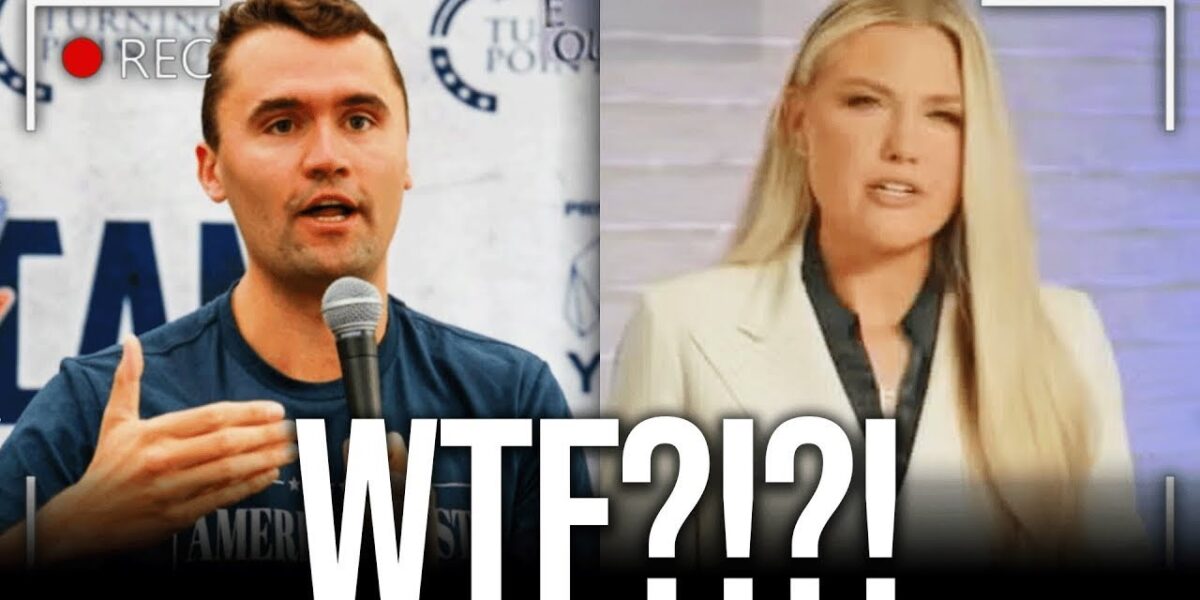
The conservative landscape has been abuzz with an escalating series of controversies surrounding Charlie Kirk, his wife Erica Kirk, and the influential youth organization, Turning Point USA (TPUSA). What began as whispers of unusual circumstances has rapidly evolved into a multifaceted public debate, fueled by prominent right-wing commentators and circulating social media allegations. At the heart of this unfolding drama are theories regarding Erica Kirk’s role, unconfirmed but widely discussed allegations of inappropriate conduct, and the Republican Party’s seemingly perplexing priorities, including the controversial naming of a highway after Charlie Kirk.
The constant online chatter reflects a deep public fascination with the inner workings of TPUSA, an organization that has become a significant force in mobilizing young conservatives. However, recent developments have cast a shadow over its operations and the figures at its helm, prompting questions about transparency, ethical conduct, and the broader direction of conservative activism in America.
The ‘Handler’ Hypothesis: Tim Dillon’s Provocative Claim
One of the most startling claims to emerge from the recent flurry of speculation comes from comedian and right-leaning commentator Tim Dillon. Known for his blunt, often cynical observations, Dillon recently articulated a theory that has sent shockwaves through online conservative circles: the possibility that Erica Kirk acted as a ‘handler’ for Charlie Kirk. This assertion, delivered with characteristic candor, suggests a relationship far more complex than a conventional marriage, implying a degree of guidance, control, or even manipulation over a prominent public figure.
A ‘handler’ in political or public relations contexts typically refers to an individual who manages, advises, or exerts significant influence over a public personality, often shaping their public image, messaging, and strategic decisions. For Dillon to suggest such a role for Erica Kirk, particularly in the aftermath of what has been described as a ‘tragic event’ (implying Charlie Kirk’s death, though the transcript doesn’t explicitly confirm it, it speaks of a ‘tragic death on its face’ and ‘three weeks after the guy’s dead’), adds a layer of intrigue and suspicion to the narrative surrounding TPUSA’s leadership.
Dillon’s commentary points to what he perceives as ‘weird’ and ‘creepy’ behavior from Erica Kirk, specifically mentioning her public appearance with sparklers shortly after the event. This detail, widely circulated online, has been interpreted by some as incongruous with a period of mourning, further fueling the handler theory. The implication is that if Kirk was indeed a ‘powerful young guy who raised a lot of money for a lot of people and took a lot of money from a lot of people,’ then the concept of a handler guiding his actions, especially in ‘sculpting narrative as it regards to domestic and foreign policy,’ becomes a potent, if speculative, explanation for certain observed phenomena.
While the speaker in the original discussion acknowledges the ‘massive conspiracy’ aspect of Dillon’s claim, he also highlights its significance, noting that such a direct and public assertion from a figure like Tim Dillon is ‘a big deal.’ This underscores the weight that such high-profile commentary can carry, even when based on conjecture rather than confirmed facts. The handler theory, despite its speculative nature, has become a central point of discussion, prompting followers to question the true dynamics within TPUSA and the extent of external influences on its direction.
Unconfirmed Allegations: Texts, Mentorship, and ‘Uncle Jeff’
Adding another layer of controversy to the saga are serious, albeit unconfirmed, allegations circulating online regarding Erica Kirk’s alleged interactions with an underage individual. A TikTok video, garnering significant attention, purports to show explicit text messages exchanged between Erica Kirk, then 25, and a 15-year-old high school sophomore. The content of these alleged texts, described as highly explicit, includes suggestive remarks and an expressed desire to ‘touch her butt for Valentine’s Day.’
The allegations further claim that the 15-year-old referred to Erica Kirk as her ‘mentor,’ raising deeply troubling questions about the nature of their relationship. The video also introduces a mysterious ‘Uncle Jeff,’ who allegedly began giving the girl money, paying for vacations, and taking her friends out on boats, while sending ‘weird texts’ and acting ‘like he wants to date her.’ The TikTok suggests a potential, albeit unconfirmed, connection between ‘Uncle Jeff’ and Erica Kirk, hinting at a broader network of concerning interactions.
It is crucial to emphasize, as the original speaker does, that there has been ‘no confirmation that this is real.’ Despite the lack of official verification or denial, these allegations have generated ‘a lot a lot a lot of buzz’ across social media platforms. The very existence of such claims, regardless of their veracity, poses a significant reputational challenge for Erica Kirk and, by extension, Turning Point USA. An organization that positions itself as a leader in youth engagement and conservative values faces immense scrutiny when its key figures are implicated in such serious, even if unproven, accusations.
In today’s hyper-connected digital age, unverified claims can spread like wildfire, shaping public perception long before facts can be established. For TPUSA, these allegations contribute to an atmosphere of distrust and suspicion, potentially alienating supporters and providing ammunition for critics. The absence of a clear and definitive response, whether a confirmation, a denial, or an ongoing investigation, leaves a vacuum that speculation readily fills, perpetuating the ‘weirdness’ surrounding the entire situation.
The ‘Charlie Kirk Memorial Highway’ and Republican Priorities
Amidst the personal controversies, Turning Point USA and the broader Republican Party are facing criticism for their perceived misplacement of priorities. A particularly striking example cited is the decision by Lake County Commissioners in Florida to unanimously vote to name a new highway, the ‘Charlie Kirk Memorial Highway,’ connecting Lake and Orange counties. This decision has sparked outrage and incredulity, especially when contrasted with the denial of a request for the late Reverend Jesse Jackson Sr. to lie in honor at the United States Capitol.
The act of naming public infrastructure after individuals is typically reserved for figures of profound historical significance or those who have made extraordinary contributions to the public good. Reverend Jesse Jackson Sr., a towering figure in the Civil Rights Movement, a two-time presidential candidate, and a lifelong advocate for social justice, undoubtedly fits this criterion. His impact on American society, politics, and the fight for equality is undeniable and far-reaching. The refusal to honor him at the Capitol, a hallowed space for national remembrance, while simultaneously pushing for highways named after Charlie Kirk, highlights a stark and perplexing dichotomy in conservative political priorities.
Critics argue that this move reflects a broader trend within the Republican Party: a focus on symbolic gestures and culture war provocations rather than addressing the tangible economic hardships faced by everyday Americans. The original speaker vehemently questions the Republican Party’s strategy, asking, ‘What the hell is the Republican party doing? They want to get clicks. They want to focus on naming roads and riling people up with the, you know, anti-woke agenda.’ This sentiment resonates with a significant portion of the electorate grappling with persistent inflation, stagnant wages, and an affordability crisis.
Consumer sentiment, as noted in the discussion, is near an all-time low. Americans are struggling to afford basic necessities, working multiple jobs to cover rent, and witnessing a decline in their purchasing power. Against this backdrop, the prioritization of naming a highway after a contemporary conservative activist, while ignoring pressing economic woes and historical figures of immense national importance, appears tone-deaf and politically misguided. It suggests a party more concerned with ideological signaling and rallying its base through cultural grievances than with pragmatic governance and improving the material conditions of its constituents.
The Broader Context: Economic Hardship, Unaddressed Scandals, and Cultural Warfare
The criticism of Republican priorities extends beyond highway naming to a host of other unaddressed national issues. The speaker points to the failure to tackle inflation, the ongoing revelations from the Epstein files, and former President Donald Trump’s alleged involvement in covering up the ‘largest most prominent pedophile ring in our lifetimes.’ These are not trivial matters; they represent profound moral, economic, and social crises that demand serious attention from political leaders. The perceived silence or deflection on these issues, contrasted with the party’s fervent engagement in culture wars, creates a narrative of evasion and irresponsibility.
Furthermore, concerns about Donald Trump’s foreign policy stances, his alienation of international allies, and controversial potential cabinet selections (such as RFK Jr. for Health and Human Services, amidst plummeting vaccine rates) are highlighted as critical issues that are being overshadowed by what critics deem as trivial pursuits. The cumulative effect is a portrayal of a political movement adrift, more preoccupied with ideological purity tests and symbolic battles than with the complex challenges facing the nation.
Turning Point USA’s Ventures and the Culture Wars
Turning Point USA itself is not immune to criticism regarding its strategic choices and cultural engagements. The discussion mentions TPUSA’s ‘alternate halftime show’ and its association with figures like Kid Rock. The observation that Kid Rock sold ‘less than 200 tickets for a show in Pennsylvania’ for a future date, and that the TPUSA show ‘did nothing for his career,’ suggests a lack of efficacy in some of the organization’s high-profile ventures. These events, often designed to be provocative and counter-cultural, appear to be failing to translate into tangible success or broader appeal, raising questions about their overall impact and strategic value.
A particularly telling example of TPUSA’s engagement in the culture wars is the ‘lib buzzword bingo’ segment. The transcript describes a ‘grown adult’ at a TPUSA event playing bingo with progressive terms like ‘community,’ ‘hard times,’ ‘support,’ ‘stay strong,’ and ‘my voice,’ in response to an Olympic athlete’s statement about fighting for human rights. This act, interpreted as ‘blatant homophobia’ and a ‘self-own,’ epitomizes the organization’s approach to political discourse: mocking and dismissing progressive language rather than engaging with the underlying issues.
The speaker critically asks, ‘Why is community live? This is such a like self-own in a way. Live buzzword bango community hard times support you. There’s no community on the on the conservative side. We don’t believe in community. Stay strong. Just blatant like homophobia here. My voice. Can’t have your own voice in the conservative uh realm. Got to be Donald Trump’s voice actually. Whatever Donald Trump is doing.’ This highlights a perceived intellectual and moral vacuum, where genuine empathy and constructive dialogue are replaced by derision and rigid adherence to a singular ideological line. Such tactics, while potentially energizing a base, risk alienating broader audiences and contributing to a more fractured and unproductive political landscape.
Conclusion: A Movement at a Crossroads
The ongoing controversies surrounding Charlie Kirk, Erica Kirk, and Turning Point USA reveal an organization and a broader political movement grappling with significant internal and external pressures. From the sensational ‘handler’ theories and unconfirmed allegations of inappropriate conduct to the highly politicized decisions regarding public honors and the relentless pursuit of culture wars, TPUSA finds itself at the center of a storm of speculation and criticism.
The disconnect between the Republican Party’s stated priorities and the pressing needs of everyday Americans, coupled with the perceived triviality of some conservative ventures, underscores a deeper struggle for relevance and legitimacy. As these narratives continue to unfold, the public remains hungry for clarity and accountability, prompting a continuous call for answers to the many questions that linger over the ‘weirder’ side of conservative youth activism.
Source: Charlie Kirk Situation Just Got Weirder (YouTube)

Related Articles
FBI Director Accused of Misusing Aircraft Amid Investigation Delays
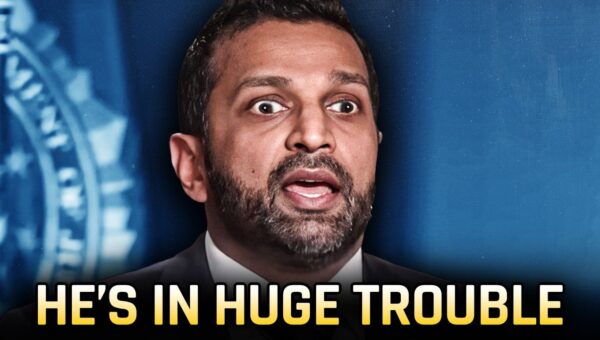
FBI Director Cash Patel is reportedly under investigation for alleged misuse of government aircraft, potentially delaying responses to critical events. A whistleblower claims Patel's travel exhausted FBI pilots, impacting response to the Charlie Kirk assassination. Further scrutiny surrounds his recent trip to Milan, with questions raised about the veracity of statements from his spokesperson.

Kansas Law Sparks Outrage by Revoking Transgender IDs
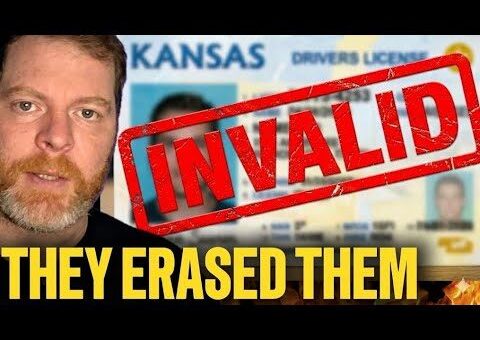
Kansas lawmakers have enacted a law retroactively invalidating IDs for approximately 1,700 transgender residents, sparking outrage and concerns over civil rights. The legislation also includes a controversial bathroom ban with citizen enforcement provisions.

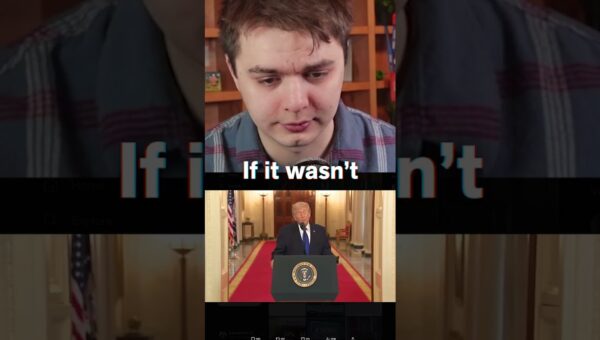
Donald Trump’s White House Speech Sparks Controversy: Critics Decry ‘Rambling’ Election Claims and Perceived Disrespect to ‘Angel Families’
Former President Donald Trump's recent White House speech is drawing criticism for his persistent, unsubstantiated claims of a "rigged election" and his demeanor. Critics argue his rhetoric, especially when addressing "angel families," shows disrespect and undermines democratic trust.