Friedman Warns of ‘Indiscipline’ in Iran Policy
Thomas Friedman criticizes the U.S. administration's "indiscipline" in its Iran policy, warning of potential chaos. He highlights the historical significance of 1979 and contrasts potential positive outcomes in Iran with the administration's perceived lack of strategic planning. Friedman also suggests Iran's current strategy aims to destabilize global markets.

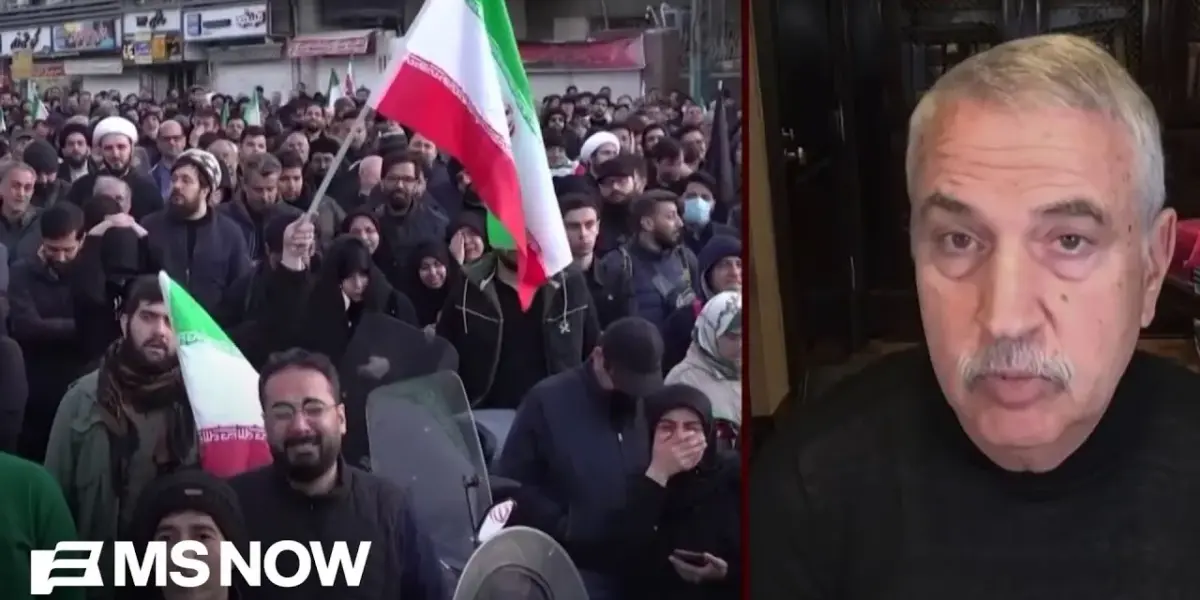
Friedman Expresses Concerns Over U.S. Iran Policy Amidst Regional Tensions
New York Times columnist Thomas Friedman has voiced significant concerns regarding the current U.S. administration’s approach to Iran, describing it as lacking the coherence and discipline necessary for effective foreign policy. Speaking on a recent broadcast, Friedman highlighted the precariousness of the situation, particularly in light of recent events involving Iran and the broader Middle East.
The Best-Case Scenario: A Negotiated Shift in Iran
Friedman outlined what he considers the most optimistic outcome in the current climate. “The best-case scenario is that the combination of the decapitation of the leadership in Iran so ISLAMIC REPUBLIC 2.0, NOT SOME MASS UPRISING OF THE PEOPLE BUT WHERE THE REFORMIST WING… is able to come to the fore now in alliance with members of the IRCG and the Iranian military. And they negotiate a deal with Trump that goes a long IT’S A LONG WAY TOWARD LIMITING OR RESTRICTING ITS NUCLEAR CAPABILITY AND LIMITING ITS MALIGN INFLUENCES AROUND THE REGION,” he explained. However, he stressed that this scenario, while desirable, is far from guaranteed, especially given the nascent stage of the current events.
A Historical Perspective: The Echoes of 1979
To understand the current dynamics, Friedman provided a historical primer on Iran and the region, emphasizing the pivotal year of 1979. “I came to Beirut as a reporter in 1979. And here’s what happened my first year on the job. The Iranian Revolution, the takeover of the Grand Mosque in Meckha in Saudi Arabia… The Russian invasion of Afghanistan, the signing of the Camp David Treaty, the opening of a port in Dubai… and the meltdown of a nuclear facility called Three Mile Island,” he recounted. He described 1979 as a year that birthed a “gigantic struggle between forces of inclusion and resistance” and the subsequent globalization that shaped the Middle East for decades.
Friedman drew a parallel between the current situation and the shifts initiated by Saudi Crown Prince Mohammed bin Salman (MBS). “MBS came along with all his faults and with all the terrible killing of Khashoggi, but nevertheless, he reversed 1979. He brought Saudi Arabia back from that radical Islamist track into a country focused on its people and its future,” Friedman noted. He believes that a similar reversal in Iran, moving away from its current theocratic leadership towards a focus on its people’s potential, could significantly improve the region’s prospects for integration and inclusivity.
Concerns Over U.S. Administration’s “Indiscipline”
Despite the potential upside of a reformed Iran, Friedman expressed profound skepticism about the current U.S. administration’s capacity to navigate such a complex geopolitical moment. “I do not have a lot of confidence in this administration’s ability to navigate this moment. They’re good at creating leverage. They’re not very good at using it, I think in a sophisticated way,” he stated. He specifically criticized the perceived lack of strategic thinking and communication, citing instances of the president engaging with the press rather than focusing on formulating a coherent message with advisors.
“When you don’t know where you’re going, any road will get you there. And I’m just so worried about the word that Richard Haass used earlier this morning, the complete indiscipline of this administration,” Friedman lamented. He characterized the current foreign policy team as “not the A-Team of American foreign policy” and warned against the dangers of initiating actions without a clear plan for their conclusion, drawing a parallel to the chaotic aftermath of the intervention in Libya.
“The opposite of autocracy is not democracy. The natural opposite is disorder. And so to fight against that, you do not want━disorder in Libya is one thing, because Libya imploded. But disorder in Iran is something completely different. It would explode.”
Iran’s Strategy: Targeting Markets and Trump’s “Soft Underbelly”
Regarding Iran’s recent actions in the region, Friedman posited that the regime’s strategy is to target what they perceive as President Trump’s “soft underbelly”: the stock market and the economy. “Iran wants to create as much chaos, turmoil in global oil markets and global financial markets. They think that will freak Trump out and make him more vulnerable in negotiations,” he explained. Friedman suggested that Iran’s aim is to drive up oil prices and drive down stock markets, hoping to pressure Trump into concessions.
A Call for Allies and Deeper Thought
Friedman also underscored the importance of international alliances, noting the administration’s recent strained relationships with allies. “It would also be nice to have a few allies, you know? Maybe now having told the rest of the world and our allies to go to hell, you know, for a year on tariffs, this would be a really good time to have some trusted allies,” he remarked. He concluded by emphasizing the need for “deep thinking” and a more disciplined, coordinated approach to foreign policy, especially when dealing with a nation as significant as Iran.
Source: 'Not the A-Team of American foreign policy': Thomas Friedman on his concerns over Iran strikes (YouTube)

Related Articles

Trump’s Global Gambit Ignites Worldwide Chaos
A deep dive into escalating global conflicts and strained alliances, this analysis connects a series of international incidents to Donald Trump's foreign policy decisions. It explores the implications for global stability and the potential reshaping of the world order.


Donbas: Russia’s Obsession, Ukraine’s Stand, and the Path to Peace
As the Russia-Ukraine war nears its fourth year, the intense fighting in Ukraine's eastern Donbas region has become a focal point. Russia's persistent demand for control over the Donetsk Oblast is met with Ukraine's unwavering defense of its sovereignty, raising questions about the possibility of peace through territorial concession and the broader implications for global security.

Trump Admin Launches ‘Epic Fury’ Operation Against Iran
The Trump administration has launched "Operation Epic Fury," a significant aerial campaign against Iran, described as the most lethal in history. Officials stated the operation aims to end decades of Iranian aggression and prevent the nation from acquiring nuclear weapons.