Fraudster Raised $26 Million on Fake Tech
A businessman allegedly raised over $26 million from investors for his company, Quantum Age Corporation, by making fraudulent claims about groundbreaking technologies. The SEC has filed civil charges, accusing the company of being a near-total fraud that used investor funds for personal expenses and a Ponzi scheme.

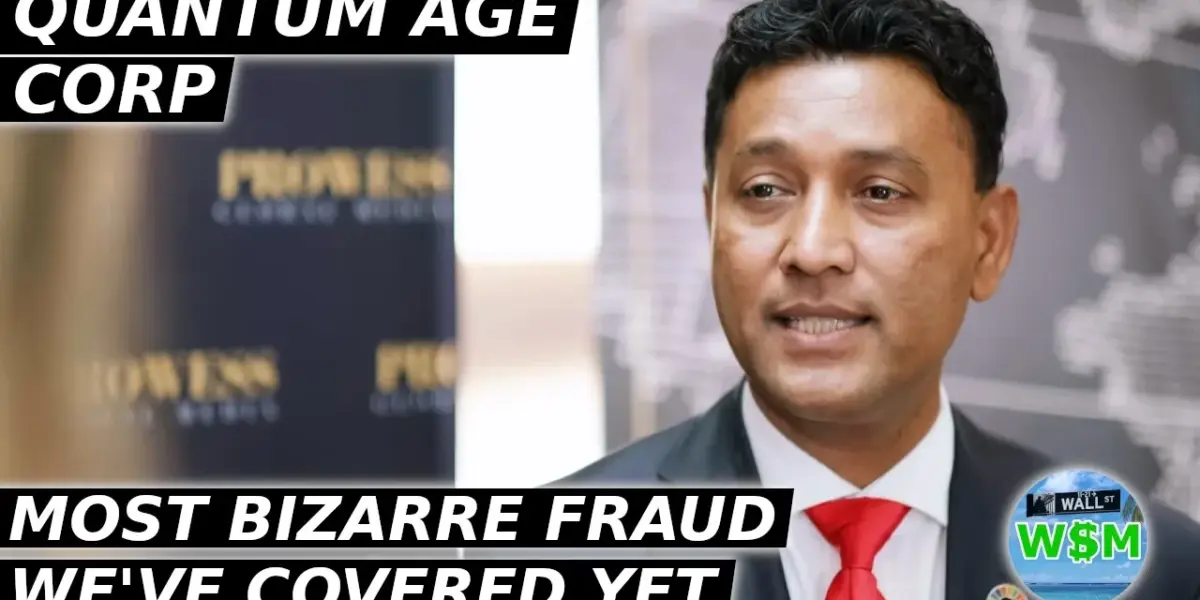
Fraudster Raised $26 Million on Fake Tech
A Bangladeshi businessman named Faz Chowdhury has been accused of defrauding investors out of over $26 million through his company, Quantum Age Corporation (QAC). The company, which operated for nearly five years, made outlandish claims about groundbreaking technologies that experts say were impossible and lacked any real substance.
Chowdhury founded QAC in 2019, rebranding from an earlier company, Disruptive Technology Innovations (DTI), which he started in 2016. Together, DTI and QAC raised approximately $26.4 million from 50 investors between 2018 and 2023. The average investment was a significant $500,000, indicating that the investors were high-net-worth individuals.
Dubious Claims and Buzzwords
Quantum Age Corporation presented itself as a technology innovation and venture-building company. It claimed to be commercializing a range of technologies aimed at creating “paradigm shifts” in various industries. These included electric vehicles, energy, fintech, data security, and health and wellness. The company’s promotional materials used a flurry of buzzwords common in the investment world at the time, such as “decarbonization technology,” “preventative and personalized medicine,” and “financial inclusion.” QAC also claimed to own a portfolio of companies developing electric and solar vehicles, organic batteries, and advanced data security solutions.
One of QAC’s purported subsidiaries, Quantum Motors, promised to develop low-cost, solar-powered electric vehicles. It claimed these vehicles would have a greater range than Tesla’s and be 10 to 100 times more energy efficient, with production costs as low as $5,000. The company also envisioned futuristic transportation systems like “quantum flash tubes” for high-speed travel, reminiscent of Elon Musk’s Hyperloop concept. However, the Quantum Motors website, like much of QAC’s online presence, was filled with generic stock photos and vague descriptions, lacking any concrete details, prototypes, or manufacturing information.
False Credentials and Misappropriated Inventions
A key part of Chowdhury’s alleged scheme involved fabricating his own credentials. According to the U.S. Securities and Exchange Commission (SEC), Chowdhury falsely claimed to hold degrees from prestigious universities like UC Berkeley, Stanford, MIT, and Harvard Business School. He also claimed to have worked at Intel and to be the original inventor of graphene, a Nobel Prize-winning discovery made by two professors in 2004. These academic and professional claims were all fabricated.
Chowdhury also leveraged the reputation of MIT professor Ian Hunter. Hunter, a serial entrepreneur, confirmed he met Chowdhury in 2014. Chowdhury presented himself as Dr. Chowdhury with a PhD in physics. Hunter hired him as a marketing executive at his company, Indigo Technologies. However, Hunter discovered in 2016 that Chowdhury did not have a PhD. Despite this, Hunter agreed to help promote Chowdhury’s new company, DTI, for a $300,000 consulting fee. Hunter has not been charged with any crime and denies involvement in the alleged fraud.
A Classic Ponzi Scheme Structure
The SEC stated that both DTI and QAC were largely fraudulent operations. The company’s subsidiaries were described as shell companies with no real operations. Chowdhury allegedly used funds from new investors to pay back earlier investors from DTI, a hallmark of a Ponzi scheme. Of the $26.4 million raised, only about $6.6 million was reportedly spent on legitimate operating expenses, such as office rent and employee salaries. QAC reportedly had only a few employees, many of whom were Chowdhury’s family members.
Chowdhury is accused of spending substantial investor funds on personal expenses. This included $1 million for car payments, meals, wine, travel, and jewelry. Another $7.9 million was transferred to shell companies believed to be controlled by Chowdhury. A significant portion, $2.1 million, was withdrawn from ATMs inside casinos in Las Vegas and Lake Tahoe, suggesting a potential gambling problem. Astonishingly, $7 million of the raised funds remain unaccounted for.
SEC Charges and Ongoing Investigation
In September 2023, the SEC filed civil charges against Faz Chowdhury and Quantum Age Corporation, leading to the shutdown of QAC and the freezing of its bank accounts. However, by that time, the accounts were nearly depleted. While the SEC has brought civil fraud charges, Chowdhury has not yet faced criminal indictment. He denies all wrongdoing, and the legal proceedings are ongoing.
Despite the charges, Chowdhury remains active. Court documents show he lost $56,000 at a Las Vegas casino in early 2025, possibly using some of the unaccounted-for funds. He has also created a new online profile, claiming to be the founder of “Graphine Valley Corporation,” a venture focused on advancing graphene for industrial and environmental progress. This new venture echoes the fraudulent claims made by his previous companies, raising concerns about potential future fundraising efforts.
Market Impact
This case highlights the persistent risks of investment fraud, particularly in sectors that capture investor imagination, like clean energy and advanced technology. The use of buzzwords and fabricated credentials can be highly effective in attracting capital, especially during periods of market exuberance. Investors must conduct thorough due diligence, look beyond ambitious claims, and verify all credentials and operational details before committing funds.
What Investors Should Know
The Quantum Age Corporation saga serves as a stark reminder that even sophisticated investors can fall victim to elaborate fraud schemes. The story underscores the importance of:
- Verifying Credentials: Always independently verify educational backgrounds, professional experience, and any claimed patents or technological breakthroughs.
- Skepticism Towards Vague Claims: Be wary of companies that rely heavily on buzzwords and aspirational statements without providing concrete evidence of operations, products, or revenue.
- Due Diligence: Thoroughly research the company, its management, and its business model. Look for independent validation of its technology and market position.
- Understanding Red Flags: Recognize common signs of fraud, such as pressure to invest quickly, lack of transparency, unusual payment methods (like large ATM withdrawals), and the use of funds to pay off earlier investors.
The SEC’s action against QAC and Chowdhury demonstrates regulatory oversight, but the significant amount of money lost and the apparent continuation of similar ventures by the accused suggest that vigilance remains paramount for all investors.
Source: The Bizarre Story Of The Quantum Age Corp (YouTube)

Related Articles


Trump Sons’ CNBC Interview Sparks Controversy with ‘Ponzi Scheme’ Remark and Incoherent Defenses
A recent CNBC interview with Donald Trump Jr. and Eric Trump has ignited controversy, with the brothers defending their business practices against allegations of leveraging their father's political influence. Their responses, described as incoherent by some, included Eric Trump's rambling account of banks canceling them due to political affiliation, and a striking remark from Donald Trump Jr. about being "at the top of the Ponzi scheme that was banking," a statement that has raised significant legal and ethical concerns.


Nvidia’s Self-Driving Tech Powers LA Test Drive
Nvidia's L2++ autonomous driving platform was tested in a real-world LA drive, showcasing its sensor fusion and decision-making capabilities. The company plans a nationwide rollout and Level 4 robo-taxi services, signaling strong progress in the autonomous vehicle market.


GOP Lawmaker Demands ‘Aggressive’ AG Replacement
GOP lawmakers are divided over border security funding as one representative calls for a more "aggressive" Attorney General. The debate over funding and the upcoming replacement for AG Pam Bondi highlight internal party struggles. Meanwhile, concerns about birthright citizenship and FEMA's low disaster fund add to the political landscape.