Fox News Urges Tankers to Risk Lives, Sparking Outrage
Fox News host Brian Kilmeade's suggestion that oil tankers should sail through war zones to diminish threats has sparked outrage. Critics argue this encourages mariners to risk their lives for political gains, raising ethical and safety concerns.


Fox News Suggests Risky Maneuvers for Oil Tankers
In a recent segment that has ignited considerable debate, Fox News host Brian Kilmeade suggested that oil tankers should navigate through a war zone, a proposition met with swift condemnation from critics. The controversial statement, made in the context of international tensions involving Iran, posits that such a bold move could diminish the perceived Iranian threat and lead to “complete Iran capitulation.” Kilmeade’s remarks, which have drawn comparisons to his earlier controversial comments about the homeless, have raised serious questions about the nature of advice being dispensed on national television.
The Call for “Guts”
Kilmeade’s argument, as presented in the transcript, centers on a direct appeal for courage and decisive action. He stated, “If you want to diminish the Iranian threat, if you want to make sure that this ends up with complete Iran capitulation, sew some guts and go through that straight and and do it.” This sentiment frames the act of sailing through a potentially dangerous maritime area not merely as a logistical choice, but as a strategic imperative with significant geopolitical implications. The underlying assumption appears to be that a show of force, even at considerable risk to commercial shipping, would yield a favorable political outcome.
Ethical and Safety Concerns Emerge
The response to Kilmeade’s suggestion has been overwhelmingly critical. The core of the objection lies in the ethical implications of encouraging individuals to undertake life-threatening missions for political gain. As one observer pointed out, “oil tanker captains and crews shouldn’t be asked to risk their lives to help Trump’s polling numbers.” This perspective highlights the perceived disconnect between the high-stakes reality faced by mariners and the political machinations being discussed on air. The question is stark: are media personalities advocating for dangerous actions that have direct, potentially fatal consequences for ordinary civilians?
Historical Context of Maritime Tensions
The geopolitical landscape surrounding maritime routes, particularly in regions like the Persian Gulf, has a long and often volatile history. Throughout various periods of conflict and tension, the safety of commercial shipping has been a recurring concern. International waters, while ostensibly open to all, can become flashpoints when national interests clash. The Strait of Hormuz, a critical chokepoint for global oil supplies, has been a focal point of such tensions on numerous occasions. Past incidents involving the seizure of vessels, attacks on shipping, and naval standoffs underscore the inherent risks associated with these waterways during times of heightened conflict. The current suggestion by Kilmeade, therefore, does not exist in a vacuum but echoes historical anxieties about the weaponization of maritime traffic and the potential for escalation.
Media Responsibility and Advice-Giving
The incident also brings into sharp focus the responsibility of media outlets in shaping public discourse and the advice they offer. When a prominent news channel features commentary that appears to endorse or encourage risky behavior, it raises questions about editorial oversight and the potential for irresponsible messaging. The phrase “What kind of advice are these people giving live on Fox News on Monday morning? Jesus” encapsulates the disbelief and dismay felt by many regarding the perceived recklessness of the suggestion. In an era where information is disseminated rapidly and widely, the impact of such statements can be profound, potentially influencing public perception and even real-world actions.
Why This Matters
This incident highlights several critical issues: the ethical boundaries of political commentary, the safety of commercial mariners in conflict zones, and the role of media in advocating potentially dangerous actions. The lives of tanker crews are not abstract bargaining chips in geopolitical games. Their work is essential to the global economy, and their safety should be paramount. The suggestion that they should voluntarily put themselves in harm’s way to achieve a political objective is not only ethically dubious but also demonstrates a concerning detachment from the human cost of such strategies. It questions whether the pursuit of political narratives on television can override fundamental principles of human safety and responsibility.
Implications, Trends, and Future Outlook
The implications of such rhetoric are far-reaching. It risks normalizing the idea that human lives can be expendable in the pursuit of political objectives. For the shipping industry, it underscores the ongoing vulnerability of maritime operations in volatile regions. This trend could lead to increased insurance costs, a reluctance of crews to serve on certain routes, and heightened international scrutiny of naval and political actions that endanger commercial traffic. Looking ahead, there is a continued need for responsible journalism that prioritizes factual reporting and ethical considerations over sensationalism and political expediency. The future outlook suggests that as geopolitical tensions persist, discussions surrounding the safety of maritime trade will remain critical, and the media’s role in these conversations will be under constant examination. The challenge for media organizations is to provide analysis that is both insightful and grounded in respect for human life and international law, rather than issuing calls to action that could have devastating consequences.
Source: Fox Host Tells Tankers To Sail Through War Zone #politics #fyp #new (YouTube)

Related Articles


Iran Appoints New Leader Amid Escalating Global Tensions
Iran has appointed Mojtaba Khamenei, son of the former leader, as its new Supreme Leader amidst escalating international conflict. The war has driven oil prices to record highs, impacting global markets and American consumers. Meanwhile, the U.S. military toll rises, and travel faces significant disruption due to the government shutdown.
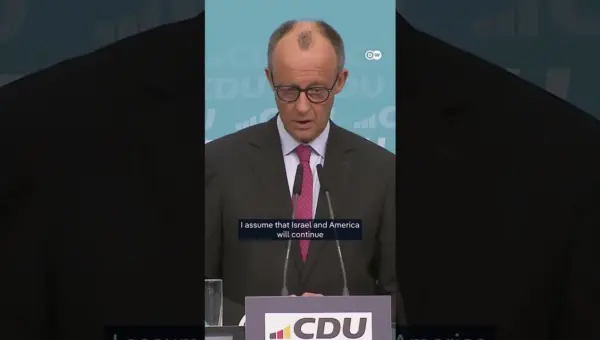
Merz: “Iran is the center of international terrorism, and must be shut down”
CDU leader Friedrich Merz has labeled Iran the "center of international terrorism" and called for the downfall of its current regime. Merz argued that regime change in Tehran is the quickest path to ending regional conflicts and that Iran's support for groups like Hamas and Hezbollah makes it a primary threat.
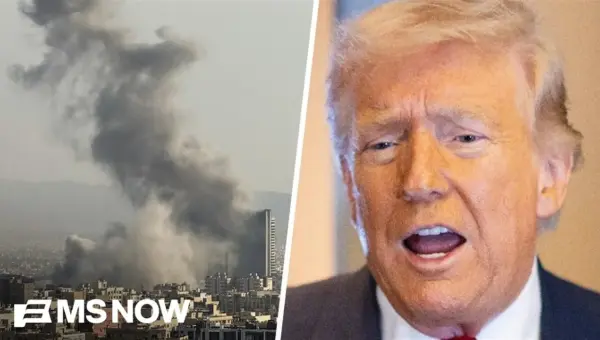
US Mulls Iran Ground Troops, Draft Amid Escalating Tensions
The White House is reportedly considering extreme military options against Iran, including the potential deployment of ground troops and even a military draft. Retired Colonel Jack Jacobs expressed skepticism about a draft but discussed limited scenarios for special forces raids.