Fox News Fights Itself: Trump’s War Exposes Deep Divides
Fox News appears to be grappling with internal dissent and a fractured narrative following Donald Trump's recent foreign policy actions. Analysis of on-air segments reveals conflicting viewpoints on the necessity and impact of military engagement, alongside indications of declining public support for the former president.

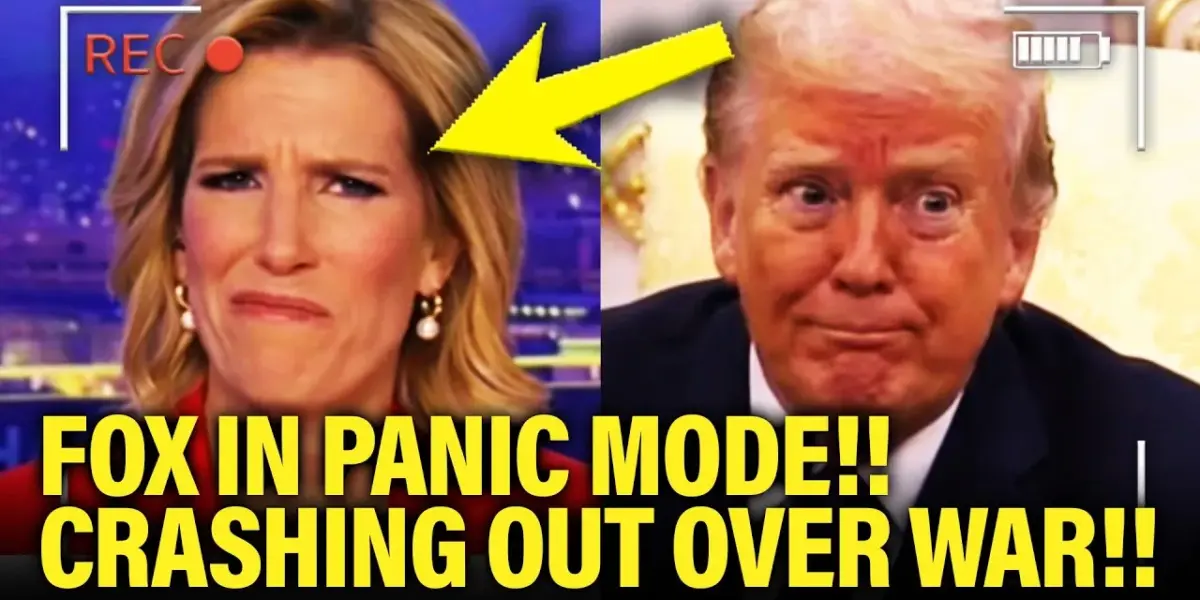
Fox News Fights Itself: Trump’s War Exposes Deep Divides
In the volatile landscape of political media, fissures are appearing in even the most established fortresses. A recent analysis of Fox News’s coverage surrounding Donald Trump’s foreign policy actions, particularly in relation to Iran, suggests a network struggling to maintain a unified narrative. Far from presenting a monolithic front, segments of the network and its guests reveal internal disagreements and a growing unease, even as the former president’s standing appears to be faltering in public opinion.
Polls Show Trump’s Popularity Plummeting
The narrative presented is that Donald Trump’s recent actions, interpreted as a “disastrous war,” have backfired, turning the country against him. This sentiment is reportedly reflected in a “lowest of the entire time he’s been in president” Yugov poll, suggesting a significant dip in his support. The implication is that a major foreign policy misstep could be directly correlated with a decline in his political capital.
Internal Dissent Among Pundits and Politicians
The transcript highlights several instances of what appears to be internal friction within the broader conservative media ecosystem and its political allies. Senator Lindsey Graham is quoted questioning the necessity of preventing Iran from posing an “imminent threat,” a sentiment that, if accurately represented, reveals a surprising divergence from a hawkish stance. The presenter’s incredulous reaction – “The whole idea is for it not to be imminent, dumbass. You want to prevent it from being imminent” – underscores the perceived absurdity of such a position within the context of national security debates.
Laura Ingraham, often seen as a staunch Trump supporter, is depicted attempting to frame the debate as a stark choice between “good and evil,” seemingly acknowledging that Trump’s base is not as monolithic as once believed. Her framing suggests a desire to rally support by appealing to fundamental moral principles rather than specific policy achievements, perhaps an indication of an effort to shore up a wavering base.
Jesse Watters is presented as pushing a narrative of strategic triumph, claiming that actions against Iran and Venezuela have effectively “tipped over two pro-dictatorships” and given the U.S. control over the global oil market, thereby weakening Russia and China. This portrayal of a “checkmate” scenario, however, is juxtaposed with the acknowledgment of rising gas prices and inflation, raising questions about the immediate economic impact on the American public.
The Israel Factor and Shifting Justifications
The role of Israel in prompting U.S. military action is also a point of contention. Senator Tom Cotton is cited suggesting that Israel’s existential threat from Iran necessitated U.S. intervention to protect American troops. This framing places the impetus for conflict on an ally’s security needs, a common but often debated justification for foreign engagement.
Ambiguous Support and Conflicting Messaging
Mike Vole, a former Trump advisor, is presented as asserting that the actions align with what “77 million Americans voted for,” emphasizing a commitment to keeping promises and not being taken advantage of. However, this assertion is made in the context of rising gas prices and economic uncertainty, leading to a more nuanced or even contradictory message from other Fox hosts.
Jesse Watters appears to acknowledge the immediate economic pain, stating, “In the short term, you’re going to see a little inflation. But if it’s a successful operation, prices are going to way, way down and the stock market is going to rip.” This prediction of future economic benefits serves as a potential balm for present anxieties, but relies heavily on the success of the military action.
Even figures typically seen as loyal to Trump, like Caroline Sunshine, express reservations. She is quoted stating, “I voted for President Trump and I worked for President Trump because I didn’t want to hear statements like that from my government again regarding American involvement in the Middle East.” This sentiment, coupled with her questioning of whether the objectives are in the “direct national interest of the United States,” suggests a growing skepticism about prolonged military engagement, even among those who have previously supported Trump.
The Broader Media Landscape
The transcript also touches upon the broader media environment, with host Tyrus lamenting the lack of fair coverage from mainstream media and asserting that corporate news is “owned by right-wing oligarchs.” This statement, while potentially intended to defend Fox News, also hints at a perception of media consolidation and bias across the spectrum.
The interaction between host Will Cain and General Jack Keane further illustrates the challenging environment. Cain’s elaborate preamble expressing respect for the General, before asking a question, is met with a curt, “You don’t have to patronize me. Just ask the question.” This brief exchange highlights the pressure on journalists to be direct and avoid perceived platitudes when discussing serious matters of war and national security.
Dana Perino’s Counter-Narrative
In contrast, Dana Perino is shown offering a counter-narrative, suggesting that the situation would be far worse under a Kamala Harris presidency, particularly concerning negotiations with Iran. This framing aims to reinforce the perceived necessity and competence of the current administration’s approach by contrasting it with a hypothetical, less capable alternative.
Why This Matters
The internal dissonance within Fox News, as depicted in this analysis, is significant. It suggests that the political and military actions of a former president are not being uniformly embraced, even by his traditional media allies. This fracturing could indicate a shift in public opinion or a growing realization among some commentators that the narrative of unwavering support is becoming untenable. The ability of a media outlet to maintain a coherent message when its key political figure is facing public scrutiny and internal dissent is a critical indicator of its influence and stability. The differing perspectives on the economic fallout versus the strategic gains, and the underlying justifications for military action, reveal a complex tapestry of opinions that challenge a simple, one-sided portrayal of events.
Implications, Trends, and Future Outlook
This analysis points to several key trends. Firstly, the increasing difficulty in maintaining a unified pro-Trump narrative, even within sympathetic media outlets. Secondly, the growing public awareness of the economic costs associated with foreign conflicts, which can overshadow strategic objectives. Thirdly, the complex interplay between domestic politics and foreign policy decisions, where partisan loyalties are tested by real-world consequences. The future outlook suggests a continued struggle for Fox News to reconcile its audience’s expectations with the evolving political and geopolitical realities. As Donald Trump navigates his current political standing, the media ecosystem supporting him will likely continue to grapple with internal disagreements, making it harder to project an image of unwavering consensus.
Historical Context and Background
The events discussed unfold against a backdrop of decades of U.S. involvement in the Middle East, marked by interventions, proxy conflicts, and shifting alliances. The Iran nuclear deal, negotiated under the Obama administration and later rescinded by Trump, represents a key point of contention and a historical marker in U.S.-Iran relations. The ongoing debate over the role of American exceptionalism, interventionism versus isolationism, and the prioritization of national interests versus international cooperation are recurring themes in U.S. foreign policy discourse. The transcript’s references to “regime media” and “state propaganda” reflect a broader trend of increasing polarization and distrust in traditional media institutions, a phenomenon that has intensified in recent years.
Source: Fox News LOSES CONTROL on AIR As Trump’s WAR BACKFIRES (YouTube)

Related Articles
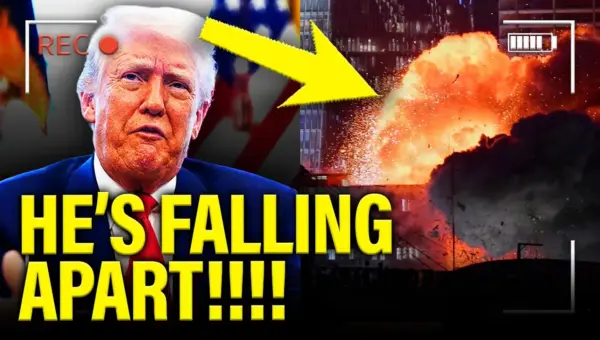
US War in Iran Escalates Amidst Domestic Economic Woes
As the war in Iran intensifies, the Trump administration faces mounting domestic economic challenges, including job losses and depleted retirement savings. Officials downplay the conflict's severity while critics highlight the human and financial costs.

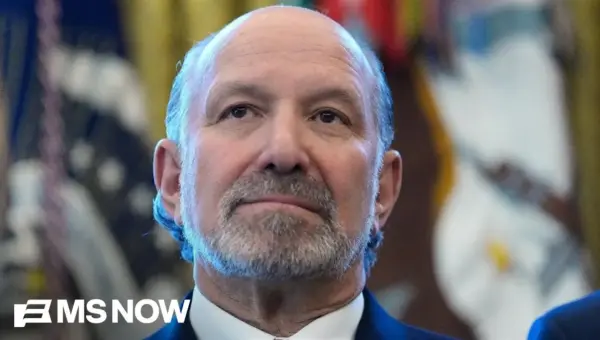
Rep. Garcia Blasts Commerce Sec. Lutnick Over Epstein Ties
Rep. Robert Garcia has sharply criticized Commerce Secretary Howard Lutnick over his Epstein ties, stating the committee was prepared to subpoena him. Garcia also called for Donald Trump's testimony and criticized Republican priorities in the House Oversight Committee's investigation.
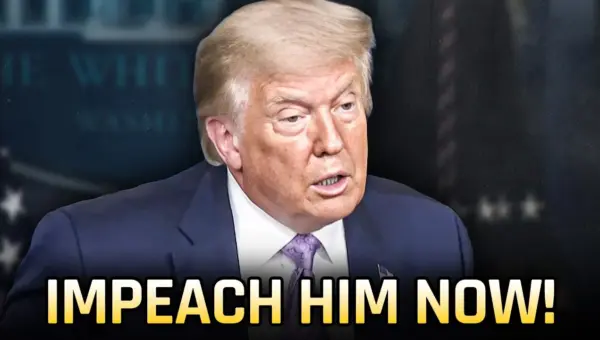
Trump’s War Declaration Sparks Impeachment Storm
Recent military actions in Iran, explicitly called a "war" by the Trump administration, have reignited calls for impeachment. The debate centers on the constitutional authority to declare war, traditionally vested in Congress, and the implications of the AUMF.