Fox News Declares Victory: Echoes of ‘Mission Accomplished’ in Iran?
Fox News has been quick to declare victory in Iran, echoing George W. Bush's infamous "Mission Accomplished" declaration. Critics argue this premature triumphalism ignores the creation of a power vacuum and escalating regional tensions, drawing parallels to the prolonged Iraq War.


A Premature Proclamation of Victory
In the volatile landscape of international conflict, the narrative surrounding military action is often as crucial as the action itself. Recent events in Iran have seen a striking parallel drawn between current rhetoric and a historically infamous declaration: George W. Bush’s “Mission Accomplished” speech aboard the USS Abraham Lincoln in May 2003. As the United States engages in military operations in Iran, a segment of media, notably Fox News, has been quick to proclaim victory, a move that critics argue echoes the premature and ultimately misleading pronouncements of the past.
The Echo of “Mission Accomplished”
The phrase “Mission Accomplished” has become indelibly linked with the Iraq War, a stark reminder of how quickly triumphant declarations can be overshadowed by prolonged conflict and unforeseen consequences. For many, the image of President Bush in a flight suit on an aircraft carrier, a banner proclaiming “Mission Accomplished” behind him, serves as a potent symbol of overconfidence and a disconnect from the unfolding reality on the ground. This declaration, made just shortly after the initial invasion of Iraq, preceded nearly a decade of ongoing conflict, insurgency, and significant loss of life. The phrase itself has since become a cultural touchstone, often invoked sarcastically to denote failure or a premature end to efforts.
Fox News’ Swift Declaration of Victory
The current situation in Iran, according to reports, has seen a remarkably swift embrace of a similar victory narrative by Fox News. Within 72 hours of the commencement of U.S. bombing campaigns, a chyron on Laura Ingraham’s program reportedly declared, “WE’VE ALREADY WON.” This sentiment was echoed by other prominent figures. Sean Hannity, on his program, featured Republican Senator John Kennedy, who also stated, “We’ve already won.” Even prior to the strikes, JD Vance, as reported by Fox News, expressed a similar sentiment of victory.
This rapid and unequivocal declaration of success stands in stark contrast to the apparent ambiguity surrounding the administration’s own objectives and duration of involvement. Critics point to a lack of clarity regarding the specific goals of the military engagement and even internal disagreements on the initial justifications for the attacks. This perceived lack of clear strategy or defined objectives from the administration makes the media’s swift pronouncements of victory all the more perplexing and, to some, alarming.
Unforeseen Consequences and a Power Vacuum
The core argument against these premature declarations of victory centers on the unfolding realities in Iran. Rather than a clear-cut success, the situation is described as having created a power vacuum. Reports suggest that individuals or groups potentially more dangerous than the current leadership are poised to fill this void. Furthermore, Iran’s response has reportedly been more robust and far-reaching than anticipated, with missile strikes targeting surrounding regions – a reaction that, according to the analysis, Iraq did not exhibit to the same degree following the U.S. invasion.
The metaphor used is potent: the action taken has been likened to kicking a hornet’s nest, with the ensuing chaos and retaliatory stings affecting a wide radius. This suggests that the initial military action may have destabilized the region further, leading to a less secure and more unpredictable environment, rather than achieving a decisive and positive outcome.
Historical Parallels and Political Irony
The parallels drawn to the Bush administration’s “Mission Accomplished” moment are not merely stylistic; they highlight a potential pattern of misjudging the complexities of foreign interventions. Donald Trump, who has himself been a vocal critic of the Iraq War and George W. Bush’s handling of it, is now associated with an action that could lead to a similar, if not worse, quagmire in the Middle East. This presents a significant irony, as a leader who campaigned on a platform of questioning foreign entanglements and criticizing past military decisions appears to be presiding over a situation that mirrors the very failures he once denounced.
The decision-makers, often situated in comfortable, insulated environments far from the conflict zone, are seen as detached from the on-the-ground realities. While they may be observing events from afar, the consequences of their decisions are borne by those in the region and potentially by international stability. Even allies of Donald Trump in the Middle East are reportedly expressing significant dissatisfaction with the current turn of events, underscoring the widespread concern about the direction of U.S. policy.
Why This Matters
The rapid declaration of victory in the face of ongoing conflict and uncertain outcomes carries significant implications. It risks sanitizing the realities of war, downplaying the human cost, and fostering a false sense of security. Such narratives can obscure the true objectives and effectiveness of military actions, making it difficult for the public to engage in informed debate or hold leaders accountable. The historical precedent of “Mission Accomplished” serves as a cautionary tale about the dangers of triumphalism in warfare, particularly when the long-term implications are not fully understood or acknowledged.
Implications, Trends, and Future Outlook
The trend of swiftly declaring victory in complex geopolitical situations, especially when amplified by partisan media outlets, suggests a growing disconnect between battlefield realities and public perception. This can be exacerbated in an era of rapid information dissemination and the constant demand for immediate narratives. The future outlook for the situation in Iran, if characterized by prolonged instability and regional escalation, will likely continue to test the validity of any initial claims of success. The “Mission Accomplished” framing, if maintained, will serve as a stark reminder of the potential for rhetoric to diverge from reality, potentially leading to further disillusionment and a deeper understanding of the true costs of conflict.
Source: Fox Has Already Declared ‘Mission Accomplished’ In Iran (YouTube)

Related Articles


Trump’s Economy Crumbles Under War and Tariffs
New job numbers reveal a devastating loss of 100,000 jobs in February, a sharp contrast to economist expectations and a blow to the administration's economic narrative. Escalating geopolitical tensions and tariffs are cited as major contributors to this downturn, impacting key sectors and financial markets.


Trump’s Iran Policy Under Fire: Vietor Questions Regime Change Strategy
Tommy Vietor of Crooked Media warns that the Trump administration may be underestimating the challenges of confronting Iran. He questions the feasibility of regime change operations against an "ideologically driven" regime and expresses concern over the lack of a clear strategy for what comes next.
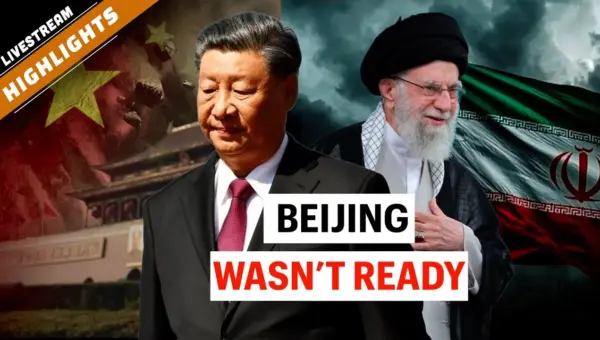
Iran Strike Exposes China’s Deepest Fears: Regime Survival
The targeted strike in Iran has exposed deep-seated fears within China's leadership, triggering anxieties about regime survival, strategic miscalculations, and the precariousness of succession. Beijing is now grappling with the implications of a volatile geopolitical landscape and its potential impact on domestic stability.