Former Premier Wen Jiabao’s Public Visit Hints at China’s Power Play
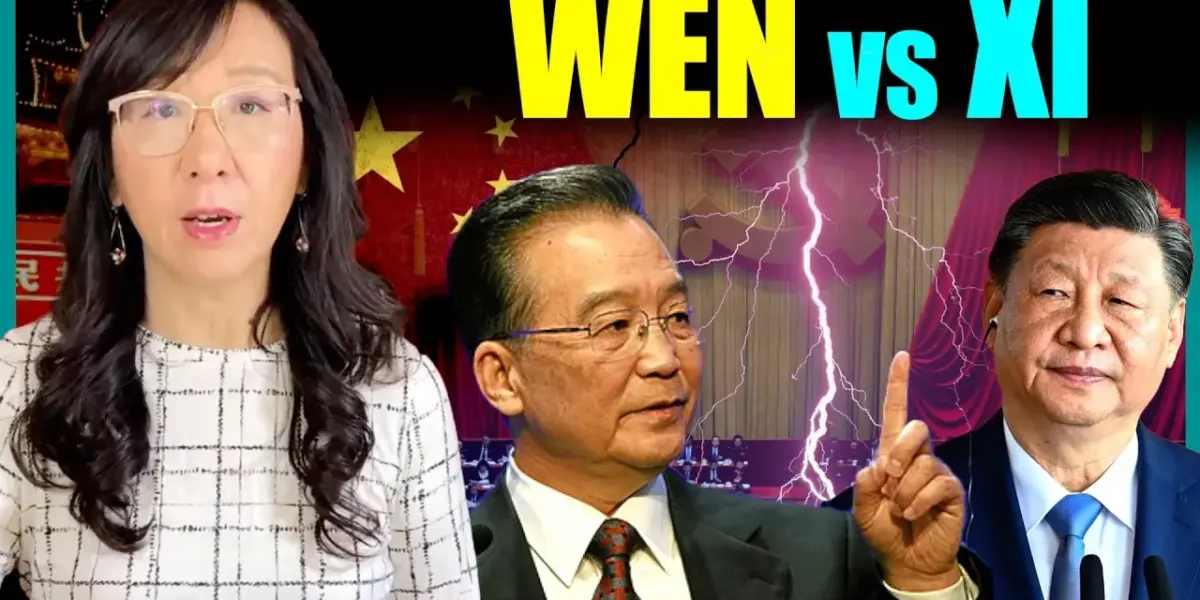
Former Chinese Premier Wen Jiabao's recent public visit to the Chinese Academy of Sciences, captured on video, has ignited discussions. Observers are analyzing the staged nature of the event and its timing, questioning if it signals deeper power dynamics within China's leadership.

China’s Leadership: A Carefully Orchestrated Appearance
A recent public appearance by former Chinese Premier Wen Jiabao has sparked widespread discussion. Days after current leader Xi Jinping visited Xiong’an, Wen was seen at the Chinese Academy of Sciences. This visit, captured in a one-minute video, appeared highly planned. Observers noted the staged nature of the event, from the crowd to the security convoy and military-linked personnel.
The footage raises questions about its true meaning. Was this simply a routine public engagement, or does it signal something more about the complex power dynamics within China’s top leadership? This analysis looks at what the video shows and what it might suggest.
Context: The Significance of Public Appearances
In China’s political system, public appearances by leaders, especially former ones, are rarely accidental. They are often carefully managed to convey specific messages to both domestic and international audiences. Leaders use these moments to project strength, show unity, or sometimes to subtly express different viewpoints.
Wen Jiabao served as Premier from 2003 to 2013. During his tenure, he was often seen as a more moderate voice within the Communist Party. He spoke about social justice and the need for political reform, which sometimes seemed to contrast with the party’s more rigid stance.
What the Video Reveals
The video from the Chinese Academy of Sciences shows a crowd gathered to greet Wen. There was a noticeable security presence, including what appeared to be military-linked individuals. The convoy of vehicles also suggested a high level of official attention paid to the visit.
Some analysts point to the timing of Wen’s visit. It followed Xi Jinping’s own public appearance in Xiong’an, a city heavily promoted by Xi as a future economic hub. This sequence might be interpreted in several ways, depending on who is doing the interpreting.
Interpreting the Signals: Different Perspectives
One view is that Wen’s visit was simply a planned event to honor his past contributions to science and technology. Leaders often visit research institutions to show support for innovation. From this perspective, there is no hidden meaning; it’s just a former leader fulfilling a public duty.
However, others see a more complex political message. They suggest that Wen’s appearance, especially after Xi’s, could be a way to subtly highlight different leadership styles or priorities. Wen’s past emphasis on social welfare and reform might be seen as a quiet counterpoint to Xi’s focus on centralized power and national security.
It’s like two chefs in the same kitchen. One chef is focused on making a very specific, elaborate dish, following a strict recipe. The other chef, while respecting the first, might subtly suggest adding a different spice or ingredient, hinting at a broader culinary philosophy.
Why This Matters
Understanding these subtle signals is crucial for anyone trying to grasp the inner workings of Chinese politics. While China presents a unified front to the world, there are often different factions and viewpoints within the ruling party. These internal discussions, though rarely public, can influence policy decisions.
Wen Jiabao’s legacy includes advocating for more open communication and addressing social inequalities. If his public appearances are seen as a gentle reminder of these values, it could suggest that these ideas still hold some sway, even if they are not currently the dominant focus.
Historical Context and Trends
China’s leadership has always been a subject of intense scrutiny. Historically, periods of transition or consolidation of power have often been marked by subtle displays of influence or dissent. The Communist Party values loyalty and unity above all else, making any perceived deviation from the party line a significant event.
Under Xi Jinping, there has been a strong emphasis on ideological control and strengthening the party’s grip on all aspects of society. This has led to a more centralized leadership style compared to the collective leadership models of the past. Therefore, any public action that could be interpreted as independent or even slightly contrary to the prevailing narrative is noteworthy.
Future Outlook
The true significance of Wen Jiabao’s visit may only become clear over time. Political analysts will continue to watch for any further public statements or actions from Wen or other former leaders. The way the state media reports on such events can also offer clues.
Ultimately, these carefully managed appearances are part of the ongoing narrative of power and influence within China. They remind us that even in a highly controlled environment, the dynamics of leadership are complex and constantly evolving.
Source: A Retired Leader Just Challenged Xi Jinping and It Was Caught on Camera (YouTube)

Related Articles

Midterms to Test Trump’s Grip on GOP, Voters Show Discontent
The upcoming midterm elections are expected to be a significant test of former President Donald Trump's influence within the Republican party and the broader electorate. With low approval ratings and voter discontent over key policies, the elections could signal a shift in political power. Experts believe the midterms will be more than just a check on the current administration, reflecting deep dissatisfaction that could impact both the House and the Senate.

Trump’s Iran Gamble: A Leader Lost in the Bluster?
Critics claim Donald Trump lacks understanding of foreign policy, particularly regarding Iran, leading to a dangerous situation. Falling poll numbers and a base questioning his actions suggest he's in a political bind.

MAHA Movement: A Lingering Force Beyond MAGA?
The Make America Healthy Again (MAHA) movement, a key force in past elections, is showing signs of enduring beyond the broader MAGA coalition. New polling indicates significant discontent among MAHA voters regarding the administration's progress on health and environmental issues, creating a potential opening for Democrats. Despite policy disagreements, Health Secretary Robert F. Kennedy Jr. maintains popularity, skillfully navigating controversial topics and connecting with his base.