Ford’s EV Pivot: Billions Lost, Strategy Rewritten
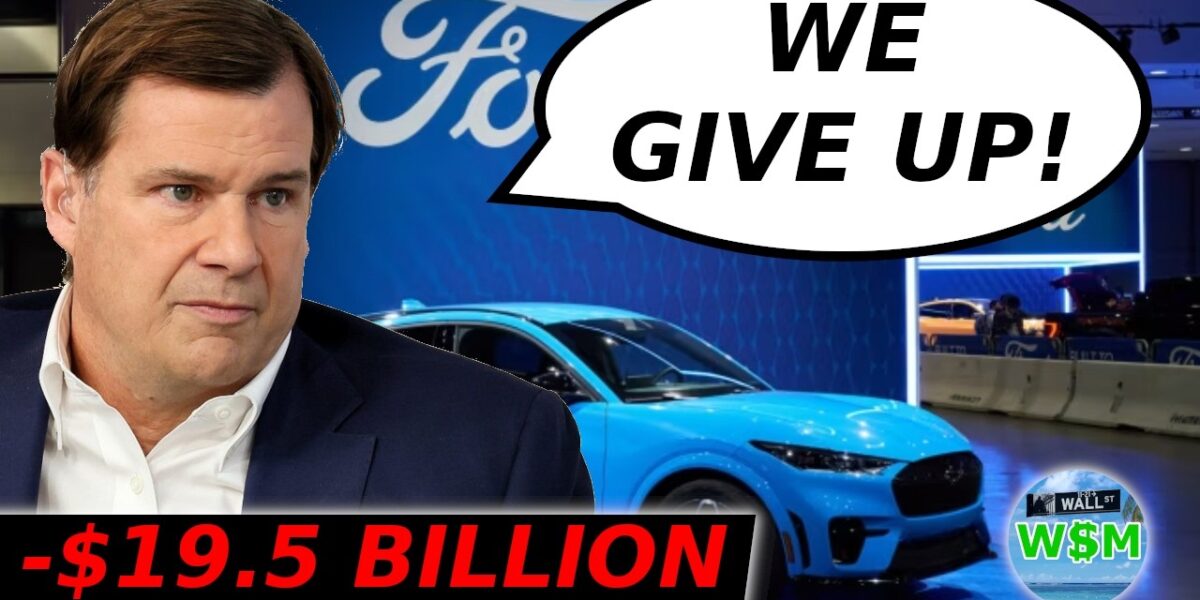
Ford is drastically scaling back its electric vehicle ambitions, announcing billions in losses and restructuring charges. The automaker will discontinue most EV models, including the F-150 Lightning, and pivot towards hybrids and more affordable EVs.

Ford Reconfigures EV Strategy Amidst Significant Losses
Ford has announced a dramatic shift in its electric vehicle (EV) strategy, signaling a significant scaling back of its ambitious electrification targets after incurring substantial financial losses. The automaker is set to discontinue most of its EV models and restructure its operations, a move that will result in approximately $19.5 billion in impairments and other charges. This pivot comes after years of heavy investment and disappointing sales figures in its dedicated EV division, known as Model E.
A Costly Transition
The transition to electric vehicles has proven to be a financially challenging endeavor for Ford. Over the past three years, the Model E segment has accumulated operating losses totaling $13.8 billion. The company’s initial plan, announced in 2022, aimed for an aggressive production of 2 million EVs annually by 2026. However, actual sales have fallen far short of these projections. In 2023, Ford sold 116,000 EVs, representing just 2.6% of its total vehicle sales. Projections for 2025 indicate sales of around 160,000 to 170,000 units, a stark contrast to the 2 million target.
Challenges with Key Models
The F-150 Lightning, Ford’s all-electric pickup truck, faced significant hurdles. Launched in 2022 with a starting MSRP of $40,000, its substantial weight and large battery pack contributed to high production costs. The battery alone, a 98 kWh unit in the base model, could account for roughly half the selling price, leading to substantial losses on each vehicle sold at the initial price point. While prices have since increased, the towing capacity of the Lightning significantly diminishes its range, often to as low as 80 miles, making it impractical for heavy-duty use. Similarly, the E-Transit electric van, aimed at commercial customers, suffered from a limited driving range of 126 miles, which is often insufficient for commercial routes.
The Mustang Mach-E, Ford’s electric compact SUV, also encountered difficulties. Launched with a starting price of $45,000, increasing competition from rivals like the Tesla Model Y, Hyundai Ioniq 5, and Chevrolet Equinox EV has forced Ford to reduce its price multiple times. The average selling price for Ford EVs in the Model E segment has fallen dramatically, from over $50,000 in early 2023 to approximately $36,000 by the third quarter of 2025. This decline, coupled with low production utilization rates at its battery plants, has resulted in astronomically high unit production costs.
Restructuring and Future Outlook
In response to these financial pressures, Ford is undertaking a significant restructuring. The company will cease production of the battery-electric F-150 Lightning. Additionally, Ford is dissolving its Blue Oval SK joint venture with SK Innovation, which was established to build three large battery production plants. This dissolution will result in an $8.5 billion impairment charge for Model E assets and program write-downs, and a $6 billion charge related to the Blue Oval joint venture. SK Innovation will take ownership of the Tennessee battery plant, while Ford will acquire the two Kentucky plants. Ford plans to convert these Kentucky facilities to produce utility-scale energy storage batteries, similar to Tesla’s Megapack, for grid applications. Another $5 billion will be recognized for program-related expenses due to the cancellation of planned new EV models.
Despite these cutbacks, Ford is not abandoning EVs entirely. The company will continue production of the Mustang Mach-E and plans to launch smaller, more affordable EV models, likely priced under $40,000, by 2027. These new models are expected to utilize cheaper Lithium Iron Phosphate (LFP) batteries. Furthermore, Ford is developing an Extended Range Electric Vehicle (EREV) version of the F-150 Lightning, set for release in late 2026. This EREV will feature an onboard gasoline generator to recharge the battery, offering a projected range of 700 miles on a full tank.
Ford’s CEO, Jim Farley, has emphasized the company’s continued commitment to hybrids, noting that 30% of F-150 sales are now hybrid models. He stated, “We have never made a statement about being all electric. We are number three in hybrids. We invested in hybrid. We never stopped investing.” The company aims to offer a range of vehicles, including affordable EVs for city use and robust hybrid options for towing and longer distances, acknowledging that not all consumers are ready for a fully electric future, especially with the expiration of federal EV tax credits.
Market Impact and Investor Considerations
The shift away from aggressive EV targets by a major legacy automaker like Ford could signal a broader recalibration within the automotive industry. The removal of the $7,500 federal EV tax credit in late 2025 has already led to a significant drop in EV sales, further impacting manufacturers’ strategies. Investors will be watching how Ford balances its profitable internal combustion engine (ICE) and hybrid vehicle segments with its more cautious approach to EVs. The success of Ford’s utility-scale battery storage initiative and the development of more affordable EV models will be critical factors in its future profitability.
Source: Ford Gives Up On EVs After Losing Billions (YouTube)

Related Articles

Porsche’s Profit Plunge: A Business Model in Crisis
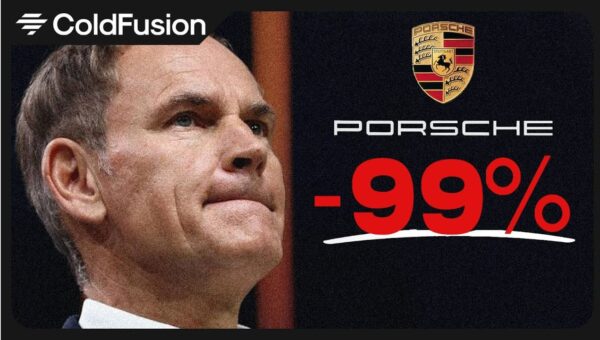
Porsche's operating profit has plummeted by 99%, signaling a crisis for its long-standing business model. The luxury automaker faces challenges from shifting market demands, intense EV competition, and the high costs of electrification, forcing a strategic recalibration.


Used EVs Offer Strong Value Proposition for Consumers
Consumers are finding significant value in the used electric vehicle market, with some models like older Teslas retaining their value remarkably well. This trend offers a compelling alternative to purchasing new vehicles, highlighting the long-term cost-effectiveness of pre-owned EVs.


Tesla Slashes Prices, Making Model 3 More Accessible
Tesla has introduced a more affordable rear-wheel-drive Model 3, significantly lowering the barrier to entry for its popular EV. This move comes as European EV sales surge, highlighting the growing demand for electric mobility.