Ford Maverick: Wrong Truck? EcoBoost vs. Hybrid Showdown
After purchasing a Ford Maverick EcoBoost, the author felt he'd bought the wrong truck when an AWD hybrid was announced shortly after. Extensive testing reveals the surprising reality of performance and fuel economy differences, leading to a nuanced verdict on which Maverick is truly the right choice.

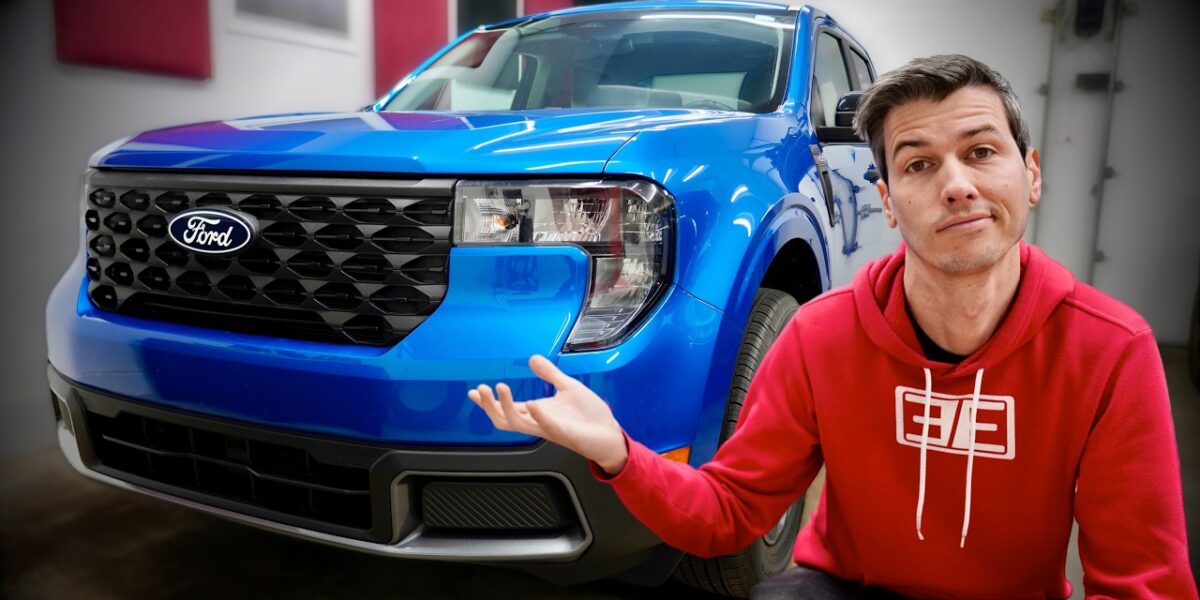
Ford Maverick: The Unexpected Verdict – Did I Buy the Wrong Truck?
It’s a familiar refrain for automotive journalists: the agony of timing. You buy a car, only for the manufacturer to announce a more desirable variant mere months later. For Jason Fensky, this tale reached a new peak with the Ford Maverick. After patiently waiting for an all-wheel-drive hybrid or a plug-in option, he finally bit the bullet and purchased an EcoBoost model. Just two months later, Ford unveiled the very configuration he’d been holding out for: the AWD hybrid. While Fensky initially felt he’d made a mistake, extensive testing of both powertrains and a deep dive into the Maverick’s evolution has led to a surprising conclusion: the EcoBoost might just be the right truck after all, depending on your needs.
Powertrain Performance: EcoBoost vs. Hybrid
The Ford Maverick offers two distinct paths for its compact pickup: the potent EcoBoost and the fuel-sipping Hybrid. The EcoBoost variant boasts a 2.0-liter turbocharged four-cylinder engine, delivering a robust 250 horsepower and 277 lb-ft of torque. In contrast, the Hybrid system pairs a 2.5-liter four-cylinder engine (rated at 162 hp and 155 lb-ft) with a 126 hp, 173 lb-ft electric motor, resulting in a combined system output of 191 horsepower. While the EcoBoost clearly leads on paper, Fensky’s real-world testing revealed a much closer performance gap than expected.
0-60 MPH Acceleration
In a series of carefully averaged 0-60 mph tests, the EcoBoost clocked in at a brisk 6.8 seconds. The hybrid, despite its lower system output, managed a respectable 7.2 seconds. This mere 0.4-second difference highlights the effectiveness of the electric motor’s immediate torque, which helps the hybrid overcome its initial deficit and the extra weight it carries over the EcoBoost model. This close performance means that for many casual drivers, the EcoBoost’s power advantage might not be as significant as the numbers suggest.
Engine Technology and Efficiency
The EcoBoost engine relies on direct injection and variable cam timing on both intake and exhaust. The Hybrid, on the other hand, utilizes a larger displacement engine running on the Atkinson cycle with higher compression and port fuel injection, which also aids in keeping intake valves cleaner. While the EcoBoost is designed for power and performance, its direct injection system can lead to fuel enrichment under hard acceleration, impacting fuel economy. The Hybrid’s Atkinson cycle and port injection contribute to greater thermal efficiency and a quieter operation.
Transmission Differences: Automatic vs. E-CVT
A major differentiator lies in the transmissions. The EcoBoost is paired with a conventional 8-speed automatic. While Fensky describes it as “fine” and “entirely mediocre,” his primary criticism is the lack of manual gear selection. This omission is particularly noticeable when towing, as the inability to manually select gears limits the use of engine braking for descending hills. The Hybrid employs an E-CVT (Electronic Continuously Variable Transmission), which Fensky praises for its brilliance and efficiency. This system allows the engine to operate at its most efficient RPM for a given load, providing an infinite range of gear ratios without the need for traditional gear shifts. Ford’s tuning ensures that when the accelerator is floored, the E-CVT holds the engine at high RPMs to maximize performance, rather than mimicking traditional automatic shifts.
Fuel Economy: Bridging the Gap
With its more efficient engine, E-CVT, and regenerative braking capabilities, the hybrid variant is EPA rated at 12 MPG higher than the EcoBoost. However, Fensky’s real-world testing revealed a smaller-than-anticipated gap. On a mixed city and highway loop, his EcoBoost Maverick achieved a verified 32 MPG, while the hybrid managed 36.6 MPG. This 14% improvement, while not insignificant, is less dramatic than expected, especially considering the hybrid’s higher initial cost. Fensky notes that the EcoBoost’s fuel economy can vary wildly; his personal average often hovers in the high 20s, with short trips in cold weather dipping into the low 20s, while longer highway runs can push into the low 30s. The hybrid’s advantage is most pronounced in city driving where it can leverage its electric power and regenerative braking most effectively. For those who primarily undertake long highway journeys, the fuel economy difference narrows considerably, diminishing the financial incentive of the hybrid powertrain.
The Truck Itself: Updates and Refinements
The Ford Maverick has seen several updates since its initial launch, and Fensky highlights key differences between his earlier model and the latest iterations. The refreshed Maverick features a larger infotainment screen with wireless Apple CarPlay, a significantly improved rearview camera, and more user-friendly mode selectors. The exterior styling has also been subtly updated with a revised front end that Fensky finds more appealing, making his 2024 model feel somewhat dated. However, Fensky points to a major advantage of the previous generation: physical climate control buttons. He finds the touchscreen-only controls in the new model less intuitive and potentially distracting, requiring more steps to adjust settings like airflow direction and taking longer to become fully operational after startup. He also laments the new Lariat trim’s standard 19-inch wheels, preferring the increased sidewall of the older 17-inch option, especially for a truck.
Value Proposition and Target Buyer
The Ford Maverick has always been lauded for its accessible pricing, a stark contrast to the rapidly inflating costs of larger trucks. Fensky contrasts a base model F-150 XL with AWD starting at over $51,000 with his fully optioned Maverick, which came in significantly less. A front-wheel-drive XLT Hybrid starts around $30,000, offering exceptional value for its segment. The choice between EcoBoost and Hybrid, and AWD versus FWD, significantly impacts the total cost of ownership and the vehicle’s suitability for different lifestyles.
Who Should Buy Which Maverick?
- EcoBoost AWD: For buyers who prioritize maximum towing capacity (up to 4,000 lbs with the tow package), need all-wheel drive for frequent inclement weather or off-road use, and are less concerned with achieving the absolute best fuel economy.
- Hybrid FWD: The most economical choice, offering excellent fuel efficiency, especially in urban environments. It’s ideal for buyers who don’t require AWD or the maximum tow rating and are looking for the lowest entry price and running costs.
- Hybrid AWD: The new all-rounder. It combines the efficiency of the hybrid system with the all-weather capability of all-wheel drive, making it a compelling option for those who want the best of both worlds, albeit with a slight compromise on maximum towing capability compared to the EcoBoost.
Verdict: The Right Truck for the Right Reason
Despite his initial regret over missing the AWD hybrid launch, Jason Fensky concludes that his EcoBoost Maverick is not the “wrong” truck. His personal need for all-wheel drive for extensive mountain and snow driving was the deciding factor, making the EcoBoost AWD the logical choice for his specific use case. He acknowledges that for many, the FWD Hybrid represents the smartest pick for overall value and efficiency, assuming the towing and AWD requirements aren’t paramount. The Maverick, in any configuration, remains a compelling package, offering practicality, affordability, and a refreshing departure from the oversized norms of the truck market. Ford’s continued innovation with the Maverick, particularly the introduction of the AWD hybrid, ensures it will remain a strong contender for buyers seeking a compact, versatile, and value-oriented pickup.
Source: I Bought The Wrong Truck – Ford Maverick EcoBoost vs Hybrid (YouTube)

Related Articles

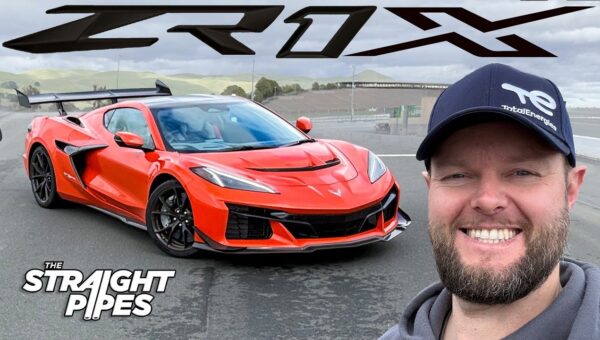
1250HP Corvette ZR1X: America’s New Hypercar King
The 2026 Chevrolet Corvette ZR1X arrives with a mind-bending 1250 horsepower, hybrid powertrain, and hypercar-shattering performance figures. Chief Engineer Josh Holder details the engineering marvels behind America's newest performance icon.

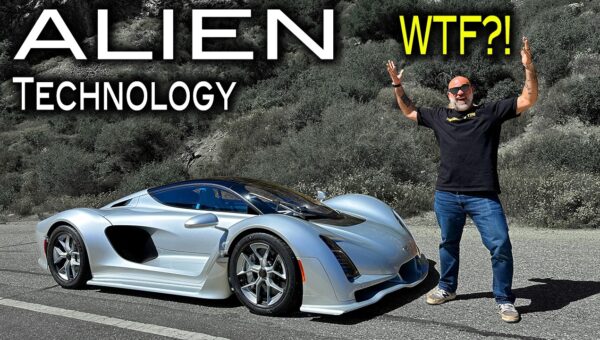
Zinger 21C V-Max: A Hypercar Revolution?
The Zinger 21C V-Max redefines the hypercar with its revolutionary 3D-printed components, a 1,250 horsepower hybrid powertrain, and a driving experience akin to a Formula 1 car. This $2.35 million machine offers unparalleled performance and a unique connection to the road, targeting the ultimate automotive enthusiast.

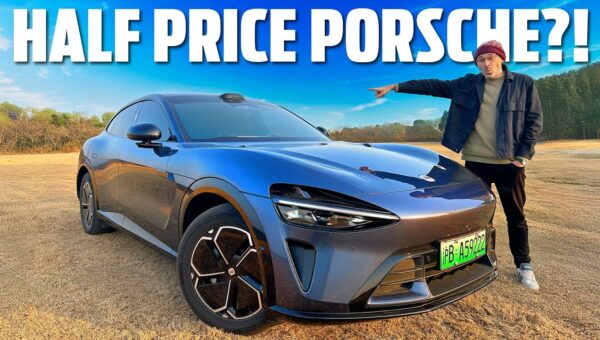
Xiaomi YU7: Is This The EV That Will Dethrone Rivals?
Xiaomi's YU7 SUV enters the market with a potent blend of cutting-edge technology, impressive performance, and exceptional build quality. Its arrival poses a significant challenge to established automakers, offering a compelling package at a disruptive price point.