Florida Housing Market Sees Sellers Face Losses
Sellers in Florida are increasingly facing significant financial losses as the housing market experiences a notable downturn. Properties bought just a couple of years ago are now being sold for less than their purchase price, highlighting the cyclical nature of real estate and the importance of data-driven decision-making.


Florida Housing Market Sees Sellers Face Losses
The Florida housing market, long a beacon for real estate investors and homeowners alike, is currently experiencing a significant downturn, with sellers in some areas facing substantial losses. Recent data highlights instances where properties bought just a couple of years ago are now being sold for considerably less than their purchase price, signaling a challenging period for those looking to exit the market.
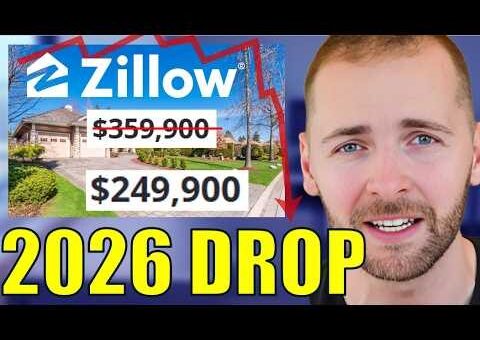
One stark example illustrates the current reality: a property purchased in 2022 for $390,000 is now listed at $357,000. This represents a potential loss of over $33,000, not accounting for closing costs, mortgage interest, or any improvements made during ownership. This scenario is not isolated. A broader analysis of the Florida market reveals a widespread price depreciation trend across numerous regions within the state.
The allure of Florida’s real estate has historically been tied to its robust appreciation rates and attractive lifestyle. However, this recent data serves as a critical reminder that real estate markets are cyclical. Periods of rapid growth can be followed by significant corrections, and the current environment underscores the importance of rigorous market analysis before making any investment or purchasing decisions.
Rental Market Strain Adds to Seller Woes
Adding to the pressure on sellers is a softening rental market in many Florida neighborhoods. In the aforementioned case, the homeowner initially attempted to lease the property, listing it at $2,600 per month and subsequently reducing the asking rent to $2,500. Despite these adjustments, the property remained unrented, likely due to an oversupply of rental inventory in the area. This inability to secure a tenant forced the owner’s hand, leading to the decision to sell at a loss rather than continue incurring holding costs without rental income.
The abundance of rental properties in certain markets can be a symptom of overbuilding or a shift in demand. When rental demand weakens, or supply outstrips demand, landlords may find themselves unable to achieve their desired rental yields. This can create a domino effect, pushing more owners to consider selling, which in turn can increase the supply of homes for sale and potentially further depress prices.
Navigating Market Volatility: The Importance of Data
The current Florida market conditions emphasize the critical need for buyers, sellers, and investors to pay close attention to granular market data. Understanding local trends, such as 12-month price forecasts and whether properties are currently overvalued or undervalued in a specific neighborhood, is no longer a passive exercise but an active necessity.
For investors, key metrics like capitalization rate (cap rate) and loan-to-value (LTV) ratio remain crucial, but their interpretation must be contextualized by current market performance and future projections. Cap rate, which measures the potential return on investment for a property based on its net operating income, becomes more sensitive in a declining market. A stable or falling cap rate in a depreciating market can indicate a healthy investment, while a rising cap rate might signal distress. LTV, the ratio of a loan to the value of an asset, is vital for understanding leverage and risk. In a falling market, a high LTV can amplify losses.
The underlying economic factors influencing the housing market are complex. Interest rate hikes by the Federal Reserve, aimed at curbing inflation, have increased the cost of borrowing, impacting both buyer affordability and investor financing. This, combined with broader economic uncertainties, can lead to shifts in consumer confidence and investment strategies. While Florida has historically benefited from population growth and a favorable climate for businesses, these macro-economic forces can exert significant pressure on even strong regional markets.
Regional Variations and Impact
It is crucial to recognize that real estate markets are not monolithic. While the transcript highlights issues in specific areas of Florida, other regions might exhibit different trends. Some of Florida’s more established or high-demand coastal areas might prove more resilient than inland or newly developed communities that have seen a surge in construction. Buyers looking for deals might find opportunities in areas experiencing price corrections, provided they conduct thorough due diligence. Conversely, sellers in these markets may need to adjust their expectations significantly or consider holding onto their properties longer.
Investors, in particular, must exercise caution. The era of assuming consistent, high appreciation may be on pause. A focus on cash flow, property management, and long-term holding strategies, rather than quick flips, may be more prudent. Understanding the local rental demand, vacancy rates, and potential for rent growth is paramount, especially in markets with high inventory.
Ultimately, the current state of the Florida housing market serves as a potent reminder that real estate is a dynamic asset class. While long-term wealth creation is possible, it is essential to approach the market with a data-driven mindset, an understanding of economic cycles, and realistic expectations. Ignoring these factors can lead to significant financial setbacks, as demonstrated by sellers now facing substantial losses.
Source: Sellers in Florida taking big losses in 2026. (YouTube)

Related Articles

Housing Market Slowdown: Cities to Watch for Price Declines
Several U.S. cities are projected to see home price declines in 2026, driven by rising inventory and slower demand. Orlando, Seattle, Dallas-Fort Worth, Tampa, and Denver are among the markets highlighted for potential price adjustments, offering opportunities for buyers but signaling a shift from recent market conditions.


Housing Market Affordability Crisis Deepens
Experts debate the current U.S. housing market, highlighting a severe affordability crisis that has frozen sales. While some see echoes of 2008, key differences in equity and supply dynamics are noted. The market faces challenges from rising costs, investor activity, and a complex interplay of supply-side factors.


Housing Market Fears: Separating Fact from Fiction
Alarming charts suggesting a housing market collapse are misleading due to limited data. While the market is undergoing a correction, understanding economic factors and regional variations is key for buyers, sellers, and investors.