Florida Housing Market Faces Steep Price Correction
Florida's housing market is experiencing a significant price correction, with double-digit declines in some West Coast counties. This shift is driven by reduced migration and persistent affordability issues, impacting sellers and potentially creating opportunities for buyers.


Florida Housing Market Faces Steep Price Correction
Florida’s once red-hot housing market is undergoing a significant price reset, with some areas experiencing drops that are bringing values back to pre-pandemic levels. This correction, particularly pronounced on the state’s West Coast, is leading to substantial year-over-year declines and forcing some sellers into distressed situations. The trend suggests a prolonged period of adjustment as affordability challenges and shifting migration patterns reshape the landscape.
Double-Digit Declines Emerge
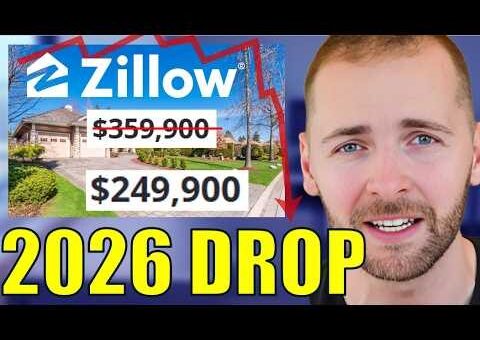
The Sunshine State is now witnessing double-digit price drops in several key counties. Penellas County has seen values fall by as much as 8% year-over-year. Further south, Lee County is experiencing declines exceeding 10%, while Charlotte County has recorded a sharp 13% decrease. These significant reductions are not just theoretical; they are translating into real financial losses for homeowners. A stark example is a property in St. Petersburg, originally purchased for $425,000 in 2023, now listed at $295,000. This represents a loss of $130,000 for the seller, who has entered into a short sale, indicating they owe more on their mortgage than the property is currently worth.
Shifting Market Dynamics
The current market reality stands in contrast to earlier predictions that Florida’s housing prices would continue their upward trajectory. The market has demonstrably shifted into reverse, driven by a confluence of factors. A primary driver is the significant slowdown in migration, a force that fueled much of the state’s rapid appreciation in recent years. As the influx of new residents moderates, demand is softening, creating a more balanced, and in some cases, a buyer-leaning market.
Affordability Remains a Key Hurdle
Compounding the impact of reduced migration is the persistent issue of high housing affordability. For many potential buyers, particularly those not already entrenched in the market, the cost of purchasing a home in Florida remains a significant barrier. This lack of affordability further suppresses demand and contributes to the downward pressure on prices. So long as these two conditions—plummeting migration and high affordability challenges—persist, the outlook for Florida’s housing market suggests continued value declines.
Regional Variations and Impact
While the downturn is widespread, the intensity varies across the state. The West Coast, as highlighted, is currently bearing the brunt of the price correction. This situation has a multifaceted impact:
- For Sellers: Those who purchased recently, especially with high loan-to-value (LTV) ratios, may find themselves in a precarious position, potentially facing losses if they need to sell. Sellers who have owned their homes for a longer period may still hold equity, but their ability to achieve previous peak prices is diminished.
- For Buyers: The current market offers a more favorable environment for buyers, presenting opportunities for more competitive pricing and potentially greater negotiation power. However, the prospect of further price drops may encourage some buyers to wait, while others might seize opportunities for investment.
- For Investors: Investors will need to carefully analyze local market conditions and property-specific metrics such as capitalization rates (cap rates) and potential cash flow. While some markets may present opportunities for distressed asset acquisition, others might require a more cautious approach. The concept of cap rate, a measure of a property’s profitability relative to its price, becomes crucial in assessing investment viability in a declining market. A higher cap rate generally indicates a better return on investment, but in a falling market, potential rental income and vacancy rates are critical considerations.
Looking Ahead to 2026
The question on many minds is the extent and duration of this price correction. While the transcript points to 2026 as a period where these price drops will continue to spread, the precise trajectory will depend on evolving economic conditions, interest rate movements, and the sustained pace of migration. The housing market is inherently cyclical, and Florida’s current phase appears to be a significant recalibration after years of unprecedented growth. Navigating this period will require careful analysis of local data and a clear understanding of market fundamentals.
Source: The Foreclosures are piling up in Florida (2025 price drops spreading in 2026) (YouTube)

Related Articles


Breaking Into Real Estate: Opportunity Knocks
High property prices and interest rates dominate current real estate discussions, leading many to believe market entry is impossible without wealth. However, historical perspective and strategic thinking suggest opportunity persists for those willing to learn and adapt, regardless of their starting financial position.


Florida Housing Market Sees Sellers Face Losses
Sellers in Florida are increasingly facing significant financial losses as the housing market experiences a notable downturn. Properties bought just a couple of years ago are now being sold for less than their purchase price, highlighting the cyclical nature of real estate and the importance of data-driven decision-making.

Housing Market Slowdown: Cities to Watch for Price Declines
Several U.S. cities are projected to see home price declines in 2026, driven by rising inventory and slower demand. Orlando, Seattle, Dallas-Fort Worth, Tampa, and Denver are among the markets highlighted for potential price adjustments, offering opportunities for buyers but signaling a shift from recent market conditions.