Firefly Aerospace Soars Past Earnings Estimates
Firefly Aerospace exceeded Wall Street's earnings expectations, driven by its historic Moon landing and a flawless Alpha Flight 7 rocket launch. The company is also expanding into national security with AI and advanced spacecraft.

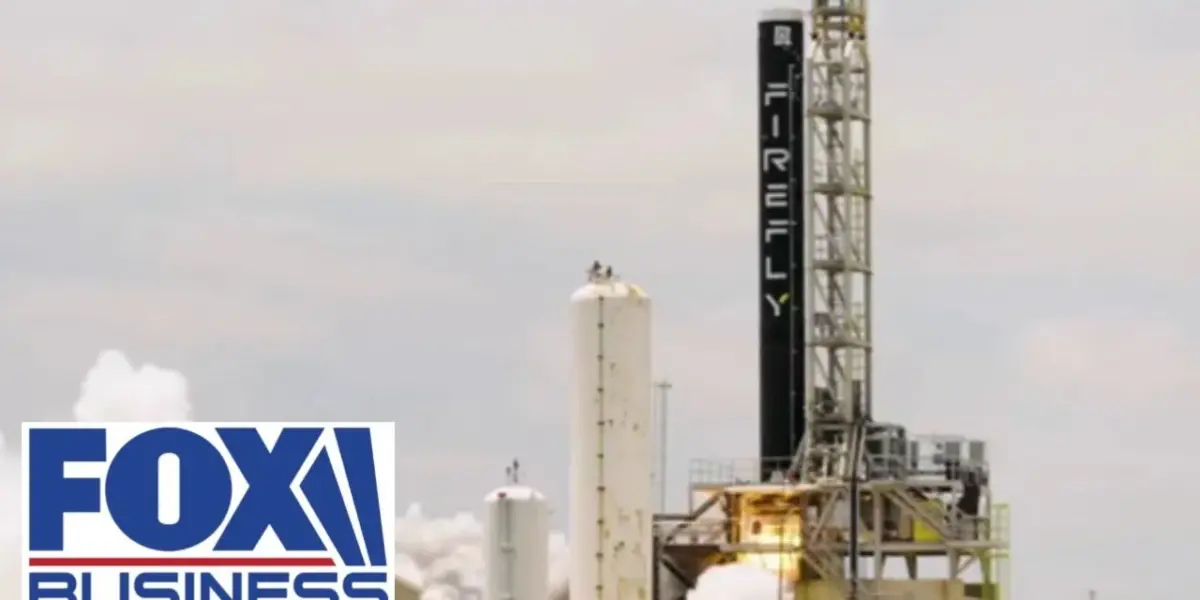
Firefly Aerospace Beats Wall Street Estimates, Eyes Future Growth
Firefly Aerospace has surprised Wall Street by exceeding earnings per share expectations. The aerospace company announced strong results, driven by successful missions and strategic acquisitions. This performance marks a significant turnaround, especially after facing some launch setbacks in the past. Investors are taking notice as the company continues to push the boundaries of space technology.
Historic Moon Landing and Strategic AI Acquisition
Last year was a landmark period for Firefly Aerospace. The company achieved a historic feat with its Blue Ghost Mission 1, successfully landing a commercial spacecraft upright on the Moon’s surface. This mission lasted 14 days and carried 10 NASA payloads, transmitting 120 gigabytes of data. Remarkably, this was accomplished for just $100 million, a fraction of the cost previously incurred by national space agencies.
In addition to its lunar success, Firefly Aerospace also completed a successful Initial Public Offering (IPO) in August. Further strengthening its capabilities, the company acquired CyTek, an artificial intelligence software firm. CyTek’s expertise is particularly valuable in national security applications. Their work includes developing systems like Forge, a critical U.S. Space Force operation. Forge processes missile tracking data to help defend the nation. In the first 30 days of a recent conflict, Forge processed a thousand missile alerts, aiding in the defense of the U.S. and its allies.
Flawless Alpha Flight 7 Boosts Confidence
The company recently celebrated a major success with the flawless launch of its Alpha Flight 7. This marks the seventh flight for the Alpha rocket. The mission achieved nominal performance, meaning it operated exactly as planned. Key systems were validated, paving the way for future upgrades. The payload for this mission was a demonstrator for Lockheed Martin, which was successfully deployed into a nominal orbit.
Company leadership highlighted an enhanced culture of safety, quality, and reliability. Following some earlier launch challenges, the team took time last fall to introspect and improve internal processes and training. This dedication clearly paid off with the Alpha Flight 7 launch. The company is now looking ahead to Flight 8, targeting a late summer launch for its upgraded Alpha rocket, known as the Block 2 configuration.
Addressing Competition and Collaboration in Space
When discussing the space industry, comparisons to major players like SpaceX are common. However, Firefly Aerospace views itself as complementary rather than a direct competitor. They acknowledge sometimes using SpaceX’s Falcon 9 rockets to transport their lunar landers. This highlights a collaborative aspect within the burgeoning space sector.
Firefly is also co-developing a medium-lift vehicle with Northrop Grumman. This new rocket is designed to be reusable and capable of carrying 16 tons to orbit. Such capacity is crucial for deploying lunar landers and large satellite constellations. This strategic partnership aims to expand capabilities for various space missions.
National Security and the New Space Frontier
Beyond commercial and scientific endeavors, Firefly Aerospace is deeply involved in national security initiatives. The company is working on technologies vital for the administration, including projects related to the “Golden Dome.” This underscores the growing importance of space as a domain for national security and defense.
The space domain is increasingly seen as the “next frontier” and a potential “war zone” due to the proliferation of technology and satellites orbiting Earth. The threat posed by competitors like China in space is a significant concern. Firefly, with its strong background in national security, is well-positioned to address these challenges.
Electra Spacecraft: Deterring Threats in Orbit
As a veteran of the U.S. Air Force, CEO Jason Kim understands the advanced threats present in space, which is considered the ultimate high ground. Firefly is developing the Electra spacecraft to counter these threats. Electra features a high-thrust engine, proven on their lunar lander missions, and significant fuel capacity.
This design allows Electra to perform complex maneuvers, evade threats, or actively deter them. The spacecraft incorporates substantial autonomy. Electra is currently under contract with a defense unit for a project focused on space domain awareness. Its purpose is to help protect assets in space, ensuring the security of critical infrastructure and operations.
Market Impact and Investor Outlook
Firefly Aerospace’s recent successes, particularly the earnings beat and the flawless Alpha Flight 7, are positive signals for investors. The company has demonstrated resilience and technical prowess. Overcoming past launch issues and achieving critical milestones like the lunar landing and successful rocket flights builds confidence in its long-term strategy.
The focus on national security applications, alongside commercial space ventures, provides a diversified revenue stream and strategic importance. The development of advanced spacecraft like Electra and the co-development of a heavy-lift vehicle position Firefly for significant growth in both government and private sectors. Investors will likely monitor the progress of the Block 2 Alpha rocket and the medium-lift vehicle closely.
Source: ‘FLAWLESS’ LAUNCH: Alpha Flight 7 sent into orbit (YouTube)

Related Articles


US Must Block China’s Tech Access for Security
US national security experts are raising alarms about China's access to advanced AI chips, arguing it threatens strategic advantages. This, coupled with charges against Chinese entities for fentanyl precursor sales and a ban on foreign routers, signals a growing effort to prioritize security over business ties.


US Energy Chief’s ‘Alien’ Secret Shakes Global Trust
A former US Secretary of Energy allegedly confessed to classified briefings about extraterrestrial life, causing him immense distress. This revelation, if true, could profoundly impact global trust in government and reshape our understanding of reality.

NASA Pivots: Mars Nuclear Probe, Moon Base Ahead
NASA is pivoting its exploration strategy, prioritizing a nuclear-powered Mars probe and accelerating plans for a moon base. The International Space Station's future is uncertain, with a shift towards commercial platforms. Meanwhile, new telescope data reveals overmassive black holes in dwarf galaxies and captures stunning images of Saturn and the Crab Nebula.