Finland Deploys Smart Border Grid Against Russia
Finland has completed a sophisticated 1,340 km "shield" network along its Russian border. This integrated system uses sensors, aircraft, and AI to detect hybrid threats, moving beyond traditional walls. The approach aims to restore deterrence by eliminating ambiguity and enabling rapid, precise responses.

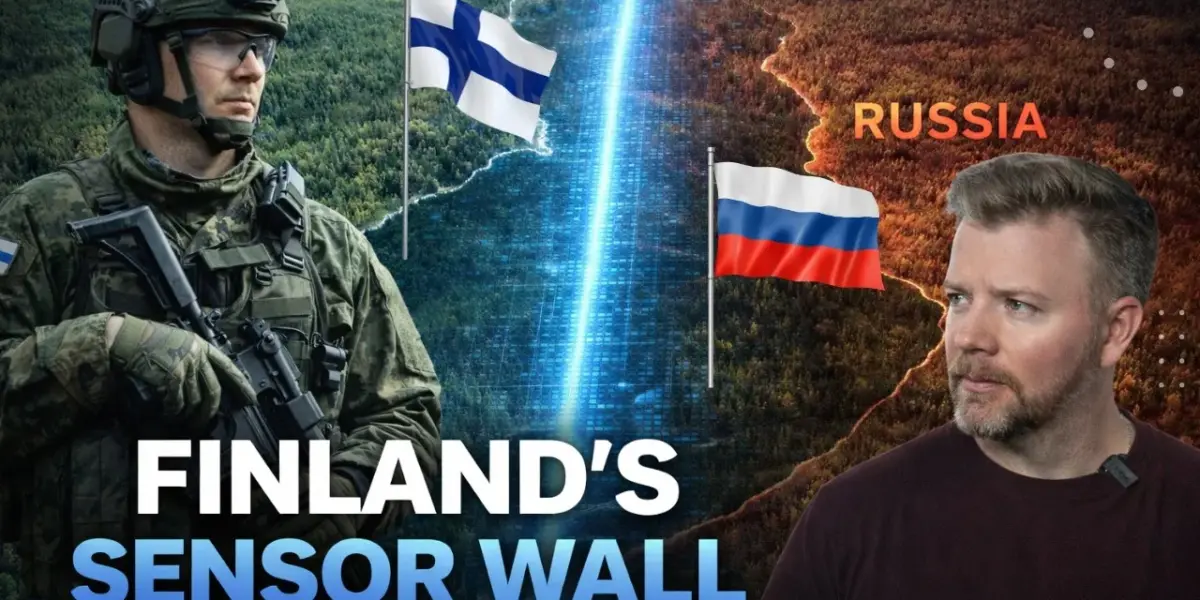
Finland’s ‘Shield’ Network Reimagines Border Defense
Finland has completed a significant upgrade to its 1,340-kilometer border with Russia, moving beyond traditional physical barriers. Instead of a simple wall, Helsinki has established a sophisticated, integrated surveillance system. This new approach, described by Finnish officials as a “shield,” aims to detect and respond to modern threats. These include not only potential military incursions but also hybrid tactics like migrant pressure and covert sabotage.
Modern Threats Demand New Defenses
The strategy acknowledges that contemporary threats don’t always arrive in visible armored columns. They can manifest as small, deniable actions designed to create ambiguity and exhaust an adversary. These include migrants pushed across the border under cover of darkness, saboteurs without insignia, or drones operating without transponders. Electronic warfare that disrupts communications and navigation systems also poses a significant challenge.
Traditional border security, relying on fences and direct communication with the capital, is insufficient against these evolving threats. Finland’s new approach prioritizes comprehensive observation, recognizing that early detection is key to controlling a situation. The goal is to ensure Finland can “write the afteraction report,” meaning it controls the narrative and response to any incident.
A Layered Network of Detection
The physical barrier itself is only one component of Finland’s enhanced border security. Reuters confirmed that the fence is equipped with integrated cameras and sensors. However, it serves as the forward edge of a much larger, layered detection network. This system combines stationary observation posts with mobile sensors, regular patrols, and a rapid response capability.
Complementing the ground-based systems are two new surveillance aircraft acquired by the Finnish Border Guard. These planes extend monitoring coverage over the eastern frontier, scanning the broader environment from the air. This aerial surveillance complements the ground sensors, which focus on specific corridors. The combination of ground and air detection provides overlapping coverage, making it significantly harder for any activity to go unnoticed.
Joensuu: A Hub for Future Border Security
A key element of Finland’s strategy is the high-tech border security laboratory established in Joensuu, near the Russian border. This facility brings together security companies and government officials. They are developing future digital and physical border security solutions. This includes autonomous systems, advanced sensor technologies, and AI-assisted monitoring. The aim is to create a cohesive digital infrastructure that links all surveillance components into a single, operational picture.
This Joensuu test zone functions as a development sandbox. Engineers actively work to identify and fix weaknesses in their own systems before potential adversaries can exploit them. This iterative process ensures that lessons learned are continuously fed back into system improvements. New versions are deployed in the field before critical vulnerabilities can emerge.
The ‘Shield’ Concept: Defense Through Transparency
Finnish officials emphasize that their new system is a “shield,” not a wall or fortress. A wall aims to physically stop everything, whereas a shield operates on the assumption that some things might get through. The focus is then on detecting and responding to these elements before they escalate into significant problems. This represents a fundamental shift in defensive philosophy, particularly relevant in an era where small, easily concealed drones can cross borders rapidly.
The core principle is to make the border environment so transparent that any crossing triggers an immediate response. This directly addresses the challenge of ambiguous, deniable, and low-cost hybrid threats. Unlike traditional deterrence, which relies on clearly visible military assets, hybrid tactics aim to remain below the threshold of easy identification. Questions like whether a drone is military or civilian, or if a migrant wave is a humanitarian crisis or a deliberate pressure operation, can paralyze response capabilities.
Restoring Deterrence in the Drone Age
Finland’s sensor grid aims to collapse this ambiguity. By rapidly detecting and attributing any border activity, the system significantly increases the cost and risk for potential aggressors. When Finland can precisely identify what happened, when, and where it originated, the calculation for Russia changes. Provocations become more expensive because they can be met with precise, proportionate responses rather than uncertain reactions.
This approach has broader implications for NATO. With Finland’s accession in 2023, the alliance doubled its land border with Russia. This extensive frontier requires new deterrence models that go beyond large troop concentrations or static defenses. Finland’s integrated detection grid offers a working proof of concept for how NATO can maintain deterrence in the drone age. The Joensuu laboratory serves as a potential template for other NATO members sharing borders with Russia.
Lessons for NATO’s Eastern Flank
A long-standing intelligence principle states, “You can’t defend what you can’t see.” Finland’s strategy is built on this foundation, recognizing that effective defense, response decisions, and the speed of those responses all depend on a clear picture of the threat environment. For decades, Finland has lived next to a nation known for ambiguous provocations and gray-zone tactics. This has provided ample time to develop a sophisticated response.
The result is not merely the longest border fence in Europe, but arguably the smartest. The combination of sensors, aircraft, digital networks, and autonomous monitoring creates a comprehensive detection grid. This quiet, technical approach is characteristic of Finland’s method of doing difficult work without fanfare. As the next potential provocation may involve a stealthy drone crossing a remote, frozen lake at 3 a.m., Finland’s system is designed to know it’s there, rendering traditional response times obsolete.
Source: Russia Didn't Expect This From Finland's New Border (YouTube)

Related Articles


Congress Splits, DHS Funding Stalls Amid Border Dispute
The U.S. House of Representatives passed a bill to fund the Department of Homeland Security (DHS) for eight weeks, but a deep disagreement with the Senate means the shutdown continues. TSA agents will receive paychecks soon, but other DHS agencies remain unfunded. The dispute centers on border security policy.


Kremlin Shakes: Elite Discontent Fuels Putin’s Paranoia
Internal turmoil and paranoia are reportedly gripping the Kremlin as President Putin faces growing elite discontent and the realities of the Ukraine war. Meanwhile, Russia's strategic involvement in the Iran conflict highlights complex calculations and potential risks, even as a wider global war remains unlikely.


U.S. Iran Tensions Rise Amid Shifting Alliances
Rising tensions between the U.S. and Iran are creating a volatile geopolitical situation. With conflicting signals on de-escalation and potential shifts in alliances like NATO and U.S.-Israel relations, the path forward remains uncertain. The global economy and regional stability hang in the balance.