Finger Found: Unraveling the Mystery of Diane Augat
This article delves into three perplexing cases: the unsolved disappearance of Diane Augat, marked by the discovery of her severed finger; the tragic fate of six sailors trapped in a sunken submarine; and the baffling vanishing act of Patricia Meehan after a fatal car crash. Each story explores the haunting circumstances and unanswered questions left behind.

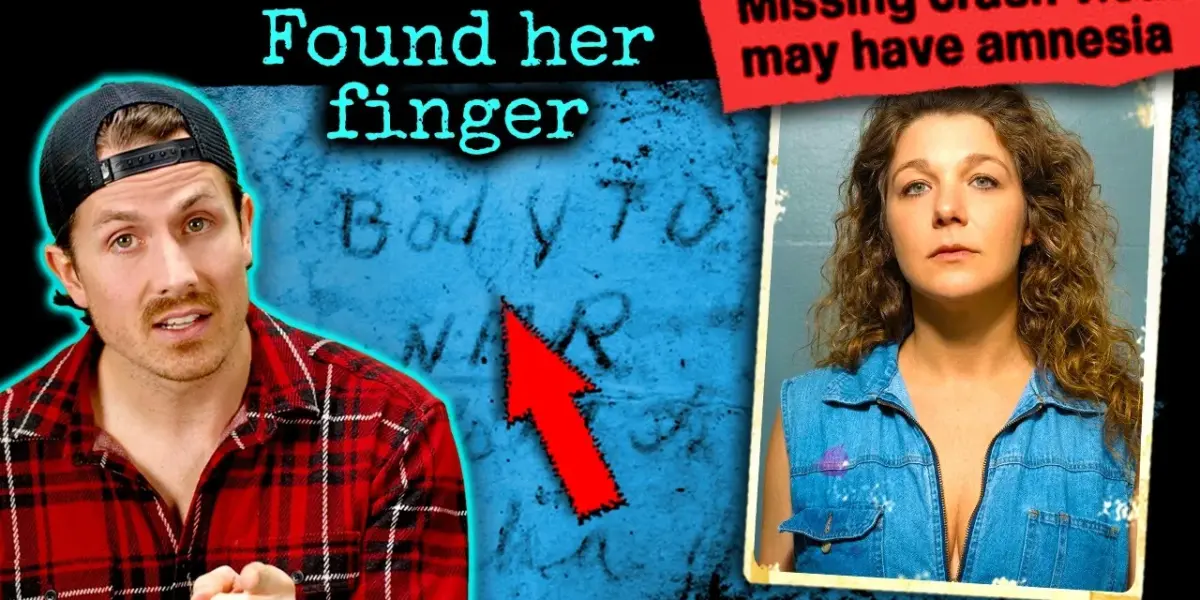
Diane Augat Vanished, Leaving Only a Severed Finger
The Florida sun beat down on April 10th, 1998, but inside the Hayloft Tavern in Hudson, Diane Augat sought a different kind of warmth. At 40 years old, her life felt like a disaster. Diane battled severe bipolar disorder, a condition that sent her spiraling into deep depressions and debilitating manic episodes. These struggles had led to the loss of her marriage and custody of her three beloved children. Though living with her sister offered some support, Diane often neglected her medication, leading to a cycle of mental health crises that landed her in psychiatric facilities multiple times.
That evening, Diane walked to the Hayloft Tavern, hoping to numb her pain with alcohol. She drank alone, her vision blurring and her stomach churning. When she slurred a request for another drink, the bartender, with a mix of annoyance and sympathy, cut her off. Humiliated and angry, Diane stumbled out of the bar, disappearing into the night.
A Mother’s Desperate Search
The next day, April 11th, Diane’s mother, Mildred, reported her daughter missing. Diane’s sister had called, distraught that Diane had left without a word and hadn’t returned. Mildred’s fear was immediate; given Diane’s history, she worried her daughter was in trouble, perhaps lost during a manic episode or worse.
Days turned into a week with no sign of Diane. Police confirmed she had been at the tavern and was later seen walking along Highway 19 and near the Coral Sands Motel. But then, the trail went cold. Mildred, increasingly frantic, visited the police station daily, only to be met with the same lack of information. Her mind raced with terrible possibilities: abduction, injury, or something far more sinister.
A Terrifying Voicemail and a Gruesome Discovery
Returning home on April 15th, Mildred found a new voicemail on her answering machine. It was Diane’s voice, filled with terror. “Help. Let me out,” she pleaded, followed by the sound of a struggle and a snatch of conversation before the call abruptly ended. Mildred’s panic escalated; this was no accidental disappearance.
She called the police, who now treated the case as a likely kidnapping. However, the caller ID offered little help, simply stating the call came from “Starlight.” Attempts to trace the call or identify “Starlight” proved fruitless. The investigation stalled, lacking any concrete leads.
Then, on April 16th, five days after Diane vanished, the police received a disturbing call. A man walking along Highway 19 had found an object and, unsure of its nature, asked officers to investigate. At the scene, police discovered a gruesome piece of evidence: the severed tip of a finger. Forensic analysis confirmed it belonged to Diane Augat.
Unanswered Questions and Lingering Clues
Over the following years, supposed sightings of Diane surfaced, but each led to dead ends. Police interviewed over 100 people, yet “Starlight” remained an enigma, and the circumstances surrounding Diane’s finger being severed were never explained. The case grew colder, but strange clues continued to appear in odd places.
The manager of a convenience store found a bag of Diane’s neatly folded clothes in their outdoor freezer. Another store’s counter held a plastic bag with cosmetics, scrawled with Diane’s name. Police could not determine who left the items or why. Despite these fragmented clues, Diane Augat’s disappearance and the mutilation she suffered remain an unsolved mystery, a chilling reminder of a life tragically cut short.
The Submarine Tragedy: A Race Against Time
On December 17th, 1927, 21-year-old sailor Joe Stevens was living his dream aboard a U.S. Navy submarine in Cape Cod Bay. Joe had always been fascinated by submarines, even building a pretend periscope as a child with his sister, Florence. Now, assigned to the torpedo room of the USS S-4, he was part of a test sail with the submarine’s 40-man crew.
Suddenly, a deafening metallic grinding sound reverberated through the vessel, followed by a violent shake that threw Joe and five other sailors in the torpedo room to the floor. Water began gushing through the open door connecting their compartment to the rest of the submarine. In a split-second decision, Joe’s companions slammed and sealed the door, trapping them inside the small, windowless space.
Trapped Beneath the Waves
The sailors assumed an accident had occurred, striking the submarine. They expected orders from the captain, but silence followed. Then, a jolt indicated the submarine had settled on the seabed, a mile offshore. Though the situation was dire, they initially believed rescue was imminent, given their proximity to a Coast Guard station.
However, as minutes stretched into hours, their hope dwindled. No rescue attempts were apparent, no communication came from the surface, and the emergency lights flickered out, plunging them into total darkness. With no food or water and a finite supply of oxygen, the torpedo room became a suffocating tomb. The air grew thin, and despair set in.
A Rescue Attempt Hampered by Nature
After what felt like an eternity, Joe heard a faint metallic clanging. Rescue divers had arrived. Using Morse code, Joe confirmed their presence and learned the horrifying truth: a Coast Guard ship had collided with their submarine, sinking it and killing everyone else on board. Joe and his companions were the only survivors, saved only by the sealed torpedo room door.
Their relief was short-lived. As they communicated their dwindling air supply, the divers explained the immense difficulty of their rescue. Opening any part of the submarine would flood it instantly, killing them. The only viable option was to lift the entire submarine to the surface. This complex operation, challenging even with modern technology, was further complicated by a fierce storm that raged for days, making it impossible for rescue ships to position the necessary equipment.
A Sister’s Foreboding Memory
While the agonizing wait continued off the coast of Massachusetts, Joe’s sister Florence, in Providence, Rhode Island, scanned newspapers and listened to the radio, desperate for news. Reports confirmed the sailors were alive but trapped by the storm. Florence was consumed by fear, a fear amplified by a chilling memory from their childhood.
Years earlier, during a game of make-believe submarines, a four-year-old Joe had uttered a cryptic phrase: “All hands were lost.” He refused to explain and never played the game again. Now, Florence felt a profound, terrible understanding: her young brother had somehow predicted his own death.
Five days after the submarine sank, Florence received the devastating news. Joe and the other sailors in the torpedo room had perished. The tragedy underscored the brutal realities of the sea and the devastating impact of human error, leaving Florence to grapple with the haunting possibility of a child’s premonition.
Patricia Meehan: A Roadside Collision and a Vanishing Act
On the evening of April 19th, 1989, Patricia Meehan, a 37-year-old ranch hand living in Bozeman, Montana, called her father, Thomas, in Pittsburgh. Patricia confided in her father that she was struggling with loneliness, a recent breakup, and general dissatisfaction with her life. She even asked if she could move back home, a request her loving father readily granted.
The next day, April 20th, over 1,500 miles away in rural Montana, a woman named Carol Heitz was driving down a desolate highway. Suddenly, the car in front of her swerved off the road. A moment later, Carol understood why: another car, driving the wrong way, was hurtling towards her. Carol slammed on her brakes and tried to swerve, but it was too late. Her car was struck head-on.
An Eerie Encounter and a Cold Trail
Carol survived the crash, though injured. As she exited her car to check on the other driver, the woman emerged. In the headlights, Carol saw a middle-aged woman with shoulder-length strawberry blonde hair. The woman appeared unhurt and, strangely, calm, showing no reaction to the devastating collision she had caused.
Instead of speaking to Carol, the woman simply stared, then turned and began walking away. Carol yelled for her to stop, to wait for the authorities, but the woman ignored her. She calmly walked off the highway, climbed a fence, and disappeared into a vast, empty field. When police arrived, they identified the other car’s owner as Patricia Meehan, who lived 400 miles away. They found a trail of her footprints leading into the field, but the trail abruptly ended, and the K9 units lost her scent. Patricia Meehan had vanished without a trace.
A Case of Mistaken Identity or Something More?
Two weeks later, a police officer in Luverne, Minnesota, nearly 700 miles from the crash site, thought he recognized a woman in a fast-food restaurant. The woman, described as having strawberry blonde hair and staring blankly, matched the description of Patricia Meehan, whose disappearance had become national news. The officer approached her, but the woman denied being Patricia Meehan.
The officer, unconvinced, arrested her. However, upon further investigation, it was confirmed that the woman was not Patricia Meehan. This encounter raised more questions than it answered. Was it a case of mistaken identity, or had Patricia Meehan, after causing the fatal crash, somehow managed to travel hundreds of miles and assume a new identity, only to be found and then seemingly vanish again? Patricia Meehan’s whereabouts and fate remain unknown, leaving her father and law enforcement with a profound and enduring mystery.
Source: Vanished without a trace… except her FINGER (YouTube)

Related Articles

Criminals’ Shocking Confessions to Lovers Revealed
Explore the chilling true stories of criminals who confessed their darkest secrets to romantic partners, leading to shocking downfalls and betrayals. From financial titans to serial killers, these tales reveal the dangerous intersection of love and crime.


Husband Denies Role in Wife’s Bahamas Disappearance
A Michigan man, Brian Hooker, is in Bahamian custody after his wife, Lynette, disappeared from their boat. Hooker claims she fell overboard and was swept away by a current, but her daughter doubts his story, citing a volatile marriage. Investigators are examining all possibilities, with past domestic incidents adding complexity.


Granny Ripper’s Reign of Terror and a Journalist’s Dark Secret
This article delves into three chilling true crime cases: the "Granny Ripper" who murdered and dismembered her landlady in Russia, a family's terrifying encounter with serial killer Aileen Wuornos, and the shocking revelation of a journalist who was himself a serial killer, investigating his own crimes.