Fetterman’s Shift: Alone on War Powers, Isolated on Civilian Casualties
Senator John Fetterman's recent votes on war powers and a controversial missile strike have placed him in solitary positions, diverging from Democratic consensus. His justifications spark debate on foreign policy and the party's identity.


Fetterman’s Shift: Alone on War Powers, Isolated on Civilian Casualties
In a political landscape often characterized by predictable partisan alignments, Senator John Fetterman has recently charted a course that has left both allies and adversaries in Washington scratching their heads. In two separate, high-profile instances, Fetterman has found himself as the sole Democratic voice in the Senate, diverging from his party on critical foreign policy and military actions. These decisions, particularly his stance on a recent missile strike and his earlier vote on presidential war powers, raise significant questions about his evolving political identity and the broader implications for Democratic foreign policy.
Last week, Senator Fetterman made headlines for being the only Democrat to vote with Republicans against limiting President Donald Trump’s war powers. This move, which granted the executive branch continued broad authority for military action, immediately drew criticism from within his own party, who often advocate for greater congressional oversight in matters of war and peace. The decision signaled a potential departure from traditional Democratic stances on checks and balances in foreign policy, a stance that typically emphasizes de-escalation and multilateralism.
This week, Fetterman once again stood apart. He was the only Democrat not to co-sign an open letter to Defense Secretary Pete Hegsth, demanding a thorough investigation into a missile strike that hit an Iranian girls’ school. The casualty count from this strike, it has since emerged, was more than double the initial reports, a detail that amplified calls for accountability and a full accounting of the events.
Fetterman’s justification for abstaining from the letter, as articulated in an interview with CNN’s Caitlyn Collins, revealed a complex and, to many, controversial rationale. He argued that an investigation was already underway and acknowledged by the Pentagon, making the letter redundant. “They’re going to do an investigation. Why would I sign on a letter asking them to do what they’re obviously already going to do?” he stated, suggesting a pragmatic, if somewhat dismissive, approach to legislative action.
However, Fetterman’s explanation did not stop there. He went on to express a view that deeply divided opinion, stating, “What I don’t agree with the rest of my colleagues in the house is that it’s a war of choice or it’s a dumb or it’s it’s all the things that my colleagues have described, you know, this operation. I think it’s a good thing and I support that.” This assertion—that the operation, despite the tragic outcome of civilian casualties, was a “good thing”—sparked immediate backlash. He further attempted to draw a distinction between U.S. actions and those of Iran, noting that “the United States never ever targets target civilians. Iran does, you know, and including their own citizens. And they massacred 35,000 of them just a couple weeks ago.” He also criticized what he perceived as a disproportionate media focus on the school strike compared to Iranian government actions against its own people.
A Controversial Justification
Fetterman’s defense rested on several pillars: the inevitability of an investigation, a perceived endorsement of the military operation itself, and a moral equivalence argument that highlighted Iran’s human rights abuses. He suggested that the focus on the school strike by “the left media” was misplaced, contrasting it with the alleged silence or lesser concern regarding Iran’s internal repression.
This framing, however, has been widely interpreted as a false equivalence and a dismissal of the gravity of civilian casualties resulting from U.S. military actions. Critics argue that while Iran’s regime is undoubtedly brutal, acknowledging that fact does not absolve the U.S. of responsibility for its own actions, especially when those actions result in unintended but devastating loss of innocent life.
As one pointed critique in the original transcript highlights, “The government of Iran was horrible. Nobody is arguing that fact… But at some point… it’s not our place. We can do other things that do not involve bombing children to try to get them to stop. We can create a massive coalition, choke them economically until they come to the table to stop killing their own people. There are diplomatic ways to do these things. We didn’t even give it a chance. We just said, ‘Nope, we’re going to start firing some missiles. Who knows where they’re going to land?'”
This sentiment underscores a core tenet of liberal foreign policy: the pursuit of diplomatic and economic solutions over military intervention, particularly when civilian populations are at risk. The argument is that even if the target was legitimate, the execution and resulting collateral damage are unacceptable and demand rigorous scrutiny, not endorsement.
The transcript’s author expressed strong disapproval, stating, “And how dare you try to act like, well, nobody cared when they were killing their people, but now that we’re killing them, suddenly it’s a bad thing. Resign right the [expletive] now. Get your Frankenstein ass out of the United States Senate. And if you’re not going to do that, then drop the D next to your name because we don’t [expletive] want you. We don’t want you anywhere near the Democratic Party. You’re a waste of space inside the Democratic Party. You are apparently nothing more than a Republican warhawk. So, go ahead and change that D to an R because you’re proving to all of us who and what you truly are.”
This extreme reaction, while unpolished, captures a deep disillusionment felt by some who view Fetterman’s positions as a betrayal of Democratic values and a lurch towards hawkishness.
Historical Context and Shifting Alliances
Senator Fetterman’s recent votes and statements come at a time of significant flux within the Democratic Party regarding foreign policy. Historically, Democrats have been more hesitant about military interventions and have emphasized diplomacy and international cooperation. However, recent global events have tested these traditional stances, leading to a more complex and sometimes fractured approach within the party.
The debate over presidential war powers, which Fetterman’s vote touched upon, has a long history in the United States. Congress has often ceded significant authority to the executive branch in matters of national security, leading to ongoing tensions about the balance of power. Fetterman’s decision to side with Republicans on this issue suggests a willingness to grant broader executive discretion, a position that has traditionally been more aligned with conservative viewpoints.
Similarly, the response to military actions with significant civilian casualties has always been a sensitive point for Democrats. The party platform typically includes strong condemnations of actions that harm non-combatants and calls for adherence to international humanitarian law. Fetterman’s apparent support for an operation that resulted in such casualties, even with his caveats, marks a notable deviation from this norm.
Why This Matters
Fetterman’s unique positions have several critical implications. Firstly, they highlight a potential fissure within the Democratic Party on foreign policy and national security. As the party navigates an increasingly complex global landscape, these internal debates become more pronounced. Fetterman’s willingness to break with party consensus, even on issues that might be considered core to Democratic identity, suggests a personalized approach to policy-making that prioritizes his own assessment of situations.
Secondly, his stance on the Iranian school strike, and his justification for it, risks alienating a significant portion of the Democratic base, particularly younger progressives and those most sensitive to human rights issues and the devastating impact of war on civilians. The charge of being a “Republican warhawk” reflects a fear among some that Fetterman is moving away from the progressive ideals he once espoused.
Thirdly, his alignment with Republicans on the war powers vote could set a precedent, signaling a willingness among some Democrats to engage in bipartisan consensus-building on national security issues, even if it means adopting positions traditionally associated with the opposing party. This could reshape the dynamics of foreign policy debates in Congress.
Finally, Fetterman’s actions raise questions about political strategy and identity. Is this a calculated move to appeal to a broader electorate, or a genuine evolution of his views? His supporters might argue that he is being pragmatic and principled, refusing to engage in partisan posturing. Critics, however, see it as a departure from his roots and a potentially damaging shift for the Democratic Party’s image and policy objectives.
Implications, Trends, and Future Outlook
The trends suggested by Fetterman’s recent actions are worth monitoring. The growing assertiveness of certain factions within the Democratic Party on national security, coupled with a willingness to challenge traditional liberal orthodoxies on military intervention, could become a more prominent feature of American politics. This could lead to a more diverse and potentially more contentious debate within the party, as different wings grapple with how to respond to global threats.
The future outlook for Fetterman’s political trajectory remains uncertain. His ability to maintain support within his home state of Pennsylvania, which is politically diverse, will be crucial. His willingness to forge his own path, even if it leads to isolation within his party on key votes, could be seen as a sign of strength by some voters, or as a liability by others.
Ultimately, John Fetterman’s recent divergence from his Democratic colleagues on critical foreign policy issues presents a compelling case study in political evolution and the complex challenges of navigating national security in the 21st century. His decisions have sparked intense debate, forcing a re-examination of what it means to be a Democrat in an era of shifting global dynamics and persistent geopolitical conflicts.
Source: John Fetterman Somehow Becomes Even WORSE (YouTube)

Related Articles
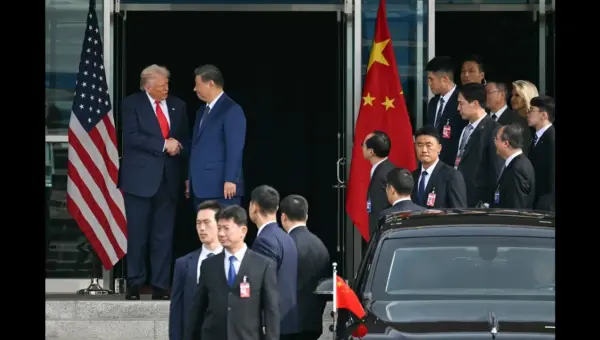
Trump’s “Walk Away” Tactic Signals Tougher Stance on China
Retired Air Force Brigadier General David Stillwell believes President Trump's strategy of being willing to walk away from negotiations puts pressure on China. This tactic, combined with US global actions and strengthened alliances, signals a more assertive American foreign policy.

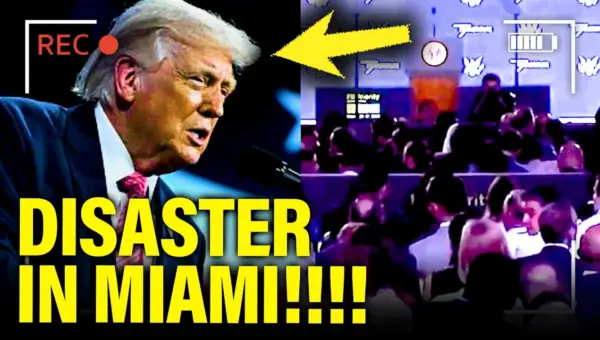
Trump’s War Talk Stuns Financial Crowd
Donald Trump's recent speech in Miami focused on his foreign policy, particularly his critical views on NATO and his vision for international relations. He declared the U.S. would no longer defend NATO allies, questioned the value of existing alliances, and suggested renaming the Strait of Hormuz. The speech also touched on his personal views of success, his allies, and his perceived role as a global peacemaker.
Trump’s Warpath: New Threats Signal Imperial Ambitions
Recent statements from Donald Trump reveal a potential embrace of increased military action and interventionist foreign policy. This approach, characterized by critics as "imperialism 2.0," contrasts with his past promises of peace and has even drawn criticism from parts of his own base. The implications for U.S. global engagement and domestic priorities are significant.