Fed Signals Higher Rates Amid Inflation Fears
The Federal Reserve signaled a more hawkish stance, hinting at potential interest rate hikes due to persistent inflation concerns. Jerome Powell acknowledged discussions of rate hikes and highlighted ongoing inflation drivers, suggesting rates may stay higher for longer.

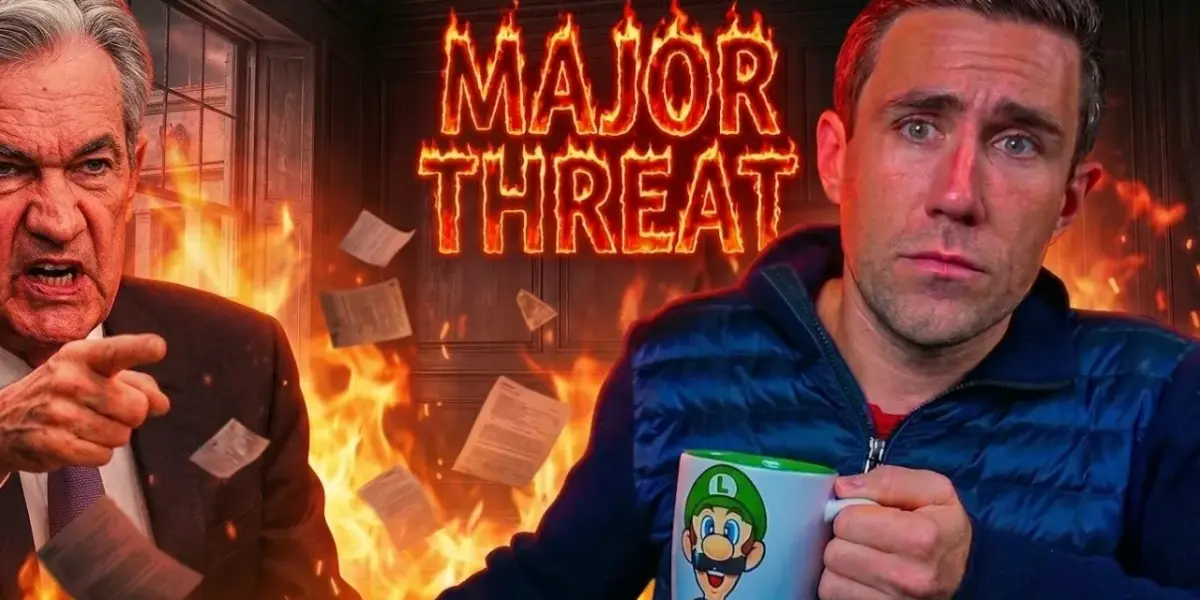
Fed Signals Higher Rates Amid Inflation Fears
The Federal Reserve’s recent policy meeting delivered a surprising message to investors, hinting at the possibility of interest rate hikes rather than cuts. Federal Reserve Chair Jerome Powell’s press conference following the Federal Open Market Committee (FOMC) meeting revealed a cautious stance on inflation and economic progress. This has led to a shift in market expectations, with analysts now anticipating rates could remain higher for longer.
Economic Projections Show Growth, But Inflation Lingers
The Fed’s Summary of Economic Projections (SEP) initially painted a positive picture. It indicated steady GDP growth and a stable unemployment rate, with projections for the Fed funds rate remaining unchanged. GDP forecasts were even revised upward for both this year and next. Inflation projections saw a slight increase, with the core PCE (Personal Consumption Expenditures) forecast rising from 2.5% to 2.7% for this year.
However, beneath the surface of these generally positive projections, some concerning signals emerged. The FOMC statement removed language about the labor market showing signs of stabilization, replacing it with a more neutral description: “the labor market is little changed.” This subtle shift suggested a less optimistic view on labor market strength than previously communicated.
Rate Hike Talk Dominates Discussion
The most significant takeaway from the press conference was Jerome Powell’s acknowledgment that the possibility of a rate hike was discussed during the meeting. Powell stated there are “two-sided risks” to interest rates. While a majority of members did not see a hike as the base case, several did, indicating a clear division and increased concern about inflation.
This discussion of rate hikes, even if not currently the base case, sent ripples through the market. Investors had been anticipating rate cuts, and the suggestion of potential hikes introduced significant uncertainty. The 10-year Treasury yield rose to 4.255%, and the 2-year Treasury yield saw a more substantial increase of 8.1 basis points, reflecting a move towards higher interest rate expectations.
Inflation Drivers and Powell’s Concerns
Powell highlighted several factors contributing to his inflation concerns. He pointed to a string of shocks, including the COVID-19 pandemic, the Russia-Ukraine conflict, supply chain disruptions, and more recently, energy price shocks stemming from events in the Middle East. These events have repeatedly interrupted progress on bringing inflation back to the Fed’s 2% target.
A particular focus was on core goods inflation, which has shown a concerning rise. Data indicates that core goods inflation is currently running at a 4.5% annualized rate on a one-month basis and 3.7% on a three-month basis. Powell emphasized that progress on rate cuts is contingent on seeing a decline in core goods inflation. Until that progress is evident, rate cuts are unlikely.
He also noted that non-housing services inflation has remained stubbornly high, despite the labor market not showing significant inflationary pressure. This disconnect is frustrating for policymakers, as it deviates from typical economic patterns where labor market tightness fuels service inflation.
AI’s Dual Impact: Productivity and Inflation
Artificial intelligence (AI) was discussed as a factor influencing both productivity and inflation. While some anticipate AI will lead to deflationary pressures, Powell cautioned against this assumption in the short term. He argued that current AI-related capital expenditures, such as building data centers and increased demand for memory chips, are actually contributing to inflation.
Powell suggested that AI might be increasing productivity and raising the neutral rate of interest in the short term. This means higher rates could be needed to keep the economy from overheating, rather than lower rates. Long-term disinflationary effects from AI are possible, but not imminent.
Powell’s Tenure and Market Reaction
Adding another layer of complexity, Powell addressed his own tenure at the Fed. He indicated he would remain Fed Chair until his successor, Kevin Walsh, is confirmed by Congress. If Walsh’s confirmation is delayed due to ongoing investigations, Powell could stay in his role for an extended period, potentially delaying rate cuts further.
This uncertainty surrounding Powell’s departure, coupled with the hawkish tone on inflation, contributed to a negative market reaction. The initial optimism from the economic projections was overshadowed by concerns about persistent inflation and the potential for prolonged higher interest rates.
Market Impact
The Federal Reserve’s recent meeting has shifted market sentiment towards a more hawkish outlook. The prospect of interest rates remaining higher for longer, driven by stubborn inflation and supply-side shocks, is a key takeaway.
- Interest Rates: Investors should brace for a scenario where rate cuts are delayed. The Fed’s focus remains squarely on inflation, and until significant progress is made, monetary policy is likely to stay restrictive.
- Economic Growth: While GDP growth is projected to be stable, the higher-rate environment could eventually dampen economic activity. Sectors sensitive to interest rates, such as housing and capital investment, may face headwinds.
- Inflation Expectations: The rise in shorter-term inflation expectations, particularly the 5-year break-even rate hitting a new high since 2023, is a significant concern. Managing these expectations will be crucial for the Fed.
- Labor Market: The subtle change in labor market commentary suggests policymakers are monitoring it closely for any signs of renewed inflationary pressure.
The Fed’s path forward will depend on incoming economic data, particularly on inflation. The current stance suggests a data-dependent approach, but with a clear bias towards caution and a willingness to keep rates elevated if inflation proves persistent.
Source: Powell JUST issued a MAJOR Threat | Fed FOMC Meeting (YouTube)

Related Articles


Iran Conflict Sparks Market Volatility, Experts Weigh In
Geopolitical tensions in the Middle East have rattled global markets, with stocks falling and safe-haven assets like the U.S. dollar strengthening. Experts suggest the market may have overreacted, creating potential buying opportunities, but warn of a "bumpy journey" ahead due to infrastructure damage and potential oil shortages. Concerns also linger about the Federal Reserve's independence amidst political commentary.

Markets Wobble as Geopolitics Shift Dramatically
Global markets are showing volatility as geopolitical tensions rise, with the Nasdaq nearing correction territory. Concerns over consumer spending, rising costs, and the nation's fiscal health are intensifying. Analysts debate whether current events represent short-term market noise or a fundamental "reinvention of geopolitics" with long-term implications.


Iran Talks Gain 10 Days, But Markets Remain Skeptical
Iran has secured a 10-day extension for negotiations, but financial markets remain unconvinced, showing little reaction to the news. Rising energy and borrowing costs, coupled with geopolitical tensions, continue to pressure global markets and consumer spending.