Fed Holds Rates Steady, Signals Potential Hike Amid Inflation Concerns
The Federal Reserve held its benchmark interest rate steady today, but signaled that a future rate hike might be necessary due to persistent inflation. Chair Jerome Powell highlighted economic resilience alongside concerns about elevated price levels, particularly those influenced by global events and tariffs. The Fed's policy path remains flexible and data-dependent.

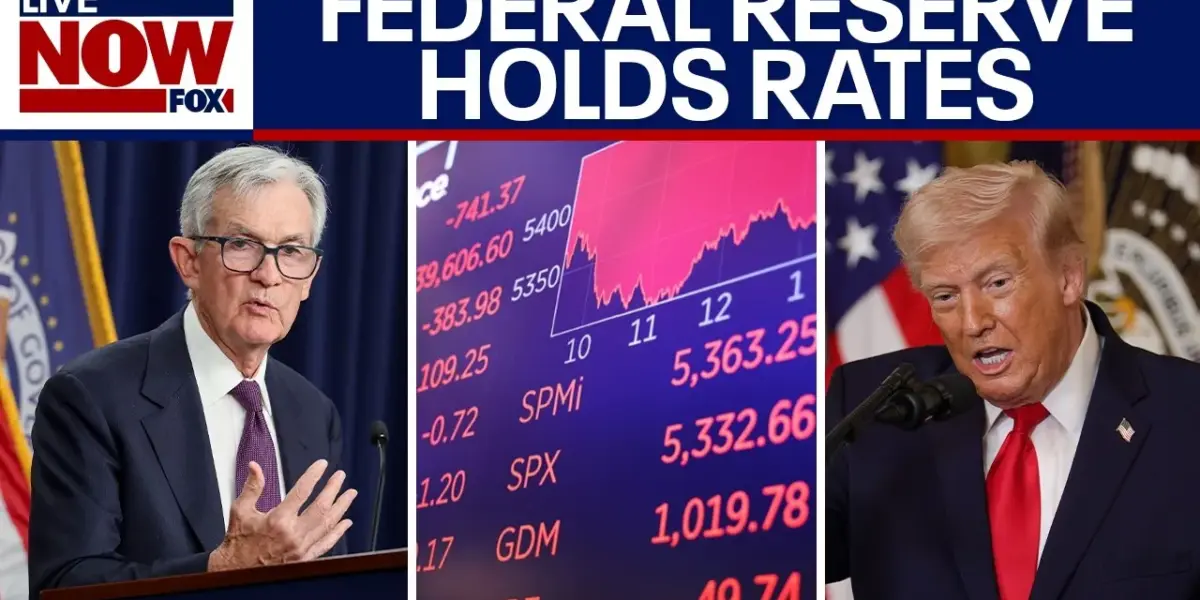
Federal Reserve Keeps Interest Rates Unchanged, Signals Possible Future Hike
Washington D.C. – The Federal Reserve announced today that it will keep its benchmark interest rate unchanged, maintaining the current target range for the federal funds rate at 3 and a half to 3 and 3/4 percent. Federal Reserve Chair Jerome Powell stated that while the U.S. economy is expanding at a solid pace with resilient consumer spending, inflation remains somewhat elevated. The decision comes as the Fed balances its dual mandate of maximum employment and stable prices, while navigating uncertainties like the conflict in the Middle East.
Economic Outlook: Mixed Signals and Inflation Worries
Available data indicates that economic activity has been robust, with consumer spending showing resilience and business investment continuing to grow. However, the housing sector remains weak. Job gains have been steady, but the pace of growth has slowed, partly due to lower immigration and labor force participation. Unemployment remains low, with the rate little changed in recent months.
Inflation, though down from its mid-2022 highs, is still above the Fed’s 2% target. The latest figures show total Personal Consumption Expenditures (PCE) prices rose 2.8% over the past year, with core PCE prices up 3.0%. The Fed notes that recent increases in oil prices, driven by Middle East disruptions, have pushed up near-term inflation expectations. While longer-term inflation expectations remain anchored, the Fed’s own projections show total PCE inflation at 2.7% this year and 2.2% next year, slightly higher than previously forecast.
Monetary Policy Path: Data-Dependent and Flexible
Chair Powell emphasized that the Federal Open Market Committee (FOMC) decided to leave policy rates unchanged, viewing the current stance as appropriate to promote progress toward their goals. “We will remain attentive to risks to both sides of our dual mandate,” Powell stated. He added that the Fed is well-positioned to determine the extent and timing of future adjustments to its policy rate based on incoming data and the evolving economic outlook.
The FOMC participants’ projections, as detailed in the Summary of Economic Projections (SEP), indicate a median forecast for the federal funds rate to be 3.4% at the end of this year and 3.1% at the end of next year. This reflects no change from December’s projections. However, Powell cautioned that these forecasts are not a committee plan and that monetary policy is not on a preset course. Decisions will be made on a meeting-by-meeting basis.
“The implications of developments in the Middle East for the US economy are uncertain. We will remain attentive to risks to both sides of our dual mandate.”
Jerome Powell, Federal Reserve Chair
Addressing Inflation Concerns and Future Rate Cuts
During the press conference, Powell addressed questions about inflation, particularly concerning the impact of oil prices and tariffs. He acknowledged that the Fed is aware of the persistent inflation over the last few years, interrupted by various shocks. While progress has been made in reducing goods inflation, particularly as the one-time effects of tariffs fade, Powell stressed the need to see continued progress. He explained that the Fed generally looks through temporary energy shocks, but this is dependent on inflation expectations remaining well-anchored and the broader context of inflation staying above target for an extended period.
Regarding the possibility of rate cuts, Powell noted that while the median projection for the federal funds rate remained unchanged, there was some movement among individual participants toward fewer cuts. He explained that the forecast for rate cuts is conditional on economic performance. If the expected progress on inflation is not realized, rate cuts may not occur as anticipated. The Fed is closely monitoring potential impacts on consumption and growth, including wealth effects from the stock market and the diversion of spending due to higher gas prices.
Looking Ahead: Vigilance and Commitment
The Federal Reserve remains committed to its goals of maximum employment and stable prices. As the economy navigates ongoing global uncertainties and inflationary pressures, the Fed will continue to closely monitor economic data and adjust its policy as needed. The focus remains on achieving the 2% inflation goal and ensuring long-term inflation expectations stay anchored, serving the best interests of the American people.
Source: Federal Reserve update: Powell 'might' raise rates soon (YouTube)

Related Articles


Iran Conflict Sparks Market Volatility, Experts Weigh In
Geopolitical tensions in the Middle East have rattled global markets, with stocks falling and safe-haven assets like the U.S. dollar strengthening. Experts suggest the market may have overreacted, creating potential buying opportunities, but warn of a "bumpy journey" ahead due to infrastructure damage and potential oil shortages. Concerns also linger about the Federal Reserve's independence amidst political commentary.

Markets Wobble as Geopolitics Shift Dramatically
Global markets are showing volatility as geopolitical tensions rise, with the Nasdaq nearing correction territory. Concerns over consumer spending, rising costs, and the nation's fiscal health are intensifying. Analysts debate whether current events represent short-term market noise or a fundamental "reinvention of geopolitics" with long-term implications.


US Holds 8,000 Tons of Gold: A History Lesson
Discover how the U.S. amassed over 8,000 tons of gold, a journey that began with President Roosevelt's 1933 order and the Bretton Woods Agreement. Learn how this historical gold hoard shaped the dollar's global dominance and its eventual decline.