Fed Faces Inflation-Recession Dilemma Amid Market Turmoil
The U.S. economy faces a critical juncture as the Federal Reserve grapples with persistent inflation and a decelerating economy. Rising oil prices, a shifting Treasury market, and a surge in gold prices signal deep-seated investor concerns. A potential leadership change at the Fed adds another layer of uncertainty.

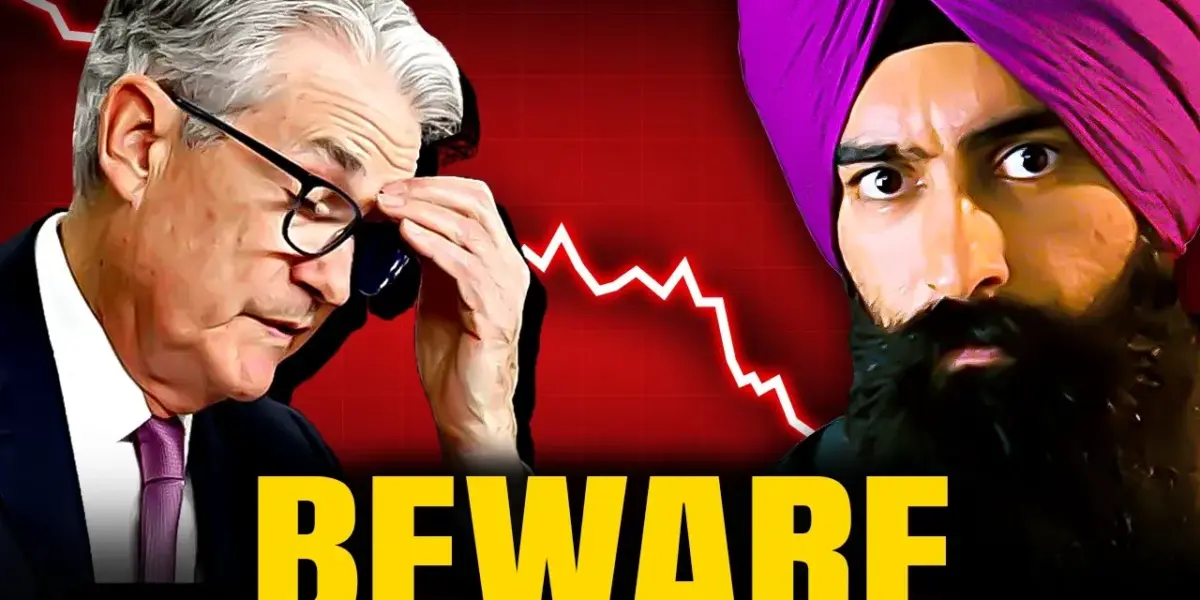
Fed Trapped Between Inflation and Slowing Economy
The U.S. economy is undergoing rapid transformations, marked by soaring oil prices, a booming gold market, and a declining stock market. While geopolitical events, such as the conflict in the Middle East, act as immediate triggers, the underlying economic fissures have been developing for years. This complex environment presents a significant challenge for the Federal Reserve, which finds itself in a precarious position, caught between battling persistent inflation and addressing a decelerating economy.
Historical Parallels: The Specter of Stagflation
To understand the current predicament, historical parallels are instructive. The early 1970s offer a striking resemblance. A period of high inflation, exacerbated by the U.S. government’s departure from the gold standard, led to increased money printing and government spending. This was compounded by the 1973-1974 Yom Kippur War, which sent oil prices skyrocketing. The confluence of these factors, coupled with shifts in Federal Reserve policy aimed at managing unemployment, resulted in stagflation—a debilitating economic condition characterized by slowing growth, rising prices, and stagnant employment.
Today, concerns are mounting that history may rhyme. Inflation, which had begun to re-accelerate in early 2026, has been further inflamed by recent increases in oil prices. Simultaneously, the labor market is showing signs of weakness, influenced by factors such as artificial intelligence (AI) adoption and broader economic shifts. This creates a dual threat: rising prices threatening purchasing power and a weakening job market signaling economic distress.
Treasury Market Signals Investor Anxiety
A key indicator of this shifting sentiment can be observed in the U.S. Treasury market. Traditionally, during times of economic uncertainty or geopolitical conflict, investors flock to Treasuries—considered a risk-free asset—as a safe haven. This increased demand typically drives down Treasury yields (the interest rate paid by the government). However, in the wake of recent geopolitical events, the opposite has occurred. Treasury yields have risen, indicating decreased demand and suggesting that investors are more concerned about a potential dollar crisis or persistent inflation than about an immediate recessionary threat. This is a departure from historical patterns where economic downturns, not inflation, were the primary drivers of Treasury demand.
“When people are buying treasuries, the interest rate that the government pays generally goes down… But if people are not buying treasuries, the government has to incentivize you with higher interest rates.”
Even major financial institutions like BlackRock have noted this anomaly, with their analysts pointing to rising long-term Treasury yields despite their safe-haven status, signaling a potential structural shift in market dynamics and growing concerns about the U.S. dollar.
The Federal Reserve’s Conundrum
The Federal Reserve, the central bank of the United States responsible for monetary policy, faces a critical dilemma. Its traditional tools involve adjusting interest rates to manage economic conditions. When the economy shows signs of overheating and inflation is a concern, the Fed raises interest rates to curb spending. Conversely, during economic slowdowns or recessions, it lowers interest rates to stimulate borrowing and economic activity.
Currently, the Fed is confronted with conflicting pressures. On one hand, inflation remains a significant concern. The surge in oil prices, which impacts everything from gasoline to groceries, has the potential to exacerbate inflationary pressures. To combat this, the Fed’s conventional response would be to raise interest rates, a strategy it pursued between 2022 and 2025.
On the other hand, the economy is showing clear signs of deceleration. Reports indicating the weakest job market performance since the pandemic in February 2026, attributed partly to AI, tariffs, and other economic factors, coupled with projections of further economic slowdown, suggest a need for stimulus. In such scenarios, the Fed typically cuts interest rates to encourage spending and investment.
This presents the Fed with a no-win situation: raising rates to fight inflation risks deepening an economic downturn and increasing unemployment, while cutting rates to stimulate the economy could fuel further inflation and devalue the dollar.
A New Era at the Fed?
Adding another layer of complexity is the impending change in Federal Reserve leadership. The term of the current Chairman, Jerome Powell, is set to expire in May 2026. President Trump, who has been critical of Powell’s stance on interest rates, has the authority to appoint a new chairman. The President has expressed a desire for the lowest possible interest rates among developed nations, a position that contrasts with Powell’s caution regarding inflation.
The nomination of Kevin Worsh, a former Fed member who previously expressed concerns about excessive stimulus and potential hyperinflation during the 2008 financial crisis, introduces further uncertainty. Worsh had, prior to the recent Middle East conflict, suggested that interest rates could be lowered by reducing the money supply through balance sheet tightening. However, the current environment of high inflation and a slowing economy complicates this outlook. The market will be closely watching how the new leadership navigates these competing pressures, though the Fed’s decisions require a majority vote from its 12 members, meaning a single chairman’s influence, while significant, is not absolute.
Gold’s Rise as a Hedge Against Uncertainty
The surge in gold prices, which has been ongoing since the pandemic and predates the recent geopolitical escalations, reflects growing investor anxiety. Unlike stocks in companies that generate value through operations, gold is primarily an asset of perceived value and a hedge against economic instability and currency devaluation. Its rapid appreciation, outpacing the stock market—a phenomenon seen only in periods of severe economic distress like the Great Depression, the stagflation era of the 1970s, the dot-com bubble burst, the 2008 crisis, and now post-pandemic—underscores a deep-seated concern about the U.S. dollar and the broader economic outlook.
Consumer Confidence and Investment Strategy
Compounding these concerns is a decline in consumer confidence. This is a critical economic indicator, as consumer spending is largely driven by sentiment rather than just income. Falling confidence typically leads to reduced spending on big-ticket items like cars and homes, further slowing the economy.
What Investors Should Know
- The Fed’s Tightrope Walk: Investors must monitor the Federal Reserve’s actions closely. The central bank is navigating a difficult path between controlling inflation and preventing an economic recession. Any policy shifts will have significant market implications.
- Treasury Market Signal: Rising Treasury yields, contrary to historical norms during crises, suggest a growing concern about inflation and the dollar’s stability over immediate recessionary fears.
- Gold as a Barometer: The strong performance of gold indicates a flight to safety and a hedge against potential currency devaluation and economic uncertainty.
- Long-Term Perspective is Key: Market volatility, driven by news and emotions, can be unsettling. However, for long-term investors, market downturns often present opportunities to acquire assets at discounted prices. A disciplined, long-term strategy, such as consistent buying (dollar-cost averaging), can be more effective than reacting to short-term market noise.
- Focus on Opportunity: While headlines may focus on fear and uncertainty, these periods can create unique investment opportunities for those who understand the underlying economic shifts and can cut through the emotional responses that often drive market fluctuations.
The coming months are likely to be characterized by continued economic flux and market volatility. Understanding these dynamics is crucial for investors aiming to navigate the evolving financial landscape and identify opportunities amidst the challenges.
Source: The Fed Can't Save You This Time — Here's Why (YouTube)

Related Articles

Iran Conflict Sparks Market Volatility, Experts Weigh In
Geopolitical tensions in the Middle East have rattled global markets, with stocks falling and safe-haven assets like the U.S. dollar strengthening. Experts suggest the market may have overreacted, creating potential buying opportunities, but warn of a "bumpy journey" ahead due to infrastructure damage and potential oil shortages. Concerns also linger about the Federal Reserve's independence amidst political commentary.

Markets Wobble as Geopolitics Shift Dramatically
Global markets are showing volatility as geopolitical tensions rise, with the Nasdaq nearing correction territory. Concerns over consumer spending, rising costs, and the nation's fiscal health are intensifying. Analysts debate whether current events represent short-term market noise or a fundamental "reinvention of geopolitics" with long-term implications.

Rate Hike Fears Spark Market Sell-Off, Geopolitics Add Fuel
Markets are reeling as a surprising shift in Federal Reserve expectations, with rate hikes now being priced in, combines with escalating Middle East tensions. This has triggered a liquidity crunch across assets, impacting everything from stocks to bonds and gold.