Fallout Season 2: New Vegas Beckons!
Fallout season 2 dives headfirst into the world of New Vegas, exploring its iconic locations and characters while weaving a complex narrative of corporate greed, personal betrayal, and the enduring spirit of survival. The season masterfully blends past and present, offering deep dives into lore and thrilling action sequences.

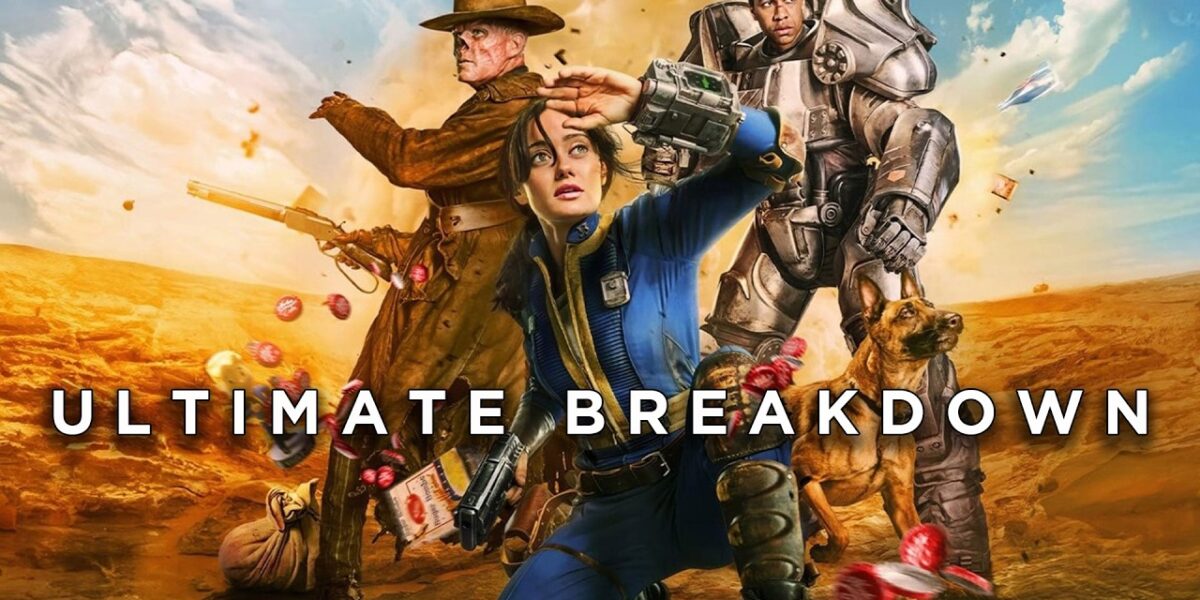
Fallout Season 2: New Vegas Beckons!
The Wasteland is back, and this time, the journey leads us straight to the neon-drenched, lawless allure of New Vegas. Fallout season 1 concluded with a colossal cliffhanger, leaving viewers on the edge of their seats as Hank set his sights on the legendary Mojave Wasteland. For fans of the iconic RPG series, this is more than just a plot point; it’s a tantalizing glimpse into a world many have yearned to revisit. With no immediate plans for a New Vegas remake or sequel from Bethesda’s Todd Howard, this season of the Prime Video hit is our golden ticket back to this beloved corner of the Fallout universe.
A Dual Timeline Dive into the Past and Present
Season 2 picks up with Hank en route to New Vegas, but he’s not alone in his pursuit. Lucy and the enigmatic Ghoul are hot on his trail, determined to intercept him. Meanwhile, Norm finds himself in a precarious situation, attempting to escape the confines of Vault 31. The show masterfully weaves in scenes from the past, offering crucial context and foreshadowing that enriches the present-day narrative. This dual-timeline approach, reminiscent of Jonathan Nolan’s work on Westworld, provides a layered viewing experience, unpacking the events that led to the post-apocalyptic world we know.
Echoes of Americana and Corporate Greed
The season premiere opens with a striking visual: studio logos displayed on a Securitron, introducing the episode title, “The Man Who Knew.” This is a clear nod to the 1956 Alfred Hitchcock thriller, “The Man Who Knew Too Much,” a film steeped in classic Americana that has clearly influenced the show’s aesthetic. The title itself is multi-layered, resonating with characters like Hank, the shadowy Mr. House, and Cooper. The narrative delves into the corrosive nature of unchecked capitalism, with Cooper’s wife’s chilling proposal to initiate the nuclear apocalypse to secure a monopoly. This theme of corporate greed, where profit trumps planetary well-being, is a recurring motif, echoing the infamous actions of Umbrella Corporation in the Resident Evil franchise.
A sweeping shot of retro-futuristic Los Angeles sets the stage, accompanied by the smooth sounds of Peggy Lee’s “Cheek to Cheek.” This use of 1950s music is a hallmark of the Fallout franchise, evoking the nostalgic yet unsettling tone established in games like Fallout 3 and New Vegas. An airship, resembling the Prydwen from season 1 and Fallout 4, hovers in the sky, a visual reminder of the Brotherhood of Steel’s presence. Below, the city teems with unrest. Protests against RobCo are visible, with citizens smashing a Mr. Handy unit. This strike highlights public anger over robots replacing human workers, a sentiment amplified by Mr. House’s television address discussing the government’s reliance on RobCo for international disputes and workforce replacement. This mirrors the historical automation riots mentioned in the games and taps into contemporary anxieties surrounding artificial intelligence and its impact on employment.
Mr. House and the Platinum Chip Enigma
The appearance of Mr. House, a pivotal figure in Fallout: New Vegas, is a major draw for fans. In the game, House, from his life-support machine, manipulates events to control the Strip, his survival contingent on recovering the lost Platinum Chip – a device containing vital data and upgrade software for his Securitron army. The show hints at this crucial quest, leaving viewers to wonder if the Platinum Chip will play a role in the unfolding narrative. While actor Rafi Silva continues to portray Mr. House, initial casting rumors suggested Justin Theroux, leading to speculation about the character’s true identity – perhaps a relative or even a body double, adding another layer of intrigue.
Mr. House’s dialogue, particularly his assertion that he is “rarely wrong,” foreshadows his uncanny ability to predict events. The $31 million found in his car and the offer of a mysterious device to be attached to a patron’s neck evoke the cybernetic pain inhibitor used by Conrad Kellogg in Fallout 4, hinting at control and manipulation. The phrase “progress marches on,” spoken by House, becomes a chilling mantra, reflecting the relentless march of technological advancement, even at the cost of human lives and the environment. This also ties into the iconic “March of Progress” imagery.
Novak and the Resurgence of the Great Khans
The journey continues to Novak, a familiar location from New Vegas, where Lucy and the Ghoul find themselves. This settlement, inspired by the Cabazon dinosaur and featuring Dinky the Dinosaur, was once protected by Boone, a fan-favorite companion. Here, they encounter the Great Khans, a faction with a long and complex history in the Fallout series. The showrunners have cleverly addressed the ambiguity of Fallout: New Vegas’s multiple endings by stating that each faction believes they won, a narrative choice that allows for creative freedom while acknowledging the game’s legacy. The Khans, depicted with their signature biker gang aesthetic, are shown to be drug addicts, a trait carried over from the games.
The Ghoul’s interactions in Novak offer poignant callbacks, mentioning buying a soda pop 25 years prior, likely Nuka-Cola, and a woman named Dollar, possibly a misremembered reference to Dee Dee, Boone’s wife, who met a tragic end. The scene is imbued with the atmosphere of classic Westerns, particularly “The Good, the Bad, and the Ugly,” with Lucy embodying the ‘good,’ the Ghoul the ‘bad,’ and perhaps Cooper the ‘ugly.’ This deliberate homage to Western archetypes, a genre Jonathan Nolan deeply admires, further enriches the show’s thematic depth.
V.A.T.S. and Iconic Gameplay Mechanics
The confrontation with the Great Khans showcases the Ghoul utilizing iconic Fallout gameplay mechanics. His use of a throwing knife, followed by a grenade launcher, and the dramatic activation of the Vault-Tec Assisted Targeting System (V.A.T.S.) are thrilling moments for players. The slow-motion targeting and the visceral impact of the grenade blast, resulting in a spectacular head explosion, are direct translations of the game’s combat into live-action. The Ghoul’s subsequent healing from radiation, mirroring the Rat Slayer perk from New Vegas and the Goo mechanic in Fallout 76, further blurs the lines between game and show.
The New Vegas Strip on the Horizon
As Lucy and the Ghoul press on, the iconic skyline of the New Vegas Strip emerges in the distance, with the Lucky 38 casino, Mr. House’s domain, prominently featured. This vista, inspired by the real-life Stratosphere Hotel and Casino, is positioned differently than in the game, suggesting a strategic deviation by the showrunners. The mention of MacCarron’s airbase, run by the NCR, and the possibility of avoiding hefty cap fees to enter the Strip, hints at the complex political landscape of the region. The post-credits scene of season 1, depicting a ravaged New Vegas strip with a Deathclaw skull and an NCR Vertibird, strongly suggests a conflict between the NCR and Mr. House, leaving the exact outcome of the game’s endings open to interpretation.
Flashbacks to the Great War and Vault-Tec’s Machinations
The narrative flashes back to Cooper’s past, revealing his wife’s devastating plan to initiate the nuclear apocalypse for profit. This scene is heavily inspired by Stanley Kubrick’s “Dr. Strangelove,” a satirical masterpiece on nuclear paranoia. The flashbacks also explore Cooper’s growing disillusionment and his attempts to protect his daughter, leading him to the location of Vault 12, the experimental vault that spawned Necropolis and turned its inhabitants into ghouls. This raises the compelling question of whether this experience contributed to Cooper’s own ghoulification.
A particularly delightful Easter egg appears as a Vault-Tec representative, identical to the one from the opening of Fallout 4, attempts to sell vaults to a panicked public. This scene masterfully recreates the chaos and desperation of the game’s opening, with Cooper himself appearing on a billboard, an unwilling symbol of the company he once served. The juxtaposition of his image with the slogan “Keep your loved ones safe” highlights the profound irony of his situation.
Vault 33’s Internal Strife and Vault-Tec’s Legacy
Back in Vault 33, life appears deceptively serene, with residents enjoying lollipops while the surface world grapples with hardship. However, beneath the surface, tensions simmer. The water situation is dire, necessitating a search for a new water chip, a mission familiar to Fallout 1 players. Betty’s secretive machinations, hinted at by her role as overseer and her connection to Vault 31, suggest a deeper conspiracy at play. The revelation that Vault 32’s inhabitants went mad upon discovering their purpose – to breed “super managers” – unveils a disturbing aspect of Vault-Tec’s social engineering experiments.
The introduction of Steph, a Vault-Tec employee from Vault 31, and Davey, a symbol of corporate ineptitude, further complicates the vault’s internal dynamics. Their interactions, particularly concerning Ched and his unconventional family, underscore the show’s exploration of found families and the diverse nature of human connection. Norm’s continued imprisonment in Vault 31 and his desperate act of opening all the stasis pods promise further chaos and revelations.
The Capitalist Boot and the Starlight Drive-In
The journey continues with Lucy and the Ghoul following Hank’s bloody footprints, a stark metaphor for the capitalist boot crushing the working class. Their encounter with a woman selling flea soup near derelict cars evokes Western tropes, reminiscent of Angel Eyes’ brutal interrogation in “The Good, the Bad, and the Ugly.” The discovery of the Starlight Drive-In Theater, a location from Fallout 4, hides a secret vault. The marquee displaying “A Man and His Dog 3,” a nod to the film that inspired the Fallout series, and a Dracula movie, adds layers of meta-commentary and genre-bending humor.
Lucy’s internal struggle with her upbringing and her desire to be a force for good on the surface, embodying the spirit of Reclamation Day, showcases her lawful good approach to a world that often lacks such morality. The discovery of Vault 24, a cut content from the game, and the chilling “wacky commie” game, foreshadow Vault 24’s true purpose: to turn people into communists. This, coupled with Cooper’s use of fame to infiltrate places and his burgeoning conflict with his wife, sets the stage for further intrigue.
The Specter of Cold Fusion and Corporate Betrayal
The pursuit of Cold Fusion, the season’s McGuffin invented by Moldaver, now in the hands of the Brotherhood of Steel and Maximus, adds another layer to the escalating conflict. The near “Mr. and Mrs. Smith” dynamic between Cooper and his wife creates palpable tension, hinting at a complex marital dynamic fraught with corporate espionage and betrayal. The mention of WestTek, a company involved in designing the T-45 power armor and responsible for the forced evolutionary virus that created Super Mutants, further deepens the lore and connects the show to the games’ established history.
Mr. House’s ominous statement, “It’s not a question of when the world will end, but who will press the button,” resonates with Cooper’s own internal conflict. The scene framing Cooper and his wife on opposite sides of the corporate plot, with Cooper playing coy, is a masterful visual cue. The movie poster for “Revenge of Brutus” serves as a potent symbol of betrayal, mirroring Cooper’s potential need to confront his own wife to prevent the apocalypse, much like Brutus’s fateful decision in Shakespeare’s Julius Caesar.
New Vegas and the Legion Await
As the season progresses, the looming presence of the Legion, a formidable faction from New Vegas led by Caesar, promises further conflict. The pronunciation of “Caesar” as “Kaisar” in the game is a detail that dedicated fans will appreciate. The season is poised to explore the complex motivations and brutal ideologies of these factions, setting the stage for epic confrontations and moral quandaries. The show’s ability to weave in such intricate lore and gameplay mechanics while crafting a compelling narrative is a testament to its success, leaving fans eagerly anticipating every new revelation from the Wasteland.
Source: FALLOUT Season 2 Ultimate Breakdown | Every Easter Egg In Episodes 1 – 8 (YouTube)

Related Articles

From the Grave: Unforgettable Character Returns
From unexpected resurrections to mind-bending narrative twists, certain character returns in movies, TV, and video games have left audiences utterly stunned. Discover the most unforgettable comebacks that redefined their franchises.
Fans Can’t Stop Rewatching These 10 Epic TV Series Finales
From the record-breaking viewership of M*A*S*H to the debated cut-to-black of The Sopranos, discover the top 10 TV series finales that fans can't stop rewatching. These iconic endings offer comfort, closure, and endless discussion.

Movies That Aged Like Milk: Behind-the-Scenes Scandals Exposed
From on-set feuds and studio interference to real-life allegations, some films are remembered more for the scandals that plagued their production than their cinematic achievements. This article delves into the dark secrets behind beloved and infamous movies, revealing how off-screen drama irrevocably tarnished their legacies.