Experts Doubt Iran War Strategy, Fear Chemical Weapons Risk
Military experts are questioning the U.S. strategy in the conflict with Iran, citing a lack of clear objectives and underestimating Iran's resilience. Concerns are also rising about the potential use of chemical weapons by Iran against U.S. troops.

US Strategy in Iran War Questioned by Military Experts
Retired U.S. Army Maj. Gen. Spider Marks and Council on Foreign Relations President Richard Haas expressed serious doubts about the current U.S. strategy in the conflict with Iran. Speaking on a news program, both experts highlighted a lack of a clear end goal and a potential underestimation of Iran’s resilience and capabilities. They suggested that the military actions, while achieving tactical successes, may not be leading to a stable strategic outcome.
No Clear “Off-Ramp” for Conflict
General Marks stated that current discussions indicate no clear path for Iran to de-escalate or end the conflict, describing the approach as a “stall tactic.” He argued that an “off-ramp” is needed not just for Iran, but also for the United States and Israel. The focus on striking targets, while effective, lacks a defined objective. “We don’t know what that means,” Marks said. “We can keep hitting targets every day, all day long and have success, but that success is leading, question mark, to where?” He emphasized the absence of a stated strategy for the desired end state.
Iran’s Resilience and “Mosaic Strategy”
Despite significant military successes reported by CENTCOM, including the destruction of over 10,000 targets and substantial damage to Iran’s naval and drone production, Iran continues to attack. General Marks attributed this to Iran’s “mosaic strategy.” This approach involves dispersed command and control, resilience, and operating on “mission orders.” This means units continue their tasks even if communication is lost, making them difficult to neutralize completely. “They’ve spread themselves out throughout the society and throughout this incredibly large nation,” Marks explained. He noted that Iran’s ability to escalate is faster than the U.S., and their long-term horizon for enduring conflict is far greater than that of the United States.
“We can go after all these targets. It won’t necessarily have any additional effect on Iran’s ability to resist. This is a regime that we decapitated, a new one stepped in. It’s chaotic, it’s bloodied. But those control mechanisms still exist.”
Misreading Iran and Lack of Negotiation Signs
Richard Haas agreed, stating there are no signs Iran is seeking negotiations. He described Iran’s approach as fighting a different kind of war, targeting societal infrastructure and energy resources, and disrupting vital shipping lanes like the Strait of Hormuz. Haas believes that winning battlefield victories does not automatically translate into a lasting strategic advantage, especially concerning Iran’s nuclear program and control of the Strait. He pointed to the Iran-Iraq War as an example of Iran’s societal resilience, suggesting they are unlikely to capitulate easily and that regime change is not imminent.
Allies’ Concerns and Operational Plans
Haas also addressed criticism of U.S. allies, noting that European nations, while not heavily dependent on Middle Eastern oil, are affected by the global economic fallout. He explained that allies were not consulted on the current military actions. “They weren’t in on the takeoff here,” Haas said, referencing the need for allies to be involved from the beginning. While Europeans might be open to actions concerning the Strait of Hormuz, they require a viable operational plan from the U.S., which Haas believes is currently lacking. He suggested potential options like a blockade to pressure Iran, but emphasized the need for continued consultations to avoid further transatlantic disagreements.
Troop Deployment and Chemical Weapons Threat
Regarding the deployment of U.S. troops, including the 82nd Airborne Division, General Marks expressed uncertainty about their specific mission once on the ground. He noted that these deployments provide options for the commander but questioned their ultimate purpose, whether for securing the Strait of Hormuz or other operations. Marks specifically warned against occupying locations like Karg Island, calling it a potential mistake due to Iran’s ability to disrupt resources. His biggest concern for troops on the ground is Iran’s potential use of chemical or biological weapons. “What is the capacity for Iran to use chemical or biological weapons?” Marks asked. “I can’t imagine an environment where soldiers are coming aground into the Zagros Mountains, and now you’re in a chemical environment.” He urged a calm and deliberate approach to employing military capabilities.
Looking Ahead
The experts’ comments underscore a critical juncture in the conflict. The lack of a clear strategy and the potential for escalation, including the use of unconventional weapons, present significant challenges. Future developments will likely focus on whether the U.S. can articulate a coherent strategy with defined objectives and if diplomatic channels can be effectively utilized to de-escalate tensions and find a sustainable resolution. The role and engagement of international allies will also be crucial in shaping the path forward.
Source: Ret. U.S. Army Maj. General shares his 'biggest concern' with U.S. troops on the ground in Iran (YouTube)

Related Articles


Tiger Woods Arrested for DUI After Crash
Golf legend Tiger Woods was arrested for DUI in Florida following a dramatic rollover crash. Meanwhile, a government shutdown continues as House Republicans block a Senate deal, leading to airport chaos and TSA worker pay issues. The stock market also plummeted into correction territory amid fears of a prolonged Iran conflict.

Trump’s Iran War Plans Criticized Amid Border Funding Standoff
Lawmakers and analysts are criticizing the Trump administration's handling of the Iran conflict and its approach to border funding, arguing that a lack of clear planning and a focus on political battles are making the U.S. less safe. Concerns are particularly high regarding the FBI's priorities and the potential impact of these issues on national security.
Trump Critical of NATO as Iran Conflict Escalates
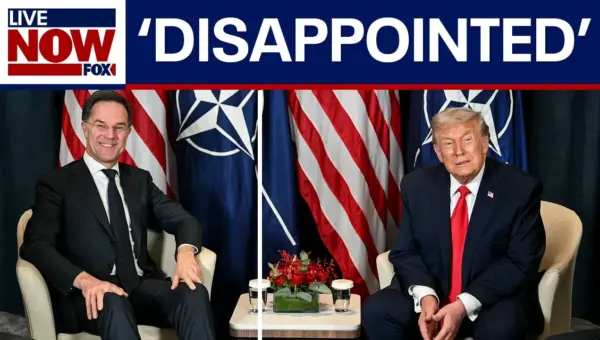
President Trump voiced frustration with NATO's lack of involvement in the Iran conflict while the U.S. military prepares for a sustained campaign. Reports indicate significant damage to Iran's military, but tensions remain high with ongoing missile strikes and a recent attack on a Saudi air base wounding U.S. personnel.