Exiled Prince Eyes Iran’s Future After Leader’s Death
The recent death of Iran's Supreme Leader has created a power vacuum, bringing exiled Crown Prince Reza Pahlavi into the spotlight. Pahlavi envisions a democratic Iran, but his proposed transition plan faces scrutiny over centralized powers.

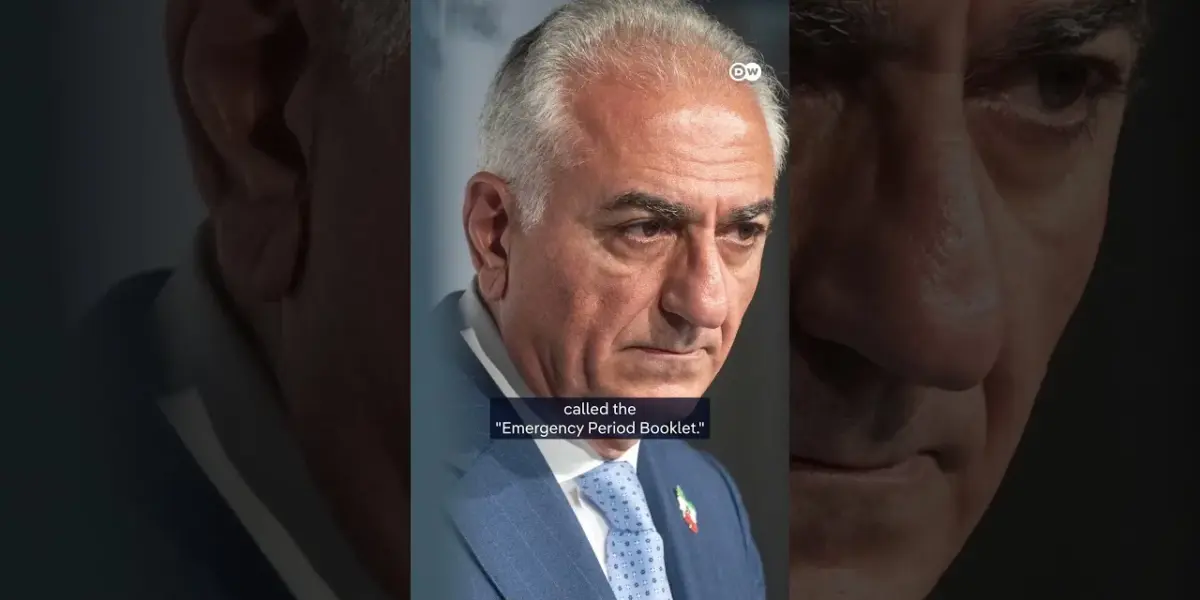
Monarchy’s Return? Exiled Prince Reza Pahlavi Emerges as Potential Leader for Iran
Tehran, Iran – The sudden death of Iran’s Supreme Leader Ayatollah Ali Khamenei, following alleged strikes by US and Israeli forces, has thrown the future of the Islamic Republic into uncertainty. In the wake of this seismic event, exiled Crown Prince Reza Pahlavi, residing in the United States, has emerged as a prominent figure, articulating a vision for a democratic Iran and staking a claim to lead the nation through a critical transition period.
Pahlavi’s Vision: A Democratic Iran with a Symbolic Monarchy?
Reza Pahlavi, the eldest son of the former Shah of Iran, has been living in exile since his family was ousted during the 1979 Islamic Revolution. His father, Mohammad Reza Pahlavi, remains a controversial figure in Iranian history – remembered by some as a modernizer and by others as a tyrannical dictator.
Now, Pahlavi is presenting himself as a potential leader for a future Iran. His supporters, often framing him as the “leader of free Iran” or even “king,” suggest a desire for a return to monarchy, albeit one similar to constitutional monarchies in countries like Sweden or Great Britain. In this model, the monarch would serve a largely symbolic role, devoid of direct political power.
“His supporters and people around him, people close to him, um frame him as the leader um of the free Iran um as the king. And then this is also interesting. They say that they want a monarchy like the monarchy in Sweden or Great Britain where um the um the king or the monarchy is more of a symbolic system and doesn’t have uh political power.”
Controversy Over Pahlavi’s Transition Plan
However, critics argue that Pahlavi’s proposed framework for Iran’s future contradicts his stated commitment to democracy. Pahlavi has released a transition plan titled the “Emergency Period Booklet,” which outlines steps for governing Iran during the initial 100 to 180 days following the collapse of the current regime.
According to some analyses of the plan, it grants Pahlavi significant power. “He says um he wants a democratic Iran where the people can decide what they want, but his framework that has been published in his name um tells a different story. he will choose um the head of the government, the head of the the council that will go forward and um start the transition period as a plan that gives resi all the powers and give him the possibility um to do everything that he wants with no accountability,” one observer noted.
This has led to accusations that while Pahlavi speaks of democratic ideals, his proposed governing structure centralizes authority in his hands, raising questions about the extent of accountability and popular participation in his envisioned transition.
International Reactions and Likelihood of Pahlavi’s Ascent
The prospect of Reza Pahlavi assuming a leadership role in Iran has garnered mixed reactions internationally. Israel has reportedly expressed support for the exiled prince. However, the stance of the United States appears less decisive.
Former President Donald Trump, when asked about Pahlavi’s potential role, expressed a degree of skepticism. “Some people like him and we haven’t been thinking about too much about that. It would seem to me that somebody from within might maybe would be more appropriate,” Trump remarked, suggesting a preference for a leader emerging from within Iran’s domestic political landscape.
Broader Implications and the Role of External Influence
Despite varying levels of external support and domestic criticism, the possibility of Pahlavi playing a significant role in Iran’s future cannot be entirely dismissed. His prominence as a figurehead for opposition movements, both within Iran and in the diaspora, makes him a notable player in the ongoing geopolitical discussions surrounding the country.
The dynamics of who leads Iran have often been influenced by external powers. As one commentator observed, the selection of Iranian leaders by external actors, particularly the US, has historically not been based on democratic credentials or qualifications, but rather on strategic considerations.
“But Paki’s role in the future of Iran more broadly can’t be ruled out entirely. Of course not because he’s he’s a um big um figure now. Um and it doesn’t have anything to do with whether he has the qualifications or not because it has never been about qualifications. When the US think about um to dominate the Iranian policy or to decide who will be the next leader in Iranian politics, it has never been about is he is the next person a Democrat or does this person has two qualifications.”
This perspective suggests that external powers may prioritize their strategic interests over the internal democratic processes of Iran when considering potential leadership candidates.
What’s Next for Iran?
As Iran navigates the profound uncertainty following the demise of its Supreme Leader, the role of exiled figures like Reza Pahlavi will undoubtedly be a focal point of international attention. The coming months will be critical in determining whether Pahlavi can translate his symbolic prominence into tangible political influence and how the Iranian people themselves will shape their nation’s destiny amidst these turbulent times.
Source: Could the son of the former Shah be installed as Iran's next leader ? | DW News (YouTube)

Related Articles

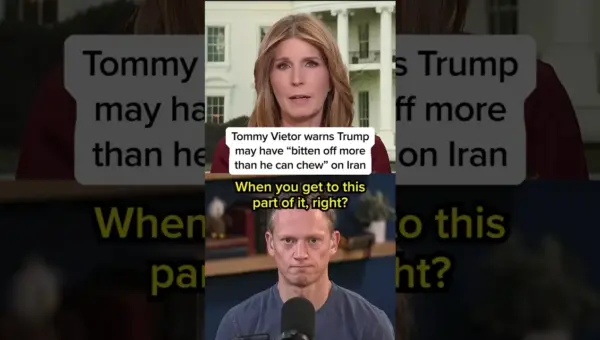
Trump’s Iran Policy Under Fire: Vietor Questions Regime Change Strategy
Tommy Vietor of Crooked Media warns that the Trump administration may be underestimating the challenges of confronting Iran. He questions the feasibility of regime change operations against an "ideologically driven" regime and expresses concern over the lack of a clear strategy for what comes next.
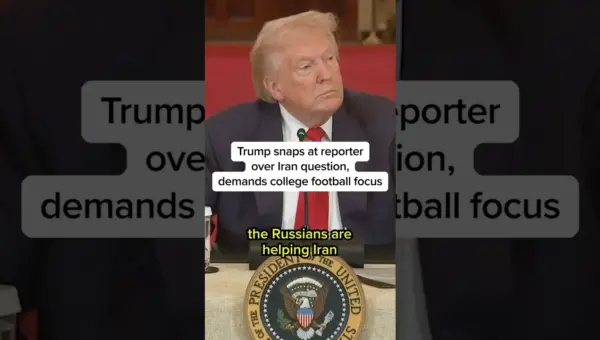
Trump Pivots to Football, Dismisses Reporter’s Iran Query
President Donald Trump publicly admonished a reporter at a White House event, dismissing a question about Russia reportedly aiding Iran in targeting the U.S. as "stupid." Trump demanded the focus remain on celebrating college football champions instead. The exchange highlights the President's communication style and his deflection of sensitive foreign policy inquiries.
Iran Strike Exposes China’s Deepest Fears: Regime Survival
The targeted strike in Iran has exposed deep-seated fears within China's leadership, triggering anxieties about regime survival, strategic miscalculations, and the precariousness of succession. Beijing is now grappling with the implications of a volatile geopolitical landscape and its potential impact on domestic stability.