Ex-NATO Envoy: Trump’s Threats Spark Worst Crisis in 77 Years
Former U.S. Ambassador to NATO, Ivo Daalder, warns that President Trump's threats to withdraw from the alliance mark NATO's worst crisis in 77 years. European leaders, including France's Macron, echo concerns about broken trust and the erosion of alliance commitments. The situation raises questions about U.S. reliability and the future of transatlantic security.

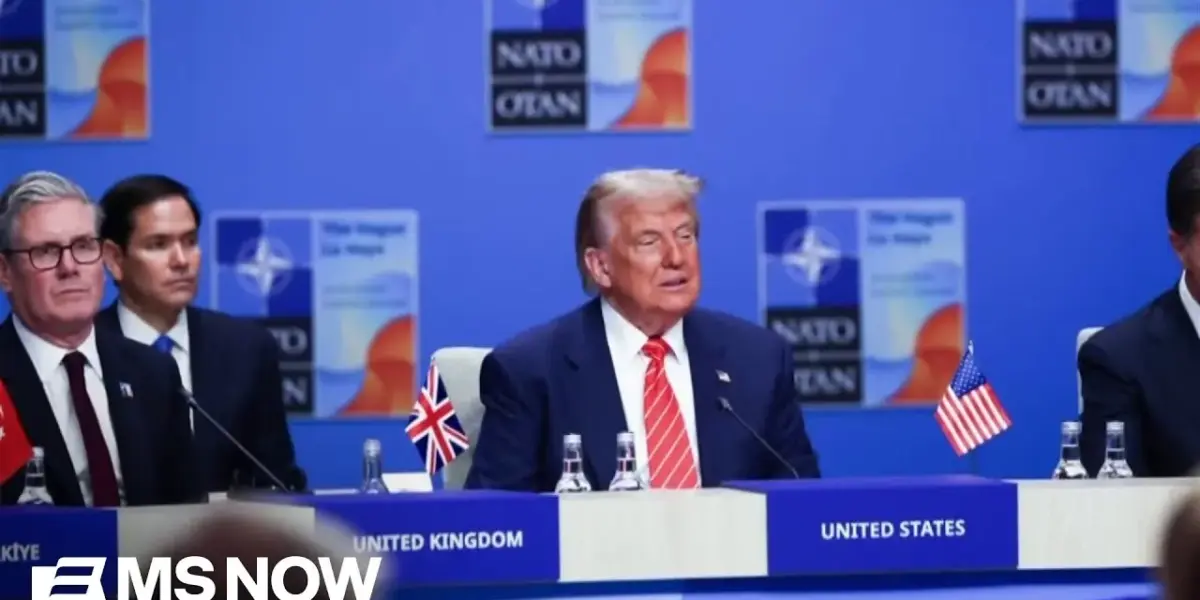
Ex-NATO Envoy Calls Trump’s NATO Threats ‘Worst Crisis’
Former U.S. Ambassador to NATO, Ivo Daalder, has declared that President Trump’s threats to withdraw the United States from the alliance represent the most severe crisis NATO has faced in its 77-year history. These comments come as Trump reportedly told The Telegraph that he always viewed NATO as a “paper tiger” and is considering U.S. withdrawal over the alliance’s refusal to join a war with Iran. The timing is critical, with the NATO Secretary-General scheduled to meet President Trump at the White House soon.
‘Trust Has Been Broken,’ Says Former Envoy
Ambassador Daalder emphasized that for the first time, a sitting U.S. President has not only hinted at but directly stated a desire to leave NATO. Furthermore, Trump has suggested that European allies should not expect U.S. support in times of war, arguing they weren’t there for the U.S. This stance represents a significant shift and a major crisis in itself. Daalder expressed deep concern that many European allies and even some in the U.S. fear being drawn into a war without consultation or consent.
European Allies Express Doubts
The sentiment of unease is shared by European leaders. French President Emmanuel Macron stated that alliances like NATO are defined by the trust that underpins them. He warned that casting doubt on commitments daily erodes the alliance’s core substance. Ambassador Daalder agreed, calling Macron’s public statement significant, as it voices what many are thinking. He noted that this erosion of trust is difficult, though not impossible, to repair.
Other European leaders have also voiced concerns. British Prime Minister Keir Starmer, while downplaying Trump’s specific comments as “noise,” stressed the need for a closer future relationship with the European Union and European nations. German Chancellor Angela Merkel has suggested that the era of U.S. global leadership is over, and European nations need to become more independent. Canadian Prime Minister Justin Trudeau has also spoken of a “rupture” in trust with the United States.
Marco Rubio’s Shifting Stance on NATO
The article also highlights the changing views of U.S. politicians. A clip of Senator Marco Rubio from 2018 is presented, where he strongly defended NATO as an essential alliance. This contrasts with more recent statements from Rubio suggesting a need to re-examine NATO’s value. Ambassador Daalder noted that Rubio, who has long understood the importance of these relationships, previously supported NATO’s value. He pointed out that in 2023, Rubio sponsored an amendment requiring Senate approval for any U.S. withdrawal from NATO, a law whose constitutionality is debated but shows a clear sentiment against unilateral withdrawal.
Daalder expressed concern that figures like Rubio might be reassessing their stance. He also noted that the Secretary of State and National Security Advisor have echoed the President’s sentiments, and the Secretary of Defense has avoided answering questions about the U.S. role in global conflicts. This, Daalder believes, indicates a dire situation for the alliance.
The Stakes for the Upcoming Meeting
Regarding the upcoming meeting between President Trump and the NATO Secretary-General, Ambassador Daalder believes it’s unlikely the NATO chief can secure a formal commitment from Trump. He stated that Trump has made his skepticism about NATO clear, often overlooking the alliance’s contributions, such as providing bases crucial for current military operations. Daalder concluded that Trump’s past statements have created too much doubt among allies for a single meeting to resolve.
National Self-Interest vs. Alliance Cohesion
The discussion touched upon a situation where French vessels were reportedly allowed to pass through the Strait of Hormuz after reaching an agreement with Iran. This raised questions about whether European countries are prioritizing their national self-interest over alliance cohesion. Daalder acknowledged that nations must pursue their interests, especially when their economic lifelines, like shipping routes, are threatened. He questioned the wisdom of actions that led to the closure of the Strait of Hormuz in the first place, suggesting that perhaps the conflict’s initiation was not the right course of action.
Source: “Trust has been BROKEN”: Fmr. NATO ambassador condemns Trump’s threats to NATO, U.S. allies (YouTube)

Related Articles

Trump Threatens Iran, Shaking Global Stability
Former President Trump's aggressive Easter Sunday warning to Iran has ignited global concerns, highlighting a volatile intersection of politics, religion, and foreign policy. The analysis explores the motivations behind such rhetoric, the deep divisions within American society, and the potential for severe economic and geopolitical repercussions worldwide.
Trump’s Rhetoric Fuels Iran Tensions, Raises War Crime Alarms
Former President Donald Trump's aggressive Easter weekend social media posts directed at Iran have sparked international concern. His threats of military action and ultimatums, coupled with conflicting narratives about military engagements, have raised alarms about potential war crimes and a dangerous escalation of conflict. Critics accuse both Trump and segments of the media of downplaying the severity of his rhetoric.
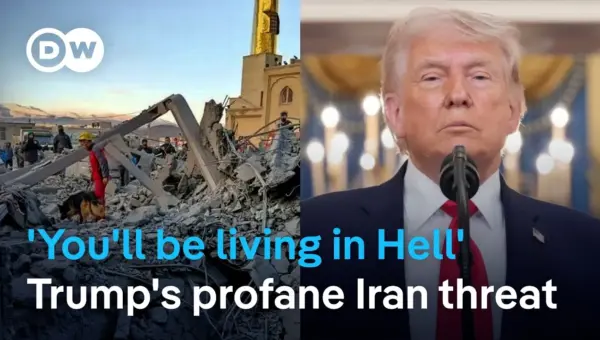
Trump’s Vulgar Iran Threat Sparks Global Outrage
President Donald Trump issued a highly profane threat against Iran via social media, warning of attacks on civilian infrastructure if the Strait of Hormuz was not opened. Experts suggest the outburst stems from frustration and desperation, while legal scholars warn of potential war crimes. The situation continues to escalate, with significant economic and political implications for the region.